
What Happened: The Core Developments
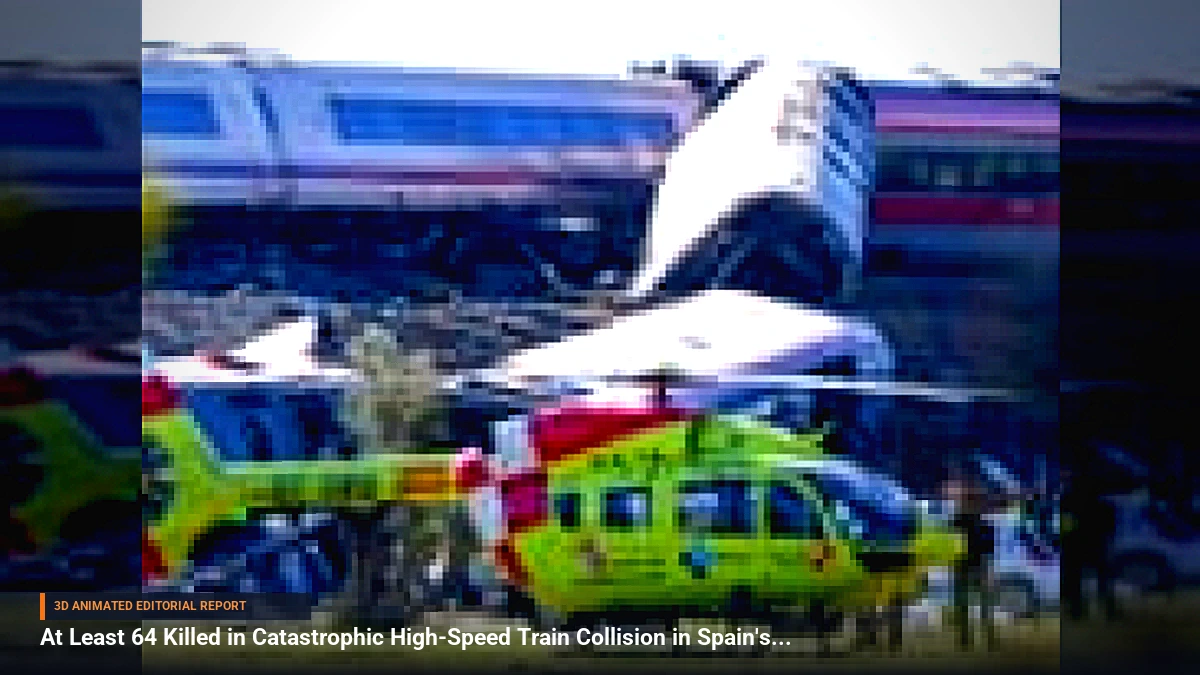
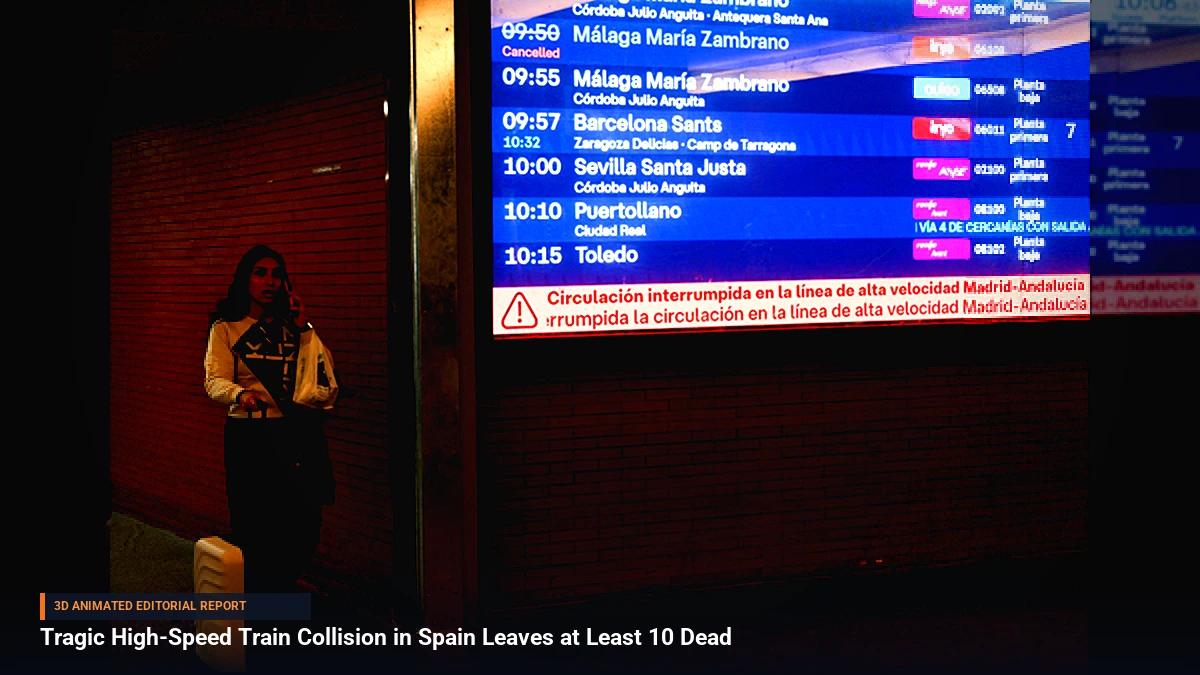
At least 64 people have lost their lives following a devastating high-speed train collision in Spain's central Toledo province. The tragedy unfolded on the heavily traveled rail corridor connecting Madrid to Seville. According to transport and emergency authorities, the crash involved two passenger services traveling in the same direction: an Iryo train (designated Iryo 7076) carrying 146 passengers and one baby, and an AVE high-speed train (AVE 2080) carrying 397 passengers, bringing the total number of individuals on board both trains to 544.
Preliminary reports indicate that one of the high-speed units crashed into the rear of a stationary or slow-moving train ahead of it on the tracks. The tremendous impact forcefully derailed at least two carriages, transforming sections of the modern transport into twisted wreckage. Emergency responders, including firefighters, civil guard units, and medical teams, rushed to the scene to extract trapped survivors and triage the wounded. Officials have cautioned that the death toll could rise further as search and rescue operations progress through the heavily damaged cars.
Background & Key Context
Spain boasts the largest high-speed railway network in Europe and the second-largest globally, trailing only China. Renowned for its punctuality and advanced engineering, the system routinely carries tens of millions of passengers annually, serving as the backbone of the nation's intercity transit.
However, this catastrophic event deals a severe blow to the system's safety record, arriving less than a year after another major rail disaster. In January, a fatal crash in Adamuz, located within the southern province of Córdoba, claimed the lives of 46 people and injured 152 others. The recurrence of two high-casualty incidents within a single calendar year has triggered immediate alarm among infrastructure experts and commuters regarding the underlying systemic and operational integrity of Spain's high-speed rail corridors.
Key Takeaways
- Mass Casualties: At least 64 people confirmed dead following the collision in Toledo province, with dozens more sustaining injuries.
- High Passenger Volume: A total of 544 passengers and staff were on board the two involved services—Iryo 7076 and AVE 2080.
- Collision Dynamics: An incoming high-speed train collided with the rear of a stopped or slowed train traveling along the same Madrid-to-Seville route.
- Infrastructure Context: The accident occurred on Europe's largest high-speed railway network, just months after a deadly January crash in Córdoba.
- Active Investigation: Spanish authorities and rail safety inspectors have launched formal probes to determine why the rear-end collision occurred.
Impact, Analysis & Global/National Reactions
The disaster has sent shockwaves through the Spanish government and prompted immediate crisis management measures at the highest levels. Prime Minister Pedro Sánchez expressed profound shock over the accident, while Transport Minister Óscar Puente established himself at the emergency control center to oversee real-time information gathering and coordinate the federal rescue response.
Transportation analysts note that rear-end collisions on high-speed rail lines are exceedingly rare due to advanced signaling and automated braking systems designed to maintain strict separation intervals between trains. The fact that such a failure occurred twice within months—following the Adamuz incident—has intensified scrutiny on network operators, maintenance protocols, and traffic management systems. Rail safety advocates are calling for an independent, transparent audit of the country's signaling architecture to restore public trust in the network.
What's Next: Looking Ahead
As emergency teams finish securing the crash site in Toledo, investigators from Spain’s rail accident investigation commission will focus on retrieving data recorders, examining trackside signals, and analyzing communication logs between drivers and traffic controllers.
Political fallout is expected to mount as opposition lawmakers demand accountability from transport officials regarding infrastructure maintenance spending and signaling redundancies. The Ministry of Transport is anticipated to release preliminary technical findings in the coming weeks, which will likely determine whether the accident stemmed from mechanical failure, human error, or software anomalies within the high-speed signaling framework.



Be the first to comment
Start a useful conversation around this story.