
What Happened: The Core Developments
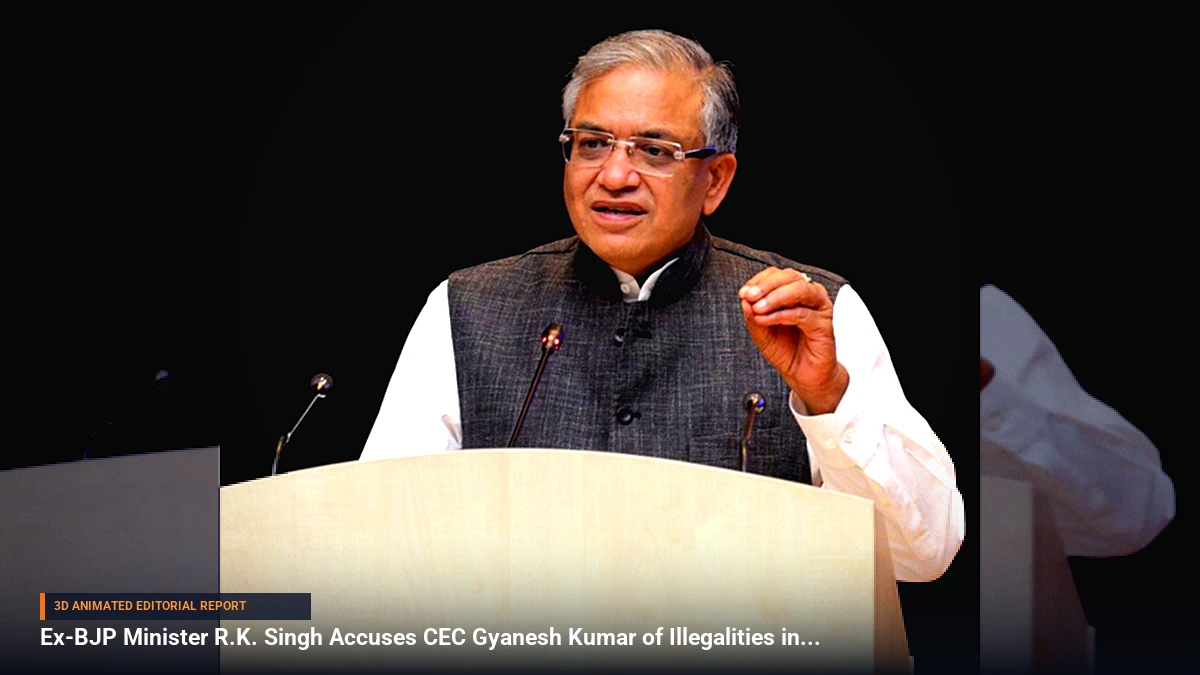
Former Union Home Secretary and former Bharatiya Janata Party (BJP) minister R.K. Singh has launched a scathing critique against Chief Election Commission (CEC) Gyanesh Kumar, accusing the top election official of committing severe illegalities concerning the Special Intensive Revision (SIR) process. Breaking ranks in an unexpected display of intra-establishment dissent, the veteran bureaucrat-turned-politician openly challenged the administrative actions of the Election Commission of India (ECI).
Mr. Singh did not stop at mere criticism; he went a step further by urging opposition parties to forge a unified front. He explicitly called for a criminal case to be filed against the CEC, alleging that the ongoing SIR drive violates established legal frameworks. This dramatic escalation has sent shockwaves through the political landscape, providing unexpected ammunition to critics of the poll panel.
Background & Key Context
The controversy centers around the Special Intensive Revision (SIR) mechanism implemented by the Election Commission. While election revisions are standard administrative procedures designed to clean up electoral rolls, the current iteration has faced intense scrutiny from various political actors who argue that the exercise exceeds statutory boundaries.
Mr. Singh's intervention is particularly notable given his background as a former top-tier bureaucrat who served as India's Home Secretary before transitioning into political office under the BJP banner. His insider knowledge of administrative procedures lends considerable weight to his allegations, transforming what might otherwise be routine political sparring into a substantive institutional debate over electoral governance and bureaucratic autonomy.
Key Takeaways
- High-Profile Defection of Narrative: Former Home Secretary and ex-BJP minister R.K. Singh publicly accused CEC Gyanesh Kumar of overseeing an illegal SIR process.
- Call for Legal Action: Mr. Singh advocated for opposition unity and demanded that a criminal case be initiated against the Chief Election Commissioner.
- Broader Political Backlash: The Congress party amplified Mr. Singh's warnings, using them to challenge the Election Commission's defense of Form 6 procedures.
- Accusations of Overreach: AIMIM leader Asaduddin Owaisi joined the chorus, condemning the SIR drive as a "backdoor NRC" (National Register of Citizens) and questioning unanimity within the poll panel.
- Questions Over Direction: Mr. Singh publicly questioned whether CEC Gyanesh Kumar was acting on directives from higher political authorities.
Impact, Analysis & Global/National Reactions
The ripple effects of R.K. Singh's statements were immediate. The principal opposition Congress party seized upon the former minister's remarks, utilizing them to dismantle the Election Commission's ongoing defense regarding Form 6 documentation. Congress leaders characterized the ECI's explanations as deceitful, pointing to Mr. Singh's bureaucratic pedigree as proof of structural flaws within the current administrative approach.
Concurrently, All India Majlis-E-Ittehadul Muslimeen (AIMIM) chief Asaduddin Owaisi launched a separate attack on the poll panel. Mr. Owaisi termed the SIR drive a "backdoor NRC," echoing deep-seated concerns among minority and regional parties regarding citizenship verification processes. Furthermore, Mr. Owaisi questioned the lack of transparent unanimity in recent decisions made by the poll panel, raising broader questions about institutional independence.
Political analysts view this development as a significant test for the Election Commission of India. When a former senior bureaucrat who once managed the nation's internal security apparatus publicly accuses the chief election authority of breaking the law, it undermines the bipartisan trust traditionally afforded to constitutional bodies.
What's Next: Looking Ahead
As pressure mounts from both disillusioned former insiders and active opposition leaders, all eyes are on the Election Commission of India to issue a formal, detailed rebuttal addressing these grave statutory accusations. Legal experts anticipate that opposition parties may formalize Mr. Singh's suggestions by exploring judicial avenues or filing formal petitions in higher courts to halt or review the SIR process.
For the ruling dispensation, managing this narrative will require careful calibration to protect the perceived neutrality of autonomous constitutional institutions ahead of upcoming electoral milestones. Meanwhile, the demand for transparency and accountability regarding the exact statutory basis of the SIR drive remains at the forefront of India's political discourse.



Be the first to comment
Start a useful conversation around this story.