
What Happened: The Core Developments
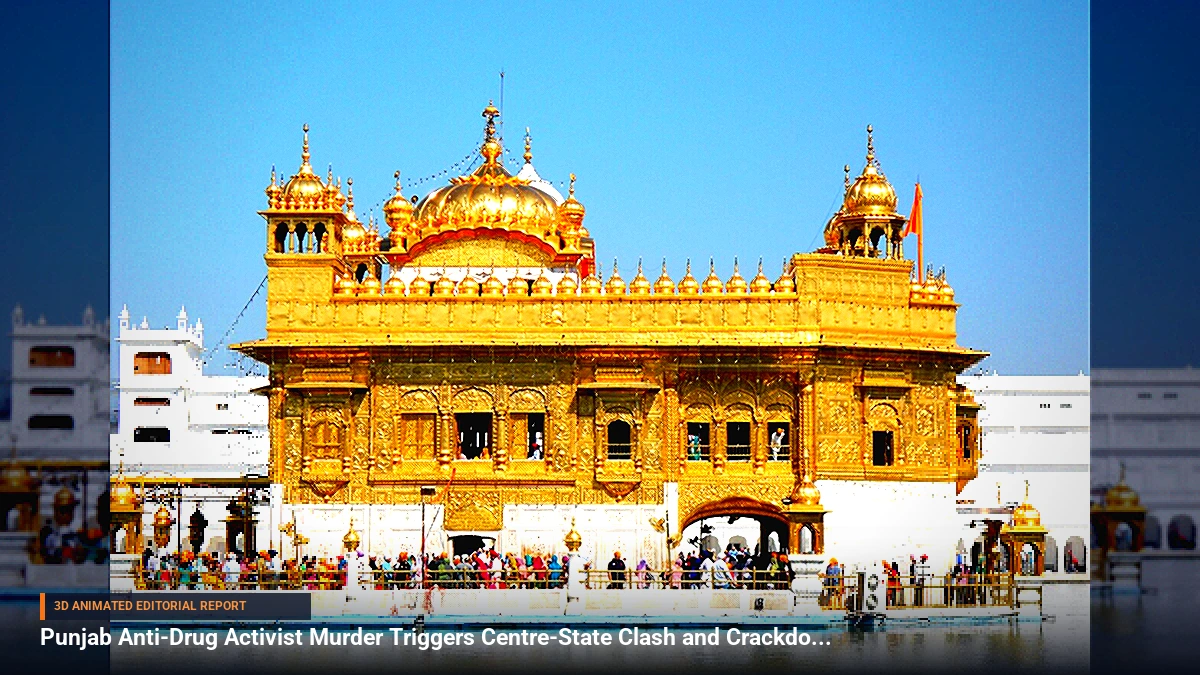
The brutal killing of anti-drug crusader Parvinder Singh Jhota in Punjab's Mansa district has sent shockwaves across India, laying bare the grave dangers faced by grassroots activists fighting the state's entrenched narcotics epidemic. Jhota was shot dead after he personally caught a local medical shop owner illicitly selling banned substances [16308].
Swift police action followed the tragedy. Local authorities apprehended the prime accused, identified as Ashwani Kumar, alongside an associate named Vipin Kumar [15863]. Both suspects were subsequently remanded to seven days in police custody to probe potential supply chains [15863]. Further expanding the investigation, law enforcement officers also arrested the shooter's wife for alleged complicity [15863].
The incident has catalyzed intense political pressure. Union Home Minister Amit Shah launched a sharp critique of the Punjab government, highlighting what he termed a flourishing illegal drug trade and a worrying surge in organized crime [16308, 16359]. In response to the growing law-and-order concerns, the Ministry of Home Affairs (MHA) dispatched three separate formal letters to state authorities demanding exhaustive investigative reports on recent high-profile activist murders [16308, 16359]. Furthermore, the Centre urged the state to detail its implementation progress regarding the national Vision Document on Narcotics Control (2026–2029) [16359].
Background & Key Context
Punjab has long wrestled with a devastating narcotics crisis that has crippled generations of its youth, turning local anti-drug activism into a perilous vocation. Activists frequently operate as civic intelligence units, tracking down rogue pharmacists and dealers who exploit regulatory loopholes.
The flashpoint involving Jhota's murder has amplified long-standing friction points between central authorities and the state administration over jurisdiction, policing effectiveness, and administrative accountability. Religious and community bodies have also waded into the discourse; prominent Akal Takht leader Giani Kuldip Singh Gargar publicly honored Jhota, designating him a "martyr" for the cause and galvanizing public sentiment against narcotics traffickers [16095].
Key Takeaways
- Assassination of an Activist: Parvinder Singh Jhota was killed in Mansa after confronting a chemist illegally selling drugs [16308].
- Swift Arrests Made: The prime shooter Ashwani Kumar, an associate named Vipin Kumar, and the shooter's wife have been taken into police custody [15863].
- Center-State Escalation: Union Home Minister Amit Shah criticized the state's handling of organized crime, prompting the MHA to send three urgent inquiry letters [16308, 16359].
- Massive State Crackdown: In an effort to counter the narrative of lax enforcement, Punjab officials seized Rs 20 crore worth of illegal medicines and suspended 520 chemist licenses [16108].
- Regulatory Loopholes Targeted: The state government raised formal concerns with the Union health minister over unregulated online sales through e-pharmacies [16108].
Impact, Analysis & Global/National Reactions
The murder has effectively placed Punjab’s entire anti-drug strategy under public and judicial trial. Critics argue that despite repeated promises, civil society members are left vulnerable to violent retaliation by criminal networks operating with political or commercial impunity.
Under immense pressure to demonstrate resolve, Punjab Chief Minister Bhagwant Mann announced a strict, zero-tolerance approach, vowing that no offender—regardless of political clout or financial influence—would escape justice [15238]. Backing rhetoric with sweeping administrative actions, the state health apparatus seized approximately Rs 20 crore worth of questionable pharmaceutical products and suspended 520 chemist licenses [16108]. State authorities also formally flagged the unchecked proliferation of online e-pharmacies as a critical vulnerability fueling unregulated drug distribution [16108].
What's Next: Looking Ahead
The coming weeks will test the resolve of both state and federal agencies. The Punjab government faces a strict deadline to respond to the MHA's three communications detailing actions taken on recent murders and the execution of the national narcotics control vision framework [16359]. Meanwhile, local courts will process the police remand extensions for the accused, while civil society groups demand permanent security frameworks for grassroots volunteers combating the narcotics trade.
Be the first to comment
Start a useful conversation around this story.