
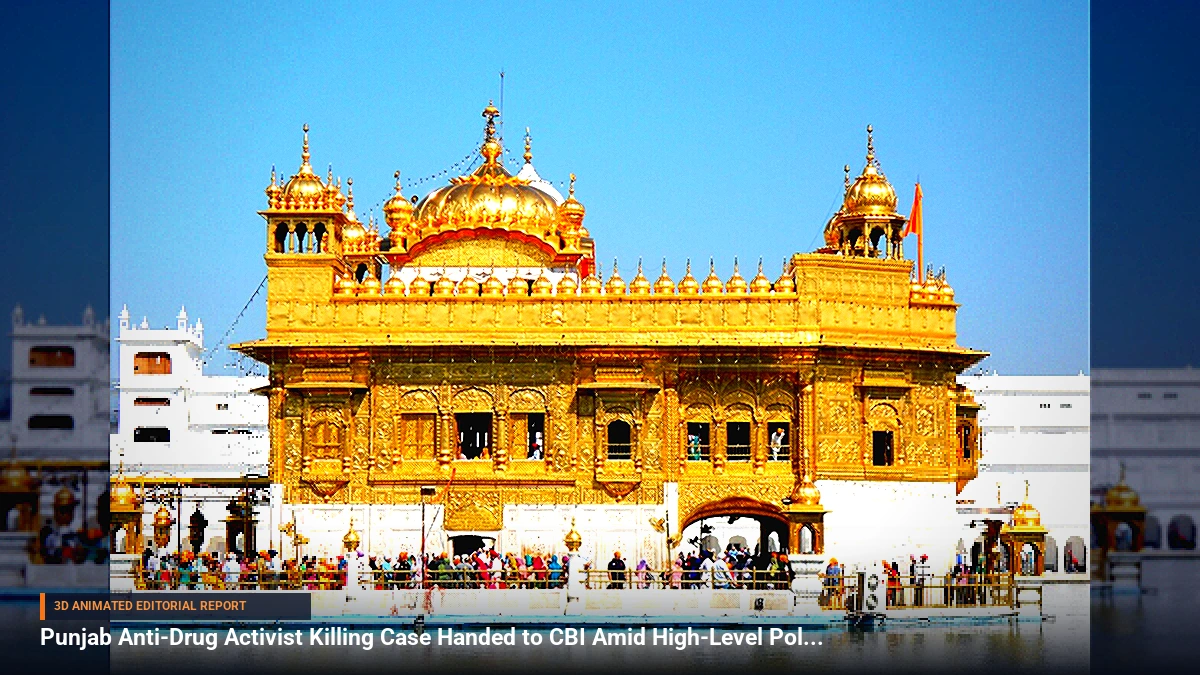
What Happened: The Core Developments
The tragic killing of an anti-drug campaigner in Punjab has triggered intense political repercussions at both the state and national levels. Punjab Chief Minister Bhagwant Mann formally announced that the murder investigation involving anti-drug activist Parminder Singh Jhota—also referred to in official accounts as Bikramjit Singh—will be transferred to the Central Bureau of Investigation (CBI). The decision was shared publicly by the Chief Minister, emphasizing that the state administration stands firmly with the victim's family in pursuit of truth and accountability.
Simultaneously, Union Home Minister Amit Shah traveled to meet personally with the family of the slain activist. The high-level federal intervention underscores the profound gravity of the incident and the escalating public pressure surrounding drug-related violence and grassroots safety in the border state.
Background & Key Context
Punjab has long grappled with a severe narcotics crisis, making anti-drug activism a perilous endeavor for civil society members, local reformers, and community groups. Activists advocating against the proliferation of illicit substances frequently put themselves at the center of dangerous confrontations with localized trafficking networks.
The murder of the activist sparked widespread outrage across cultural, political, and social spectrums. Prominent figures, including Punjabi artist and actor Diljit Dosanjh, have publicly honored the slain activist as a martyr, demanding swift and transparent justice for the bereaved family. Local pressure has also mounted visibly, with farm unions and community coalitions staging protests and holding local political functionaries accountable by pasting censure letters outside their residences.
Key Takeaways
- CBI Probe Ordered: Punjab Chief Minister Bhagwant Mann announced the transfer of the murder investigation to the CBI to ensure an impartial and thorough inquiry.
- Federal Engagement: Union Home Minister Amit Shah met directly with the victim's family to offer condolences and assess the situation firsthand.
- Grassroots Pressure: Local farm groups and community organizations have stepped up mobilization efforts, demanding accountability from local leaders.
- Cultural Outcry: Prominent public figures and artists have paid tribute to the activist, amplifying calls for systemic justice.
- Persistent Drug Crisis: The incident highlights the ongoing dangers faced by frontline campaigners battling Punjab's deeply entrenched narcotics trade.
Impact, Analysis & Global/National Reactions
The convergence of state and central leadership responses illustrates the immense political sensitivity of the drug menace in Punjab. BJP Punjab Vice President Fatehjang Singh Bajwa noted that Amit Shah's visit strongly conveys the central government's commitment to eradicating the drug menace and supporting those who stand against it.
Political analysts point out that transferring the case to a premier federal agency like the CBI is a strategic move to neutralize allegations of political bias or local police inaction. However, it also raises the stakes for both the ruling Aam Aadmi Party (AAP) in Punjab and the central administration, as the public expects tangible breakthroughs and convictions rather than prolonged bureaucratic investigations.
What's Next: Looking Ahead
As the formal handover to the CBI progresses, all eyes will be on the central agency to take over case files, examine evidence, and track down remaining suspects. Stakeholders, civil society groups, and the victim's family will closely monitor the initial findings of the federal probe. Meanwhile, political parties are expected to keep the issue at the forefront of public discourse as the state continues to grapple with the structural challenges of drug trafficking and activist safety.

Be the first to comment
Start a useful conversation around this story.