
What Happened: The Core Developments
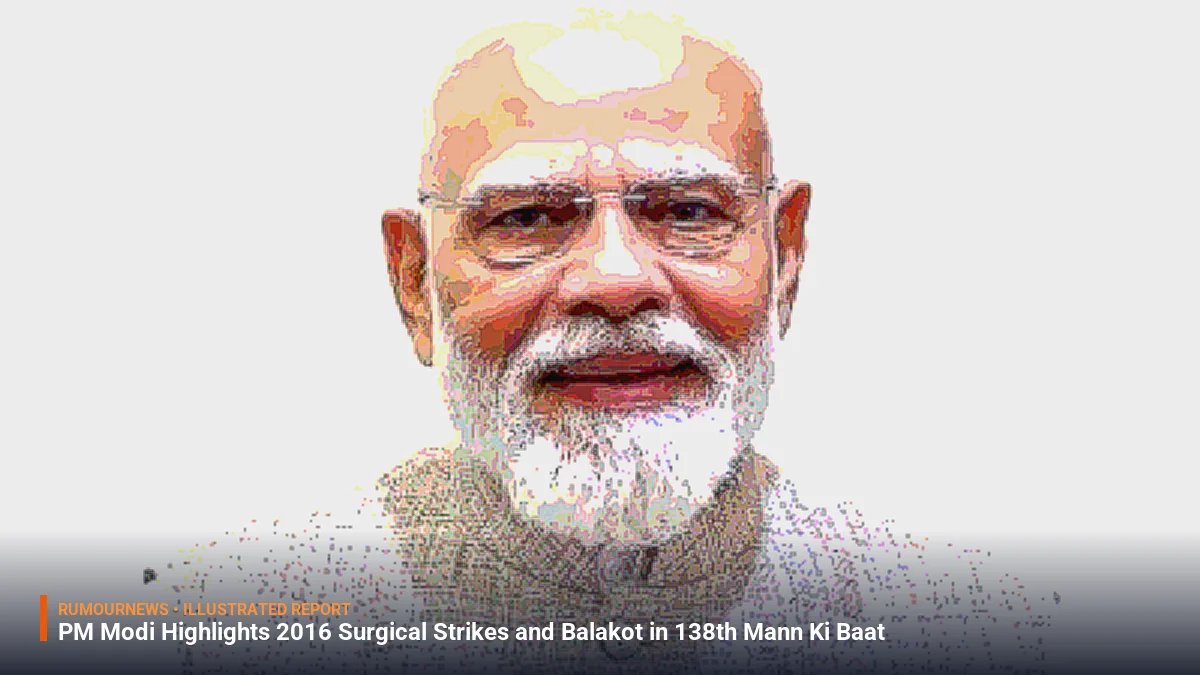
Prime Minister Narendra Modi recently addressed the nation through the 138th episode of his signature monthly radio broadcast, 'Mann Ki Baat'. During the broadcast, the Prime Minister focused heavily on national security, explicitly highlighting historical military operations against cross-border terrorism.
He referenced both the 2016 surgical strikes and the Balakot airstrikes as defining examples of India's evolving and resolute counter-terrorism doctrine. According to the Prime Minister, these decisive actions served as a befitting reply to Pakistan-backed terror networks, signaling a clear shift in how the nation responds to external security threats.
Background & Key Context
The mention of the 2016 surgical strikes and the Balakot operations underscores a consistent political and strategic narrative regarding India's national security framework. The 2016 operations were launched following a terror attack on an army camp in Uri, Jammu and Kashmir, while the 2017 and 2019 Balakot airstrikes were executed in response to the Pulwama bombing.
Over the years, these operations have been frequently cited by the administration as proof of a zero-tolerance policy toward terrorism. By invoking these milestones in 'Mann Ki Baat', the leadership continues to reinforce its messaging on national defense, projecting a posture of proactive deterrence rather than reactive defense.
Key Takeaways
- Milestone Broadcast: Prime Minister Narendra Modi delivered the 138th episode of his monthly radio program, 'Mann Ki Baat'.
- Counter-Terrorism Doctrine: The address centered heavily on India's firm stance against cross-border terrorism originating from Pakistan.
- Historical References: PM Modi specifically highlighted the 2016 cross-border surgical strikes and the subsequent Balakot airstrikes.
- Shift in Policy: The operations were framed as a fundamental departure from past diplomatic approaches, demonstrating a new threshold of military response.
- Public Engagement: Local chapters and party workers organized mass listening sessions, including notable gatherings in regions like Raipur.
Impact, Analysis & Global/National Reactions
The Prime Minister's remarks have drawn widespread attention from political analysts, defense commentators, and citizens alike. By integrating military achievements into a popular radio format, the government successfully bridges high-level strategic policy with grassroots public engagement.
Political observers note that framing national security as an ongoing collective resolve helps consolidate domestic support. Concurrently, regional events—such as the massive public listening turnout claimed by local organizers in cities like Raipur—demonstrate the enduring resonance of defense themes within the domestic political landscape.
Critics and supporters alike agree that these recurring references serve a dual purpose: honoring the armed forces while cementing the administration's legacy of decisive security governance in the public consciousness.
What's Next: Looking Ahead
As India continues to refine its domestic security apparatus and counter-terrorism strategies, public discourse remains heavily influenced by doctrines of proactive defense. Observers will be watching closely to see how these strategic narratives evolve in future policy speeches, defense updates, and forthcoming episodes of 'Mann Ki Baat' as national security remains a cornerstone of public policy and political communication.


Be the first to comment
Start a useful conversation around this story.