
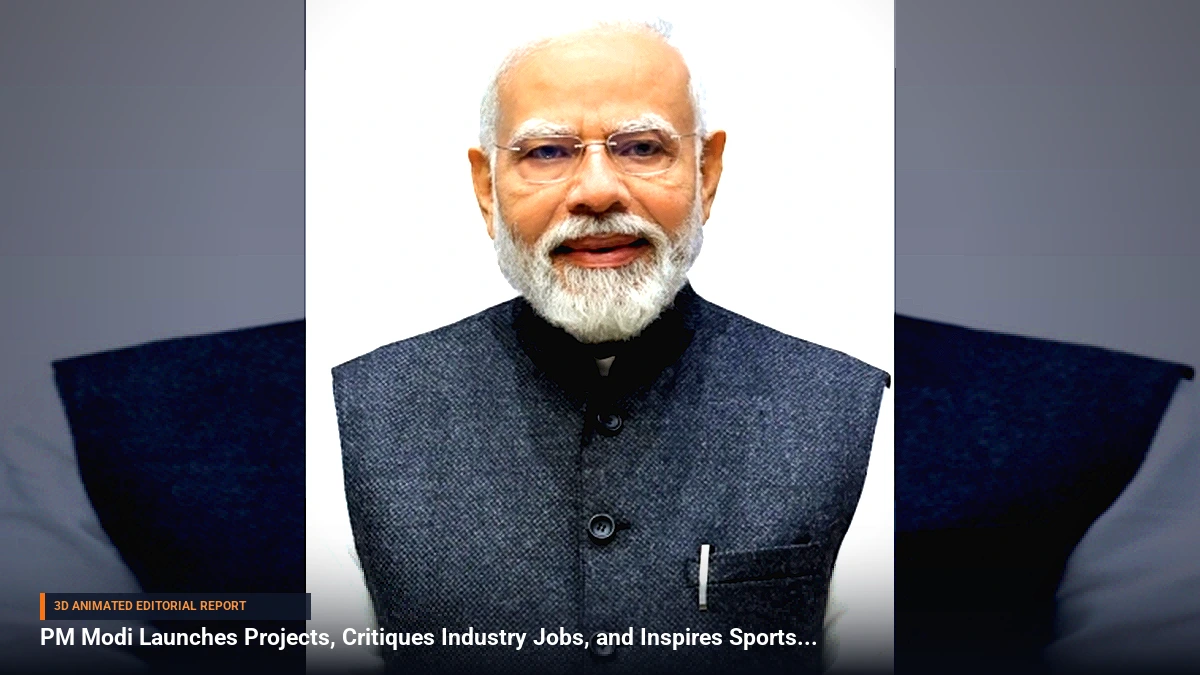
What Happened: The Core Developments
Prime Minister Narendra Modi has engaged in a diverse array of high-profile public appearances, bridging regional infrastructure development, economic accountability, and cultural interactions. In Bihar's Vaishali district, the Prime Minister inaugurated the newly constructed Nitish Setu bridge alongside launching massive development initiatives totaling Rs 34,470 crore. Amidst the celebratory atmosphere where he recreated a signature 'gamcha' wave, the political landscape remained charged, with opposition parties swiftly branding the bridge's naming and inauguration as an act of self-aggrandisement.
Simultaneously, at the FICCI Annual General Meeting and Annual Convention, Prime Minister Modi confronted India Inc. directly. Utilizing sharp vernacular metaphors regarding corporate appetite and profitability, he pulled up major industrialists over a perceived lag in domestic job creation and inadequate entry-level compensation. This direct rebuke drew immediate national attention, triggering swift counter-responses from key opposition figures including Rahul Gandhi and Mallikarjun Kharge, who seized upon the remarks to highlight broader economic vulnerabilities under the current administration.
On a lighter note, the Prime Minister's influence extended into the sports arena, where star Indian cricketer Suryakumar Yadav publicly credited a recent meeting with PM Modi as the turning point that helped him rediscover his batting form and reinvigorate his international career path.
Background & Key Context
The convergence of infrastructure rollouts, corporate governance debates, and cultural diplomacy highlights the multi-layered strategy of the current administration. Bihar remains a critical political battleground, making large-scale infrastructure investments like the Vaishali projects essential for regional economic integration. Meanwhile, the friction between the government and India Inc. over job creation underscores ongoing anxieties surrounding youth unemployment and income inequality in a growing economy—issues that opposition parties consistently leverage ahead of electoral cycles. On the cultural front, interactions between national leaders and sports icons continue to capture public imagination, reinforcing a relatable national leadership archetype.
Key Takeaways
- Massive Infrastructure Push: PM Modi inaugurated the Nitish Setu bridge and unveiled development works valued at Rs 34,470 crore in Bihar's Vaishali.
- Political Friction: Opposition leaders criticized the bridge's inauguration and naming convention as political self-aggrandisement.
- Corporate Accountability: The Prime Minister strongly reprimanded industrialists at the FICCI convention over lagging job creation and low wage growth.
- Political Fallout: Opposition leaders Rahul Gandhi and Kharge criticized the administration, arguing that the Prime Minister's critique validates failures in national employment policy.
- Sports Revival: Cricketer Suryakumar Yadav credited a morale-boosting meeting with PM Modi for reviving his athletic performance.
Impact, Analysis & Global/National Reactions
The Prime Minister's dual focus on heavy infrastructure and corporate responsibility has generated intense nationwide debate. Economists and market analysts are evaluating how India Inc. will respond to the administrative pressure regarding hiring practices and compensation structures. Business leaders have defended corporate contributions while acknowledging the need for alignment with national developmental goals.
Political analysts view the Bihar inaugurations as an essential consolidation of regional voter sentiment, even as opposition factions attempt to turn the Prime Minister's corporate critiques back onto government economic policies. The friction underlines a broader national dialogue regarding equitable growth, structural employment hurdles, and the responsibilities of private enterprise in a developing super-economy.
What's Next: Looking Ahead
Stakeholders across sectors will closely monitor follow-up meetings between policymakers and industry bodies to see if corporate commitments to employment generation materialize into tangible policy changes or hiring surges. In Bihar, the newly launched infrastructure assets will undergo phased integration to assess immediate logistical benefits for local communities. Meanwhile, political parties will continue leveraging these contrasting national narratives as preparation intensifies for upcoming legislative sessions and regional political contests.

Be the first to comment
Start a useful conversation around this story.