
What Happened: The Core Developments
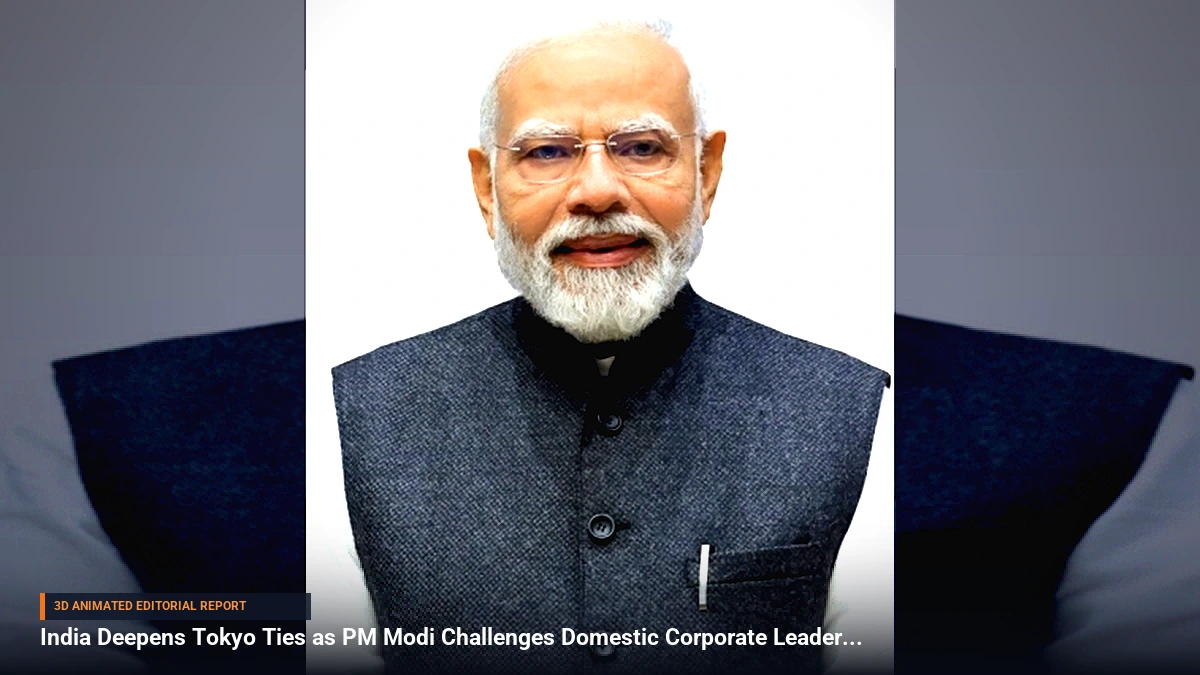
India has entered a new phase of bilateral and domestic reckoning, balancing a major leap forward in international defense diplomacy with heightened scrutiny over its domestic economic performance. External Affairs Minister Dr. S. Jaishankar traveled to Tokyo for a high-profile diplomatic visit from November 18 to November 20, 2026. During this engagement, New Delhi and Tokyo participated in the Fourth India-Japan 2+2 Foreign and Defence Ministerial Meeting, culminating in a joint agreement to deepen strategic and defense cooperation.
Most notably, the two nations reached an unprecedented pact allowing Japanese forces to utilize Indian military facilities for live-fire training. This signals a remarkable step forward in interoperability between the Indo-Pacific partners. Simultaneously, on the domestic front, Prime Minister Narendra Modi voiced stark public criticism toward corporate India, arguing that sweeping corporate tax cuts implemented to stimulate growth have fallen short of adequately elevating salaries and generating sustainable employment opportunities.
Background & Key Context
The dual developments highlight a complex balancing act for the Indian government. On the geopolitical stage, India and Japan have steadily strengthened their defense partnership over the past decade, driven by shared regional security concerns, maritime security mandates in the Indo-Pacific, and mutual resistance against economic coercion. The agreement to share military firing ranges represents a practical progression from maritime exercises and intelligence sharing to boots-on-the-ground tactical cooperation.
Concurrently, the domestic economic landscape has faced intense political debate. Following historical corporate tax reductions aimed at boosting investments, the administration anticipated a robust trickle-down effect benefiting the broader workforce. However, persistent wage stagnation concerns and employment generation gaps have pushed political leaders to openly question corporate accountability, drawing sharp reactions from opposition parties who view the Prime Minister's critique as an acknowledgment of policy shortcomings.
Key Takeaways
- Defense Milestone: Japanese military forces are set to use Indian ranges for live-fire training for the first time.
- Ministerial Engagement: EAM Dr. S. Jaishankar spearheaded talks in Tokyo between November 18 and 20, 2026.
- Strategic Alignment: Both countries explicitly flagged the menace of "economic coercion" in their joint ministerial statement.
- Domestic Friction: Prime Minister Modi criticized corporate India for failing to translate tax breaks into better wages and job creation.
- Political Fallout: Opposition figures quickly capitalized on the Prime Minister's remarks, questioning the efficacy of previous fiscal policies.
Impact, Analysis & Global/National Reactions
The simultaneous unfolding of these events illustrates the tension between India's global ambitions and its internal socio-economic realities. Internationally, the defense pact with Japan cements New Delhi's position as a linchpin in the security architecture of the Indo-Pacific. Defense analysts note that allowing foreign troops to train on native soil marks a significant departure from India's traditional stance of strategic autonomy, signaling a profound level of trust with Tokyo.
Domestically, however, the Prime Minister's friction with corporate leadership has ignited a fierce political debate. Critics and opposition leaders argue that the administration's acknowledgment of stagnant wages validates long-standing criticisms regarding economic inequality. Industry stakeholders now face mounting pressure to bridge the gap between corporate profitability and workforce welfare, even as policymakers evaluate regulatory levers to spur domestic labor markets.
What's Next: Looking Ahead
As the ink dries on the India-Japan defense agreement, military planners from both nations will need to iron out the logistical frameworks governing the upcoming live-fire exercises, including facility selections and deployment timelines.
On the economic front, all eyes will be on upcoming fiscal policy reviews and whether the government introduces new incentives or mandates to compel corporate entities toward aggressive employment generation and wage hikes. The delicate dance between projecting hard power abroad and managing populist economic pressures at home will undoubtedly shape India's political trajectory in the months ahead.





Be the first to comment
Start a useful conversation around this story.