
What Happened: The Core Developments
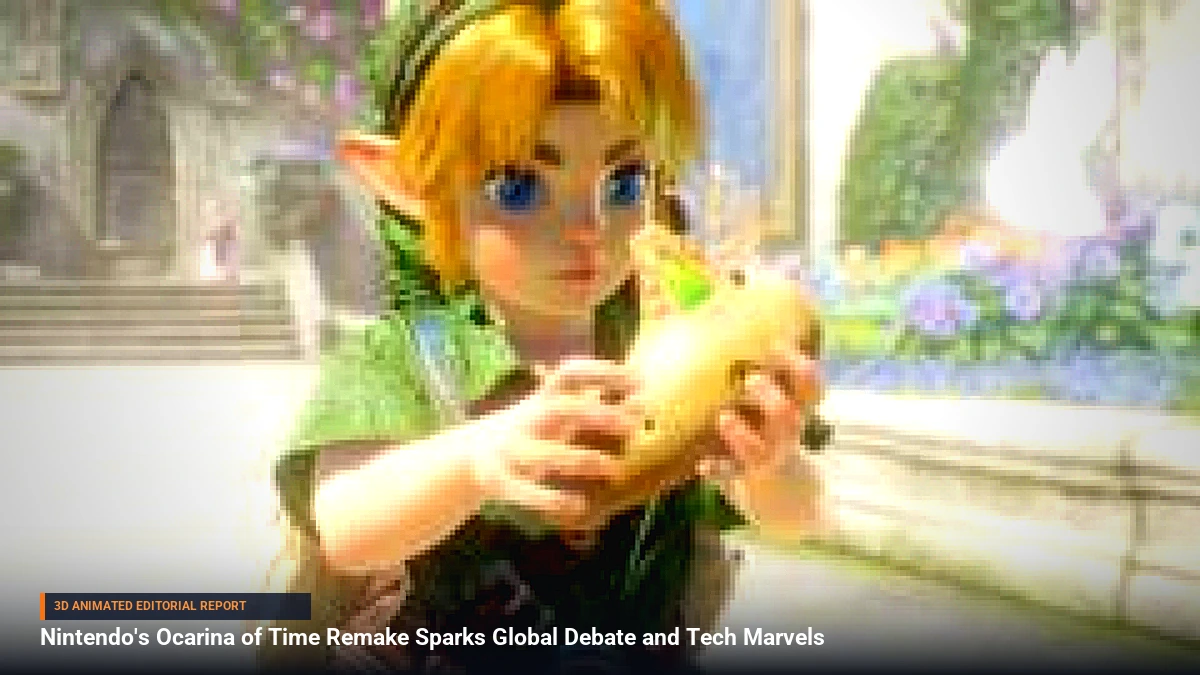
Nintendo has officially rolled out its modern reimagining of The Legend of Zelda: Ocarina of Time, a title widely celebrated as one of the greatest video games ever created. The release has immediately captured the attention of both mainstream critics and loyal fans, igniting widespread discussions about how a legendary classic translates to modern hardware. While general reviewers are dissecting the balance between nostalgic preservation and modern quality-of-life updates, community reactions have manifested in fascinating ways—including record-breaking user engagement on aggregate platforms and extreme technical tinkering by PC enthusiasts.
Background & Key Context
Originally launched on the Nintendo 64, Ocarina of Time fundamentally redefined 3D game design, narrative pacing, and environmental exploration. Over the decades, it has achieved mythic status within the gaming industry, inspiring countless developers and maintaining an active, passionate fandom. Bringing such a monumental title into the modern era presents a delicate challenge: developers must navigate the fine line between updating visual assets and mechanics for contemporary audiences while preserving the specific emotional resonance and atmospheric magic that made the original a cultural touchstone.
Key Takeaways
- Critical and Community Reception: The newly released remake has achieved staggering community engagement, posting some of the highest user scores in Metacritic history despite facing localized review-bombing attempts.
- Technical Extremes: PC tinkerers and hardware enthusiasts have already pushed the remake's boundaries, successfully running the title at a fluid 60 frames per second—though notably requiring massive hardware overhead, including up to 18.6 GB of memory on high-end RTX 5090 configurations.
- Cultural Resonance: High-profile cultural figures and award-winning musicians, including composer Jon Batiste, have stepped forward to praise the enduring brilliance of the game's iconic soundtrack and auditory design.
- Retail and Accessibility: Major retailers have already begun rolling out promotional incentives, such as special member discounts, signaling strong commercial backing for the launch.
Impact, Analysis & Global/National Reactions
Industry analysts note that reimagining a sacred classic is always fraught with high risk and reward. Initial reviews from outlets like the BBC highlight that while the reimagined title captures much of the original grandeur, it also invites intense scrutiny over modern design expectations. Meanwhile, the enthusiast community's rapid push to achieve 60 FPS performance highlights the growing divergence between console baseline optimization and brute-force PC hardware modifications.
"The challenge with Ocarina of Time isn't just updating polygons; it's recapturing a specific era of wonder without breaking the mechanics players memorized decades ago," noted industry observers. The strong user metrics underscore that the franchise's emotional pull remains as potent as ever, even as technical purists debate the frame rates and optimization limits of modern ports.
What's Next: Looking Ahead
As the dust settles on the initial launch window, all eyes will be on Nintendo to see whether official performance patches or updates are deployed to address hardware scaling and optimization. Furthermore, the modding community's ongoing experiments with high-end graphical configurations will likely push the envelope on what is technically possible with modern game engines. Stakeholders and retail partners will also monitor long-term sales trajectories to determine if this reimagining paves the way for further classic franchise revivals in the near future.



Be the first to comment
Start a useful conversation around this story.