
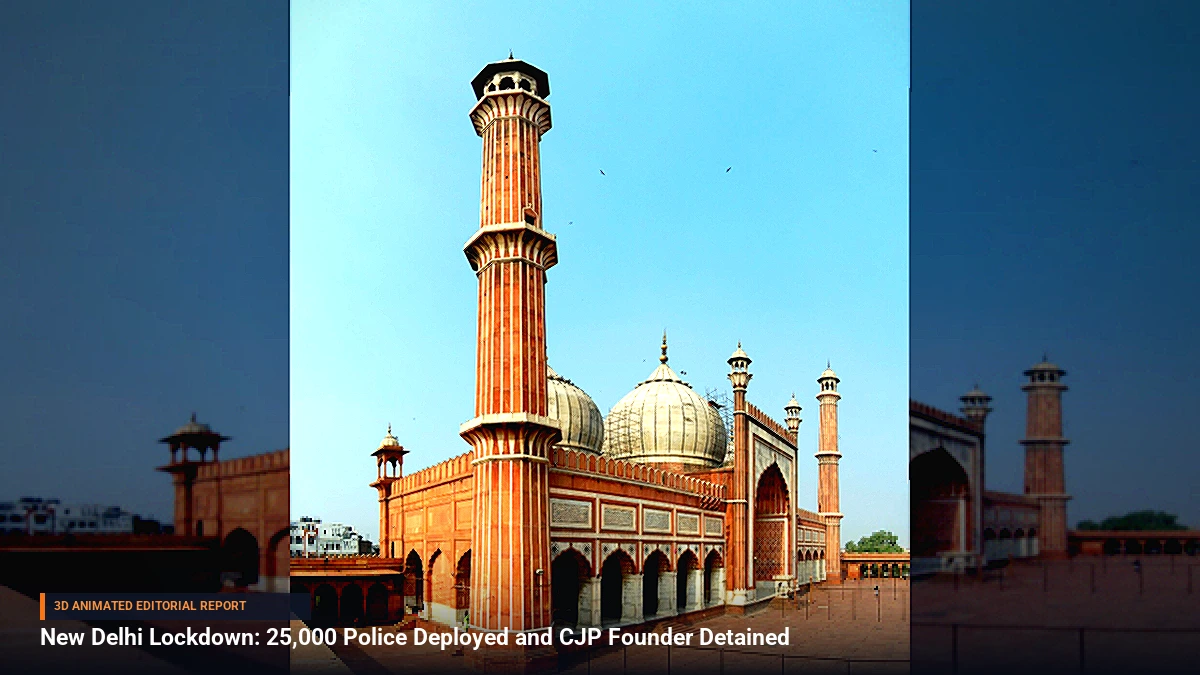
What Happened: The Core Developments
In a sweeping pre-emptive operation, Indian law enforcement mobilized a massive security apparatus across New Delhi, deploying 25,000 security personnel to manage potential civil unrest. The intense clampdown directly targeted a planned demonstration organized by the youth-led Cockroach Janta Party (CJP). The political movement had called for a high-visibility 'Lehra Do Tiranga' national flag march and a mass gathering at Central Park to protest the contentious imprisonment of political activists.
Hours before the demonstration could materialize, Delhi police intercepted and detained CJP founder Abhijeet Dipke. Video footage and reports from the ground highlighted a tense standoff between the opposition leader and law enforcement before he was taken into custody, effectively neutralizing the centralized leadership of the planned march before crowds could congregate.
Background & Key Context
The escalation in the capital stems from mounting friction between emerging youth political factions and state authorities regarding civil liberties and the incarceration of activists. The Cockroach Janta Party, known for its unconventional naming and grassroots mobilization style, has increasingly positioned itself as a vocal critic of state policies, specifically targeting the legal status of jailed political figures.
Urban centers in India have increasingly witnessed heightened security protocols designed to intercept demonstrations at their inception. Preventive detentions, a legal mechanism frequently utilized under administrative laws, have become a cornerstone of urban crowd-control strategies, sparking ongoing debates over the constitutional boundaries of freedom of assembly and speech.
Key Takeaways
- Massive Security Presence: Over 25,000 police personnel were deployed throughout New Delhi to seal off key areas and deter public gatherings.
- High-Profile Detention: CJP founder Abhijeet Dipke was taken into custody by Delhi police ahead of the scheduled 'Lehra Do Tiranga' march.
- Core Grievance: The youth-led movement organized the mobilization to protest the ongoing jailing of political activists.
- Pre-Emptive Policing Strategy: Law enforcement focused on intercepting demonstrations before rallies could form, utilizing restrictive containment measures.
Impact, Analysis & Global/National Reactions
The severe security posture adopted by municipal authorities underscores a growing institutional anxiety surrounding youth-led political mobilization. Critics and civil rights advocates argue that pre-emptive crackdowns and preventive detentions erode democratic norms by criminalizing dissent before any public disturbance can occur.
Conversely, state security defenders maintain that heavy deployments are necessary to preserve public order, prevent traffic paralysis in vital commercial zones, and manage volatile political tensions. Independent political analysts note that deploying tens of thousands of personnel for a single political faction highlights the disproportionate state response to burgeoning grassroots movements.
What's Next: Looking Ahead
As the legal status of Abhijeet Dipke and other detained CJP members remains a focal point, attention shifts to how the movement will adapt its organizing tactics. Legal challenges against the preventive detentions are expected in local courts, testing the boundaries of police powers under Indian statutory law. Furthermore, the handling of this standoff will likely influence future protest dynamics as urban centers prepare for upcoming electoral and legislative cycles.

Be the first to comment
Start a useful conversation around this story.