
What Happened: The Core Developments
In a striking electoral upset for the ruling administration in southern India, the National Democratic Alliance (NDA) completely dominated the recent Legislative Council elections. Official results confirmed that the ruling Congress party suffered a total shutout, losing all four contested seats across the state.
The vote count, which followed polling held on October 23, revealed a robust performance by the opposition coalition. The Bharatiya Janata Party (BJP) captured three seats, while its regional ally, the Janata Dal (Secular) or JDS, secured the remaining seat. This clean sweep sent immediate shockwaves through regional political circles, as the ruling party in the state failed to convert its executive leverage into legislative gains.
Background & Key Context
Legislative council elections—frequently viewed as barometers of institutional stability and localized party machinery—carry significant political weight in Karnataka. The October 23 polls served as a critical test of electoral coordination between the BJP and the JDS, who have been forging closer ties to challenge the incumbent state administration.
For the ruling Congress party, the stakes were exceptionally high. Holding state power typically provides an incumbent party with administrative momentum during mid-term electoral contests. However, failing to secure even a single seat across the four contested constituencies exposed vulnerability in grassroots organizing and regional strategy.
Key Takeaways
- Clean Sweep: The NDA won all four contested Legislative Council seats in Karnataka.
- Seat Distribution: The BJP secured 3 seats, while its ally JDS claimed 1 seat.
- Incumbent Shutout: The ruling Congress party failed to win a single seat, marking a major local setback.
- Polling Timeline: Voting for the high-stakes council seats took place on October 23.
- National Fallout: The outcome ignited a fierce war of words between Prime Minister Narendra Modi and Congress leaders.
Impact, Analysis & Global/National Reactions
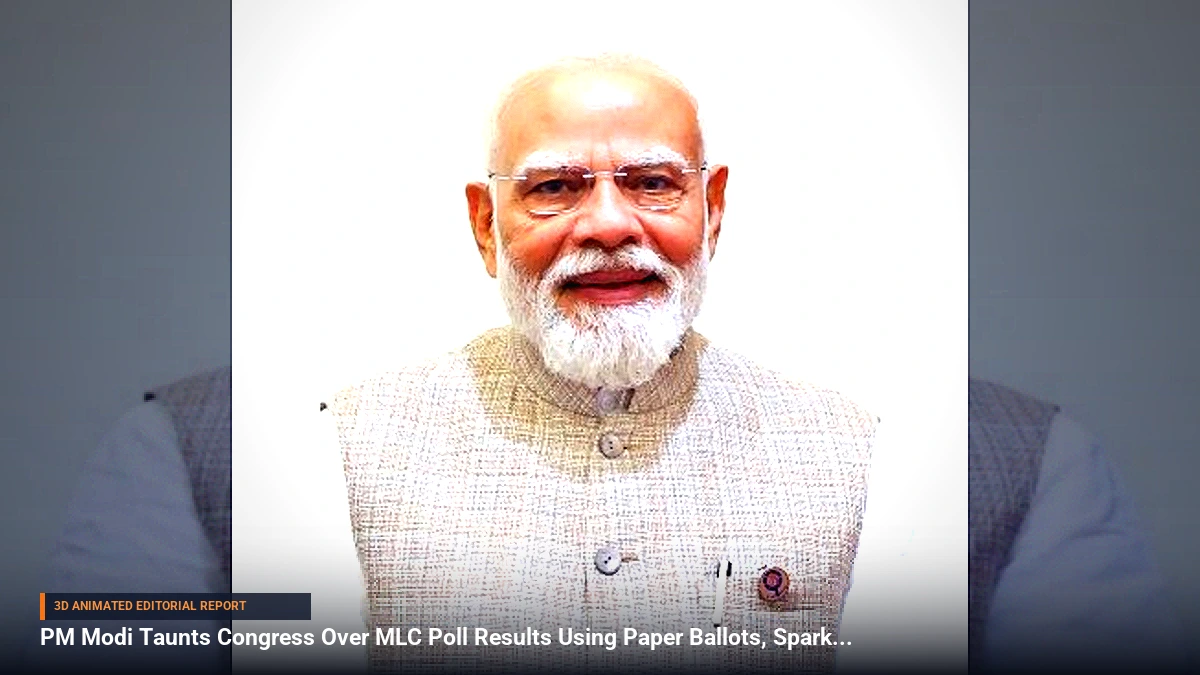
The electoral sweep quickly escalated beyond regional politics, drawing sharp commentary from national figures. Prime Minister Narendra Modi publicly highlighted the outcome, using social media and public remarks to issue political taunts regarding the opposition's performance. Accompanying his comments with pointed queries about how many seats the grand old party managed to secure, the Prime Minister underscored the psychological blow dealt to the opposition.
In response, Congress leaders pushed back vigorously. Challenging the Prime Minister directly, regional and national party spokespersons dared the central leadership to commit to conducting all future elections strictly through traditional ballot papers rather than electronic voting machines (EVMs), attempting to shift the narrative toward electoral transparency.
Meanwhile, state-level opposition figures framed the verdict as a clear sign of shifting public sentiment. BJP state leaders asserted that the council poll results directly signal voter preference for an NDA government ahead of the upcoming legislative assembly elections.
What's Next: Looking Ahead
As the political dust settles, both sides are pivoting toward long-term electoral preparation. For the NDA, the successful coordination between the BJP and the JDS provides a viable template for joint campaigning in future regional battles.
Conversely, the ruling Congress party faces intense internal pressure to recalibrate its grassroots strategy and mend organizational gaps exposed by the setback. Observers note that the psychological momentum gained by the opposition will likely influence upcoming legislative debates and shape the political alignment across the state as parties look ahead to the next major electoral showdown.


Be the first to comment
Start a useful conversation around this story.