
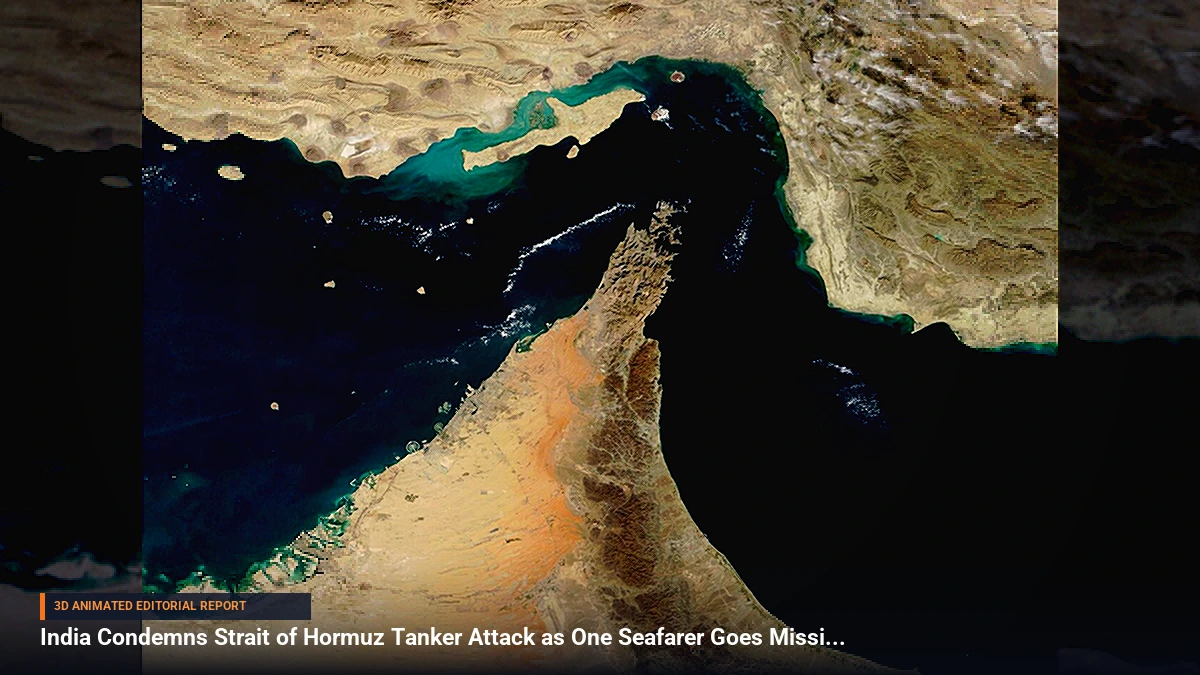
What Happened: The Core Developments
A Liquefied Petroleum Gas (LPG) tanker carrying a predominantly Indian crew of 24 members became the target of a hostile attack while transiting through the volatile Strait of Hormuz. The strike inflicted significant structural and operational damage on the vessel, injuring two Indian seafarers and leaving another Indian national missing.
In response to the assault, the Indian Ministry of External Affairs (MEA) and the Indian Embassy in Oman immediately mobilized diplomatic and logistical channels. Joint search and rescue efforts are currently underway, with Omani authorities and local maritime forces working in coordination with Indian diplomatic missions to locate the missing crew member and provide medical assistance to the injured.
Background & Key Context
The attack on the Indian-crewed LPG tanker does not occur in a vacuum; it is part of a severe and compressed escalation of maritime hostilities in the Arabian Gulf and the Strait of Hormuz. Over a 24-to-48-hour window, regional monitors have registered multiple tanker incidents, projectile strikes, and suspected mine detonations off the coast of Oman and within central shipping lanes.
Concurrently, geopolitical friction has widened significantly, marked by targeted U.S. military strikes on strategic installations such as Qeshm Island near the Strait, alongside counter-drone operations targeting American positions in the region. These overlapping kinetic events have transformed one of the world's most critical energy chokepoints into a high-risk combat zone.
Key Takeaways
- Targeted Vessel: An LPG tanker carrying 24 Indian nationals was struck while navigating the Strait of Hormuz.
- Casualties and Missing Personnel: Two Indian seafarers sustained injuries, and one Indian national remains unaccounted for.
- Diplomatic Action: The Indian government has issued a firm condemnation of the violence, emphasizing that attacks on civilian maritime trade must end.
- Rescue Operations: The Indian Embassy in Oman is closely collaborating with local authorities to execute search and rescue missions.
- Broader Regional Unrest: The incident coincides with a surge of tanker attacks, mine strikes, and direct military exchanges between U.S. and Iranian forces in the area.
Impact, Analysis & Global/National Reactions
The escalation in the Strait of Hormuz poses a direct threat to international energy security and the safety of global seafarers, who frequently bear the brunt of geopolitical standoffs. With millions of barrels of oil and vital gas supplies transiting the region daily, any disruption or security breakdown directly threatens global markets.
Official statements from New Delhi underscored the gravity of the situation, with the MEA noting that targeted assaults on commercial vessels carrying civilian crews "must end." Maritime security experts warn that the use of mines and projectile strikes against non-combatant commercial shipping constitutes a serious violation of international maritime law, prompting calls for enhanced naval protection and immediate de-escalation.
What's Next: Looking Ahead
Stakeholders across the international shipping and energy sectors are bracing for prolonged disruptions as insurance premiums spike and vessel operators reevaluate transit schedules through the Gulf.
For New Delhi, the immediate priority remains the safe recovery of the missing Indian national and the repatriation of the injured crew. Diplomatic channels will continue to pressure regional authorities for enhanced protection guarantees, while international naval coalitions evaluate measures to secure civilian shipping lanes against further asymmetric attacks.


Be the first to comment
Start a useful conversation around this story.