
What Happened: The Core Developments
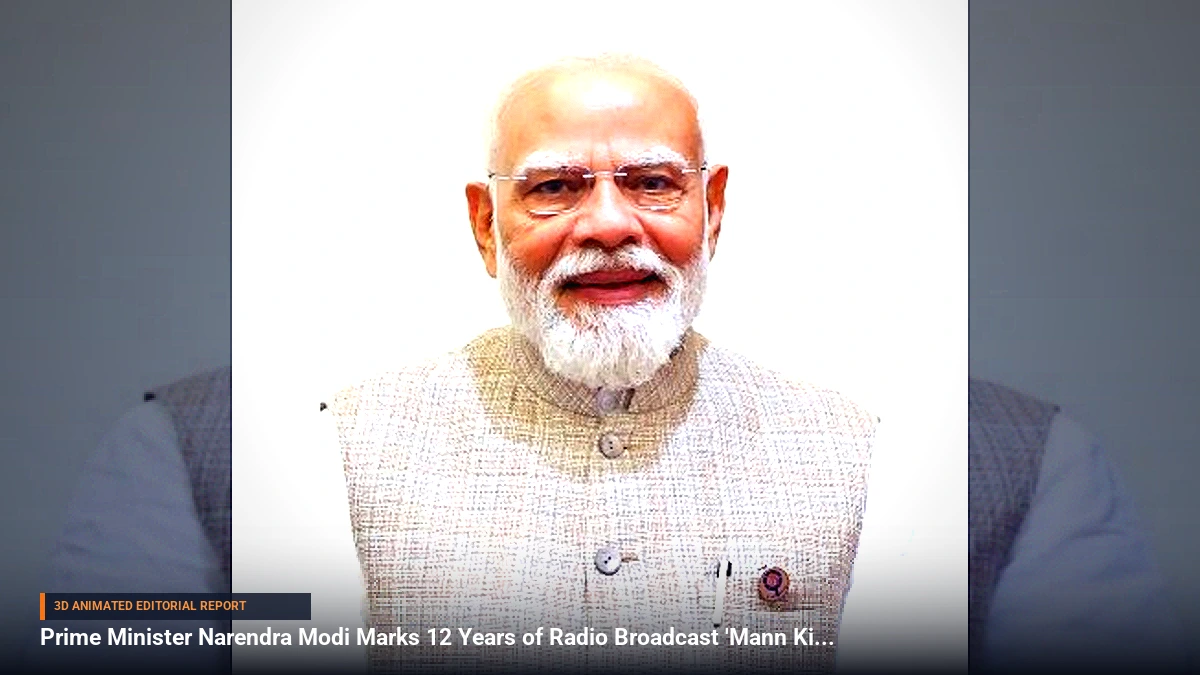
Prime Minister Narendra Modi officially marked 12 years of his signature radio broadcast program, 'Mann Ki Baat', reflecting on a decade-plus journey of communicating directly with citizens across the country. Addressing the nation through the public broadcaster, the Prime Minister described the milestone as a remarkable 'journey of inspiration' deeply rooted in the collective strength, or Lok-Shakti, of the Indian populace.
The program, which serves as a platform to spotlight unsung heroes, grassroots innovators, and social movements, continues to leverage state-owned networks to reach both urban centers and the most remote corners of the nation.
Background & Key Context
The inaugural episode of 'Mann Ki Baat' was broadcast on October 3, 2014, strategically coinciding with the auspicious festival of Vijayadashami. From its inception, the program was designed to bypass traditional media intermediaries, utilizing the extensive reach of All India Radio (Akashvani) and Doordarshan networks to establish an intimate, unfiltered channel of dialogue between the nation's highest executive office and everyday citizens.
Over the years, the program has evolved into a cultural touchstone, frequently touching upon civic duties, environmental conservation, cultural heritage, and economic self-reliance. By focusing heavily on individual success stories from small towns and rural landscapes, the broadcast has transformed ordinary citizens into celebrated national figures.
Key Takeaways
- Milestone Reached: Prime Minister Narendra Modi marked 12 years of continuous broadcasting for 'Mann Ki Baat'.
- Inaugural Date: The very first episode went live on October 3, 2014, coinciding with Vijayadashami.
- Media Infrastructure: The program relies on the wide national footprint of All India Radio (Akashvani) and Doordarshan.
- Core Philosophy: The broadcast routinely emphasizes Lok-Shakti (people's power) and highlights grassroots community achievements.
- Policy Synergy: Recent episodes have integrated timely national appeals, ranging from festive shopping localism to health initiatives like e-Sanjeevani teleconsultations.
Impact, Analysis & Global/National Reactions
Political analysts and communication experts view 'Mann Ki Baat' as a masterclass in modern political statecraft and direct-to-public engagement. In an era dominated by fast-paced digital algorithms and fragmented media ecosystems, the choice of traditional radio has proven surprisingly potent. By relying on Akashvani, the broadcast achieves deep penetration into rural demographics where television and internet access may face hurdles.
Observers note that the program has successfully shifted political discourse away from purely partisan debates toward developmental narratives, civic consciousness, and cultural pride. By celebrating localized innovations—such as rural artisans, grassroots environmentalists, and health workers—the broadcast has created a unique feedback loop between policy goals and citizen participation.
What's Next: Looking Ahead
As 'Mann Ki Baat' enters its thirteenth year, questions remain regarding how the format will continue to adapt to changing media consumption habits, particularly among younger, digitally native demographics. Broadcasters are expected to further expand multi-lingual digital streaming, podcast integration, and interactive feedback mechanisms to maintain engagement. Meanwhile, the program will likely continue serving as a primary megaphone for upcoming national campaigns, festive economic drives, and social welfare missions heading into the future.
Be the first to comment
Start a useful conversation around this story.