
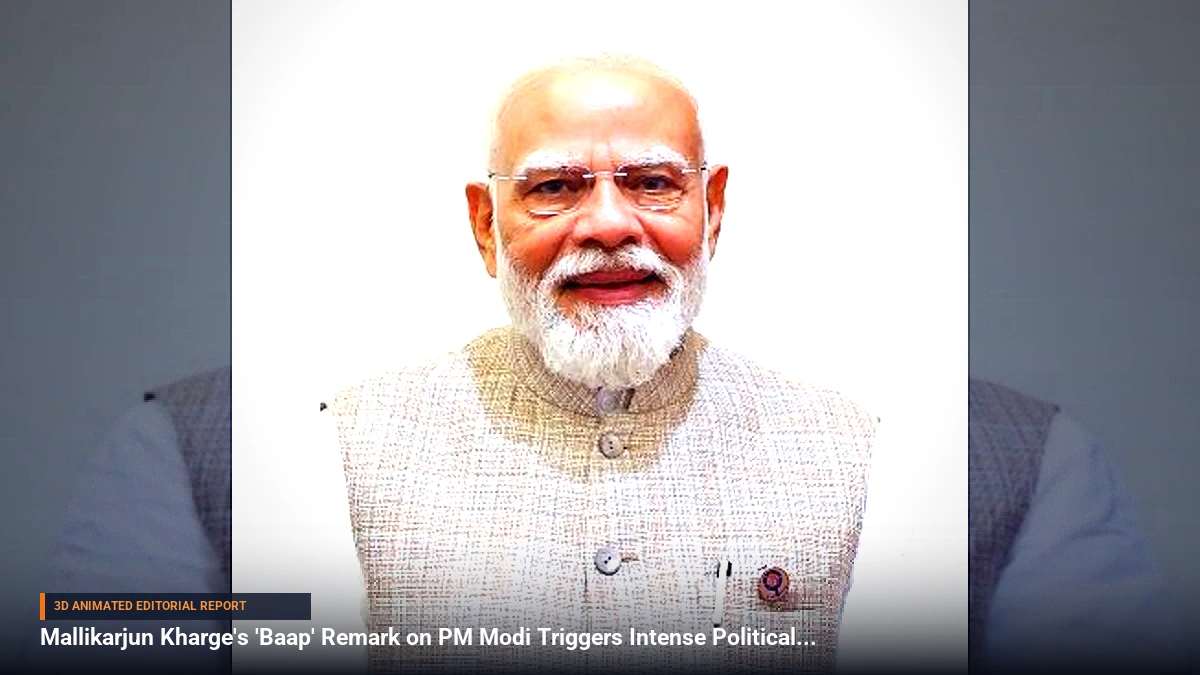
What Happened: The Core Developments
A high-stakes political controversy erupted following a public address by Congress president Mallikarjun Kharge in Patna, Bihar. During the gathering, Kharge made a fiery retort utilizing the word 'baap' in reference to Prime Minister Narendra Modi, drawing immediate national attention and severe condemnation from ruling party leaders.
The remarks quickly reverberated across electronic and social media channels, dividing political commentators and drawing sharp rebukes from top-tier administration officials. As the rhetoric intensified, different versions of the sequence of events began to emerge from attendees at the venue, attempting to contextualize the volatile exchange.
Background & Key Context
Political discourse in India has increasingly experienced heightened tensions, with verbal exchanges between the ruling Bharatiya Janata Party (BJP) and the opposition INDIA bloc frequently crossing into intense personal rhetoric. Patna, serving as a vital political crucible in Bihar, regularly hosts high-profile rallies that set the tone for regional and national electoral battles.
Incidents involving high-ranking national figures often trigger rapid cycles of claim and counterclaim, amplifying underlying ideological divisions. The latest controversy builds upon a long string of verbal skirmishes concerning leadership styles, governance models, and personal attacks exchanged during campaign trails and public conferences.
Key Takeaways
- The Controversial Statement: Congress president Mallikarjun Kharge used the term 'baap' during a public speech targeting Prime Minister Narendra Modi in Patna.
- BJP's Immediate Backlash: Senior BJP leader and Union Minister Amit Shah forcefully condemned the remark, asserting that it represents a recurring pattern of derogatory language directed at the Prime Minister by Congress leadership.
- The 'Misunderstanding' Defense: An individual present at the event, identified as Santosh Kumar, claimed the statement was taken out of context, explaining that the intended sentiment was about political persistence rather than direct abuse.
- Escalating Political Fallout: The incident has intensified the ongoing verbal warfare between the ruling administration and opposition parties ahead of upcoming legislative milestones.
Impact, Analysis & Global/National Reactions
The fallout from the Patna event was swift. Union Minister Amit Shah spearheaded the ruling party's counter-offensive, openly slamming Kharge and stating that it is "not the first time Congress has abused the Prime Minister." Institutional voices from the BJP framed the remark as symptomatic of a broader strategy of personal vitriol adopted by the opposition when facing policy debates.
Conversely, supporters and eyewitnesses attempted to defuse the brewing crisis. An attendee named Santosh Kumar stepped forward to claim that the remark was misunderstood, stating, "I was saying that unless there is a revolt, Modi will not go. Only one part of that sentence was heard and was misunderstood." Political analysts suggest that while such clarifications aim to mitigate public relations damage, the incident has already served to harden ideological battle lines.
What's Next: Looking Ahead
As political parties gear up for upcoming electoral engagements and legislative sessions, rhetoric management remains a critical focus for both camps. Observers expect the controversy to feature prominently in parliamentary debates and campaign speeches, potentially influencing ongoing discussions regarding political decorum and institutional respect. Stakeholders will closely monitor how leadership figures navigate similar public engagements to avoid further polarizing escalations.
Be the first to comment
Start a useful conversation around this story.