
What Happened: The Core Developments
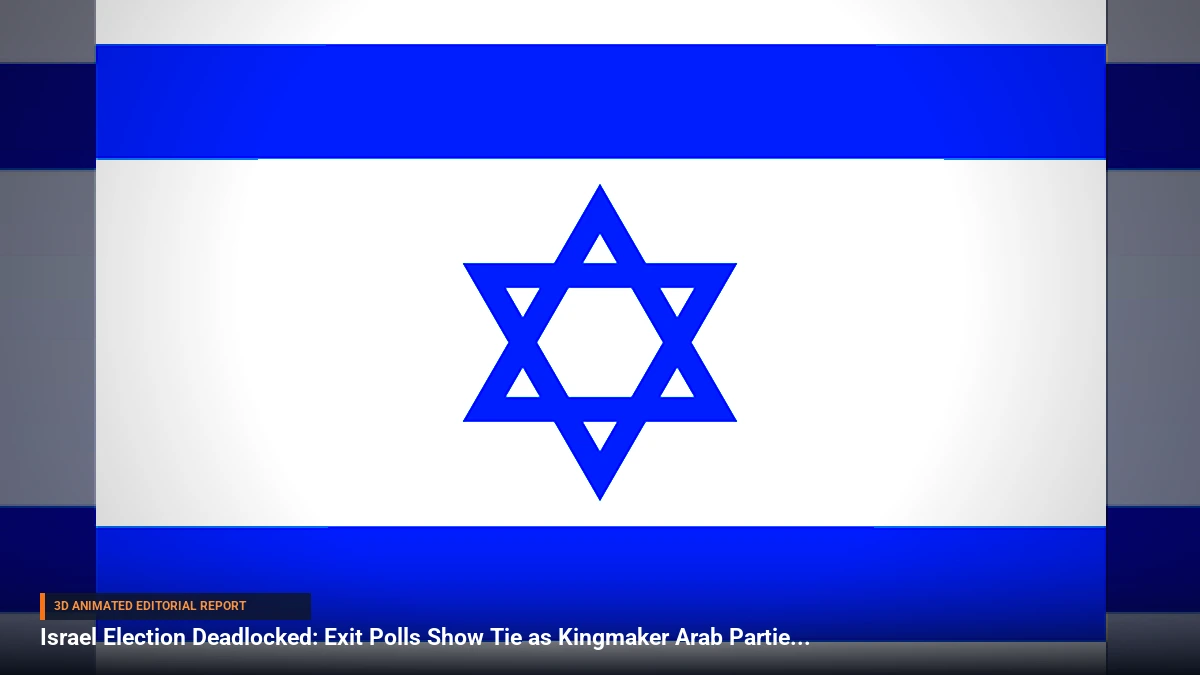
Israel’s legislative elections have culminated in a stark political stalemate, with exit polls projecting no clear winner and neither major camp securing an outright parliamentary majority. Following a day of remarkably high voter participation marked by intense domestic and international focus, the initial tallies from major television networks quickly evolved into an absolute dead heat.
While Prime Minister Benjamin Netanyahu’s right-wing and far-right coalition initially faced early projections showing a slight deficit against the opposition, updated exit polls revealed a razor-thin tie. Both Netanyahu’s political alignment and the central opposition bloc spearheaded by Gadi Eisenkot, a former chief of staff of the Israel Defense Forces, were positioned at 51 seats each in the Knesset. Despite his bloc's struggles to clear a majority threshold, Netanyahu's perennial stronghold, the Likud party, successfully maintained its position as the single largest individual party in the legislature.
Simultaneously, Arab and Palestinian parties operating within Israel experienced a notable surge in voter turnout and support. Their robust performance has thrust these factions directly into the spotlight, endowing them with prospective kingmaker influence as the arithmetic of coalition-building takes center stage.
Background & Key Context
This election cycle marks the first time Israelis have gone to the polls since the watershed events of October 7, rendering the vote arguably the most consequential in the nation’s modern history. The campaign played out against a backdrop of profound geopolitical stress, deep societal polarization, and intense debate over security policy, regional diplomacy, and executive governance.
Historically, Israeli parliamentary politics rely heavily on fractional representation, forcing major leaders to assemble multi-party coalitions to govern. With the Knesset traditionally requiring a 61-seat majority to form a stable government, neither the incumbent right-wing bloc nor Eisenkot’s centrist-leaning opposition bloc achieved a self-sustaining path to power in these exit projections. The complex dynamics are further compounded by strict in-person voting laws that prompted tens of thousands of overseas Israeli citizens to travel home, driving unprecedented engagement.
Key Takeaways
- Deadlocked Parliament: Exit polls show Benjamin Netanyahu’s bloc and Gadi Eisenkot’s opposition grouping deadlocked at 51 seats each.
- Likud Remains Largest Party: Despite the broader coalition shortfall, Netanyahu’s Likud secured its place as the single largest party in the Knesset.
- Surge in Arab Representation: Palestinian and Arab parties recorded significant gains, positioning themselves as potential kingmakers in future negotiations.
- Official Timeline: Electoral authorities have scheduled the publication of the official, certified final results for November 4.
- Historic Turnout: The election saw exceptionally high voter participation, reflecting deep public engagement in the wake of the October 7 conflict.
Impact, Analysis & Global/National Reactions
The knife-edge outcome has immediately triggered frantic behind-the-scenes maneuvering among party leaders eager to chart a path toward a viable governing coalition. Analysts note that the fragmentation of the Knesset places immense leverage in the hands of smaller factions and minority parties, whose demands will dictate the viability of any prospective administration.
Market watchers and international observers are closely monitoring the political uncertainty, recognizing that the formation—or failure—of a stable Israeli government will carry profound implications for regional stability, domestic economic policy, and ongoing foreign relations. As political operatives begin testing various coalition configurations, institutional actors have emphasized the need for patience while election officials meticulously audit the ballots.
What's Next: Looking Ahead
With the initial exit polling painting a picture of intense legislative gridlock, all eyes now turn toward the formal counting process managed by the electoral commission. The official results are officially slated for publication on November 4, giving parties a brief window to conduct informal consultations before the state president formally tasks a political figure with assembling a government.
Until the certified tallies are released and the exact distribution of smaller faction seats is finalized, Israel faces a tense interim period. The coming days will likely feature intense negotiations, strategic posturing, and high-stakes bargaining as both major blocs attempt to court swing factions and secure the elusive majority required to govern.


Be the first to comment
Start a useful conversation around this story.