
What Happened: The Core Developments
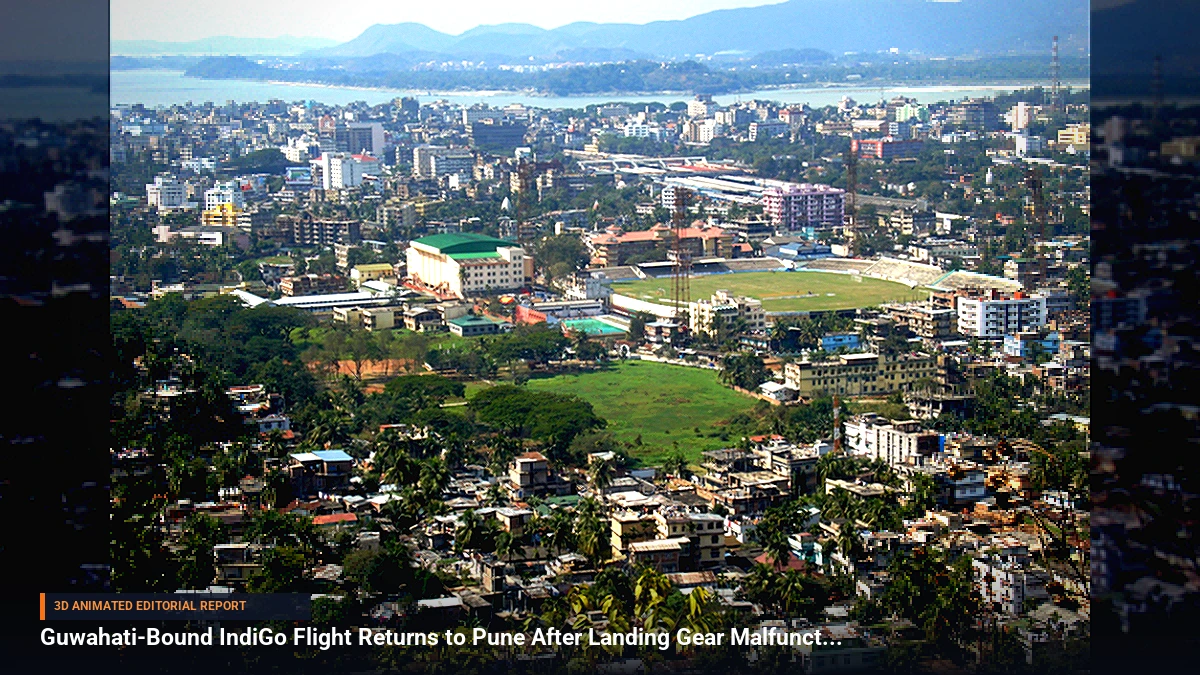
A scheduled domestic commercial flight operated by IndiGo, traveling from Pune to Guwahati, experienced a sudden mid-air technical snag when its landing gear failed to retract properly after takeoff. Faced with mechanical resistance, the flight crew made the immediate decision to abort the trajectory and return to the point of origin.
Upon receiving distress signals regarding the technical anomaly, authorities at Pune airport declared an emergency. Fire brigades, medical ambulances, and specialized emergency response teams were instantly rushed to the tarmac and put on high alert to secure a safe landing. Officials confirmed that between 192 and 193 individuals were on board the aircraft during the incident. Thanks to the prompt execution of standard operating procedures by the flight crew and ground authorities, the plane landed safely without any reported injuries.
Background & Key Context
Commercial aviation safety protocols require rigorous pre-flight checks, but mechanical components such as hydraulic actuators, locking pins, and electronic sensors governing landing gear systems remain prone to rare mechanical failures. In domestic Indian aviation, sudden technical turnbacks (commonly referred to as air-turns) trigger immediate regulatory oversight by the Directorate General of Civil Aviation (DGCA). IndiGo, being India's largest carrier, operates a vast fleet of narrow-body aircraft, making mechanical reliability and prompt fault identification central to its daily operational framework.
Key Takeaways
- Incident Route: A Pune-to-Guwahati IndiGo service was forced into an unscheduled return.
- Core Malfunction: The primary technical issue involved the landing gear failing to retract after departure.
- Passenger Status: Between 192 and 193 people were on board; all passengers and crew are completely safe.
- Emergency Response: Pune airport authorities declared a full-scale emergency, deploying fire brigades and medical units on standby.
- Safety Protocols: Quick decision-making by the flight deck averted potential complications, demonstrating adherence to emergency management guidelines.
Impact, Analysis & Global/National Reactions
Incidents involving mechanical failures on major commercial carriers invariably spark renewed discussions surrounding aircraft maintenance standards and component life-cycles within the fast-expanding South Asian aviation market. Aviation analysts point out that while modern fly-by-wire and hydraulic systems are engineered with multiple redundancies, retraction failures demand absolute precision from flight crews.
"The primary objective in any landing gear anomaly is stabilizing the aircraft and managing fuel weight before a precautionary touchdown," noted an independent aviation safety consultant. "The swift declaration of an emergency at Pune airport underscores that passenger safety takes precedence over schedule integrity." Airline representatives have emphasized that passenger well-being remains their topmost priority, with ground support teams deployed immediately to assist travelers with alternative travel arrangements.
What's Next: Looking Ahead
Following the safe landing, the aircraft has been grounded at Pune airport for detailed engineering inspections. Maintenance technicians and regulatory inspectors will conduct comprehensive checks on the hydraulic lines, electronic control units, and physical locking mechanisms associated with the landing gear assembly. A preliminary incident report is expected to be filed with aviation regulators to determine whether the fault stemmed from a component defect, sensor misread, or hydraulic pressure loss.





Be the first to comment
Start a useful conversation around this story.