
What Happened: The Core Developments
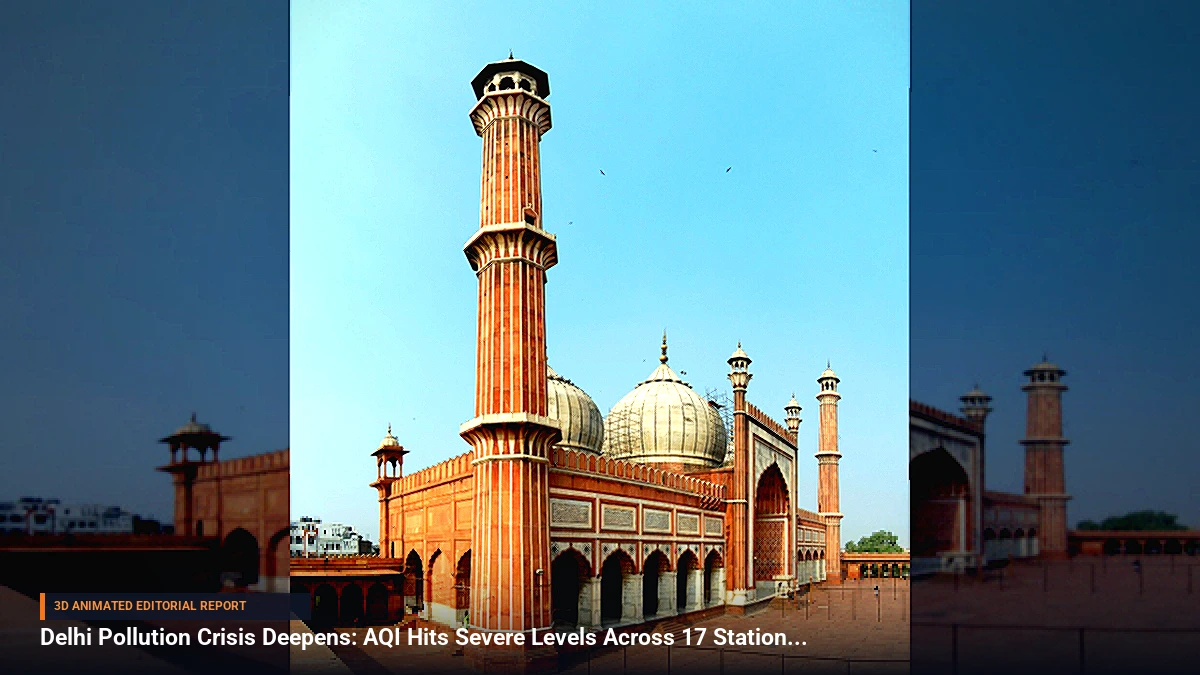
The air quality in India's national capital has deteriorated sharply, pushing public health officials into high alert. Recent reports indicate that the Air Quality Index (AQI) has reached severe levels at no fewer than 17 monitoring stations across Delhi. Citywide indices have hovered dangerously between "very poor" and "severe," with different monitoring networks registering overall figures between 352 and 419.
Among the hardest-hit areas, the Indian Institute of Technology (IIT) Delhi station recorded a staggering peak AQI of 428. A thick, persistent smoky haze continues to envelop the metropolis, severely limiting visibility and compounding health risks for millions of residents, particularly vulnerable groups such as children, the elderly, and those with pre-existing respiratory conditions.
Background & Key Context
Delhi's annual battle against toxic air is a complex, multi-layered crisis involving localized vehicular emissions, industrial pollutants, construction dust, and seasonal agricultural stubble burning in neighboring states. Over the years, municipal and federal authorities have deployed a revolving door of emergency protocols. These include the implementation of the "odd-even" vehicle rationing scheme, temporary bans on construction activities, the deployment of anti-smog guns, and theoretical discussions regarding artificial rain via cloud seeding.
However, these technological and administrative interventions have frequently run up against unyielding meteorological realities. Low wind speeds, dropping temperatures, and atmospheric inversions trap pollutants close to the ground, neutralizing the short-term impact of surface-level mitigation strategies. Furthermore, proposals for artificial rain depend heavily on specific cloud cover and moisture levels, rendering cloud seeding an unreliable quick fix.
Key Takeaways
- Severe Spikes: Seventeen monitoring stations across Delhi have crossed into the severe AQI category, signaling widespread hazardous air.
- Alarming Peaks: IIT Delhi recorded the city's highest individual reading at an oppressive AQI of 428.
- Overall Deterioration: General citywide air quality metrics continue to bounce between 352 and 419, keeping the capital firmly in the "very poor" to "severe" zones.
- Persistent Haze: A thick, smoky pall remains locked over the region due to unfavorable meteorological conditions.
- Intervention Limits: Recurring measures like odd-even rules and cloud seeding face severe limitations when pitted against large-scale atmospheric stagnation.
Impact, Analysis & Global/National Reactions
The recurring paralysis of Delhi's air quality has intensified scrutiny on the long-term viability of current environmental policies. Critics and environmental analysts argue that reactive, short-term measures are insufficient for a structural crisis that demands year-round regional coordination. Public health experts have noted a sharp surge in hospital visits for respiratory and cardiovascular ailments, placing immense strain on local healthcare infrastructure.
While policymakers frequently debate high-tech solutions—such as drone-based dust suppression and cloud seeding experiments—scientific consensus increasingly points toward the need for aggressive, preventative regional planning. This includes accelerating the transition to electric public transport, enforcing stringent industrial emission standards, and finding sustainable, economically viable alternatives to stubble burning for farmers in northwestern India.
What's Next: Looking Ahead
As meteorological forecasts offer little immediate relief—with experts warning the public not to pin excessive hopes on unseasonal or insufficient rain—attention turns to upcoming emergency administrative reviews. Municipal bodies are expected to deliberate on enforcing stricter GRAP (Graded Response Action Plan) stages, which could include broader restrictions on commercial trucks, enhanced public transit subsidies, and potential closures of educational institutions if readings remain at peak severe levels.




Be the first to comment
Start a useful conversation around this story.