
What Happened: The Core Developments
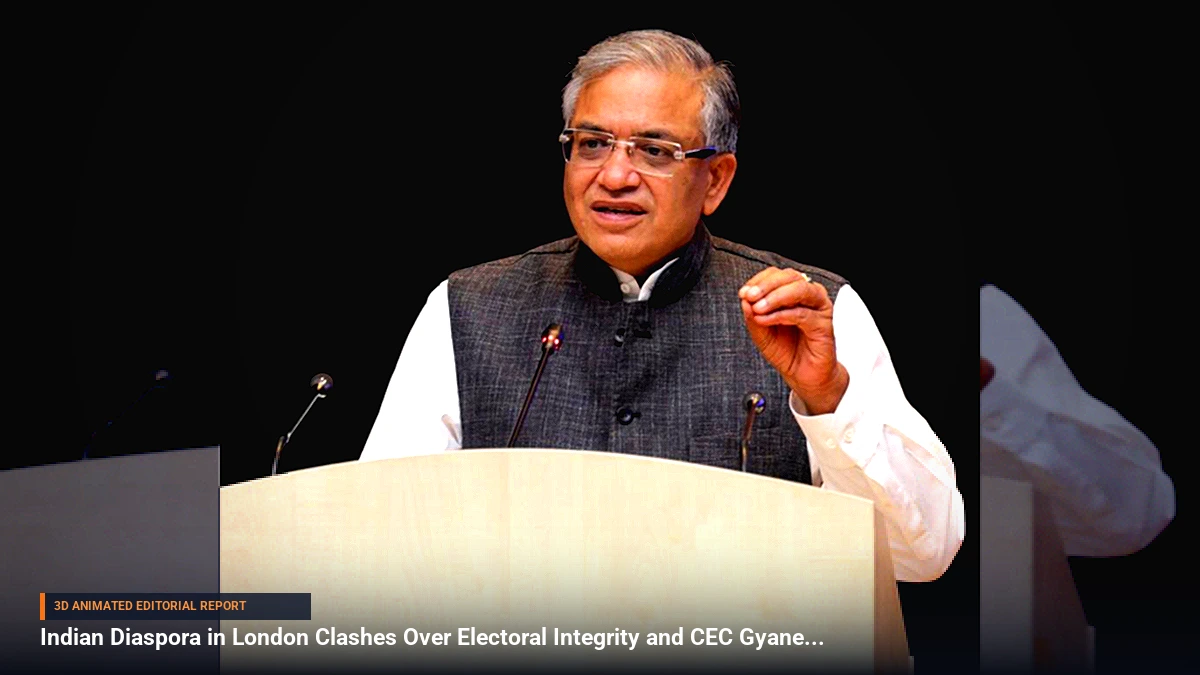
The streets outside the Indian diplomatic mission in London transformed into a flashpoint of domestic Indian political polarization. Indian student groups, leftist organizations, and various members of the diaspora gathered to protest against Chief Election Commissioner (CEC) Gyanesh Kumar and policies related to the Special Intensive Revision (SIR).
Simultaneously, a separate group of government supporters organized a robust counter-protest in the immediate vicinity. The opposing demonstrations drew substantial attention, amplified by the digital presence of prominent public figures and digital creators, such as YouTuber Dhruv Rathee, who reportedly traveled to London and publicly urged local Indians to participate in the demonstrations concerning allegations of electoral integrity.
Background & Key Context
Transnational political activism concerning Indian democratic institutions has grown increasingly common in major global hubs like London. The core of the recent grievances centers on administrative electoral processes, specifically the Special Intensive Revision (SIR) mechanism managed by the Election Commission of India. Overseas student bodies and diaspora factions have increasingly utilized foreign soil to voice dissent or show solidarity with various political factions back home.
At the same time, supporters of the current ruling administration have systematically established counter-mobilization strategies abroad. These groups aim to counter narratives they view as detrimental to India's global image, creating volatile face-offs near diplomatic installations that demand increased oversight from local law enforcement.
Key Takeaways
- Transnational Friction: Domestic Indian political debates over election administration have successfully crossed international borders, engaging diaspora communities in Western capitals.
- Direct Confrontation: Leftist student groups and government loyalists held simultaneous, opposing rallies directly outside the Indian mission in London.
- Digital Amplification: High-profile digital creators like Dhruv Rathee played a notable role in driving attendance and visibility through social media calls to action.
- Core Issues: Protests specifically targeted CEC Gyanesh Kumar and contested procedures surrounding the Special Intensive Revision (SIR).
- Diplomatic Security: Such high-intensity demonstrations place diplomatic missions under pressure, requiring delicate crowd management by local UK authorities.
Impact, Analysis & Global/National Reactions
This incident highlights a broader trend where international diaspora groups are no longer passive observers of their home country's politics. Instead, they act as active combatants in the ideological information war. Analysts note that while the protests reflect vibrant civic engagement, they also risk importing polarized domestic rhetoric into foreign academic and professional environments.
The involvement of digital influencers signifies a shift in how modern political mobilization occurs across borders, allowing instantaneous mobilization of localized student networks. While institutional responses from the Indian High Commission remain measured, the frequency of these face-offs indicates that electoral administration policies will continue to serve as a lightning rod for overseas political friction.
What's Next: Looking Ahead
As electoral scrutiny intensifies back in India, similar diaspora-led demonstrations are anticipated in other major global cities with significant Indian student populations, such as in Ireland and North America. Observers will be monitoring whether local law enforcement agencies in the UK implement stricter perimeter controls around diplomatic facilities to prevent potential security escalations during future political flashpoints.
Be the first to comment
Start a useful conversation around this story.