
What Happened: The Core Developments
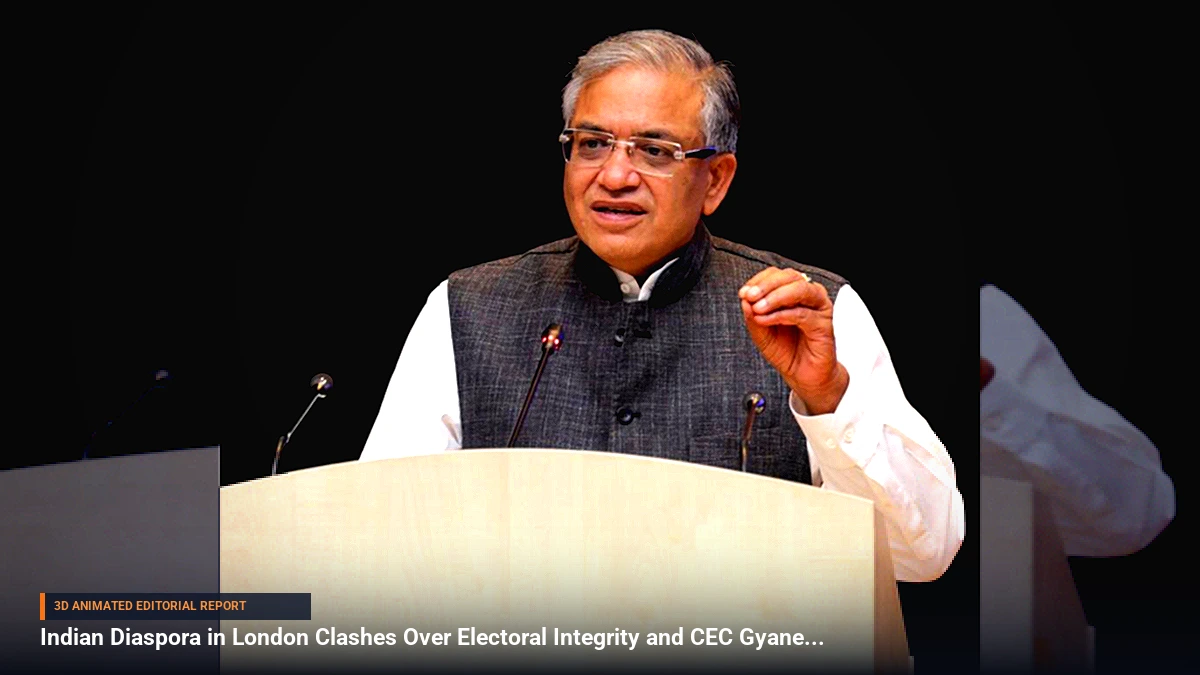
Tensions spilled onto the streets of the United Kingdom as rival factions of the Indian diaspora gathered outside the Indian mission in London. The demonstrations featured a direct confrontation between Indian student groups, leftist activists, and prominent online personalities—including YouTuber Dhruv Rathee—on one side, and supporters of the Indian government and Prime Minister Narendra Modi on the other.
The focal point of the protests was centered around controversies involving the leadership of the Election Commission of India (ECI), specifically Chief Election Commissioner Gyanesh Kumar, alongside heated debates over the Special Intensive Revision (SIR) and emerging allegations of "vote theft." What began as virtual political polarization transformed rapidly into a physical face-off on foreign soil, highlighting how deeply domestic Indian electoral debates resonate globally.
Background & Key Context
For years, political polarization within India has increasingly found an echo chamber and an active participant base in overseas diaspora communities across North America, Europe, and the UK. The latest demonstrations in London build upon growing anxieties and fierce debates surrounding institutional independence, the transparency of India's election machinery, and administrative electoral updates.
Electoral integrity has become a lightning rod for political friction both inside and outside the subcontinent. The introduction of intensive electoral roll revisions and policy adjustments by the ECI has faced intense scrutiny from opposition groups and civil society actors, setting the stage for internationalized pushback and counter-mobilizations by ruling party loyalists.
Key Takeaways
- London Face-off: Protesters and counter-protesters gathered outside the Indian mission in London, creating a tense public order situation.
- Core Issues: Demonstrations focused on Chief Election Commissioner Gyanesh Kumar and disputes surrounding the Special Intensive Revision (SIR) and "vote theft" narratives.
- Digital Influence: Prominent Indian YouTuber Dhruv Rathee traveled to London and actively urged diaspora members to join the anti-SIR demonstration.
- Counter-Mobilization: Supporters of the Indian government and Prime Minister Narendra Modi quickly organized counter-rallies to back state institutions and counter what they termed "anti-India narratives."
- Globalized Politics: The incident underscores how modern domestic Indian political fractures routinely transcend national boundaries, manifesting intensely within diaspora communities.
Impact, Analysis & Global/National Reactions
The events in London illustrate a significant shift in political engagement, where international capitals increasingly serve as stages for proxy political battles. Analysts note that the diaspora is no longer just a remote financial contributor or cultural outpost; it has become an active, polarized political constituency deeply invested in India's democratic health and institutional governance.
While student-led groups and critics utilize global platforms to voice concerns over constitutional bodies and electoral transparency, government supporters are equally organized to defend the current administration's legitimacy. This dynamic poses fresh communication and diplomatic management challenges for overseas missions, which frequently find themselves managing localized demonstrations driven by domestic Indian policy disputes.
What's Next: Looking Ahead
As political contestations inside India continue to gear up toward upcoming electoral cycles, similar diaspora mobilizations are expected to persist globally. Observers will be closely monitoring whether local law enforcement agencies in key Western capitals implement stricter guidelines for demonstrations near diplomatic missions, and how political figures leverage digital and physical platforms abroad to sway public opinion back home.
Be the first to comment
Start a useful conversation around this story.