
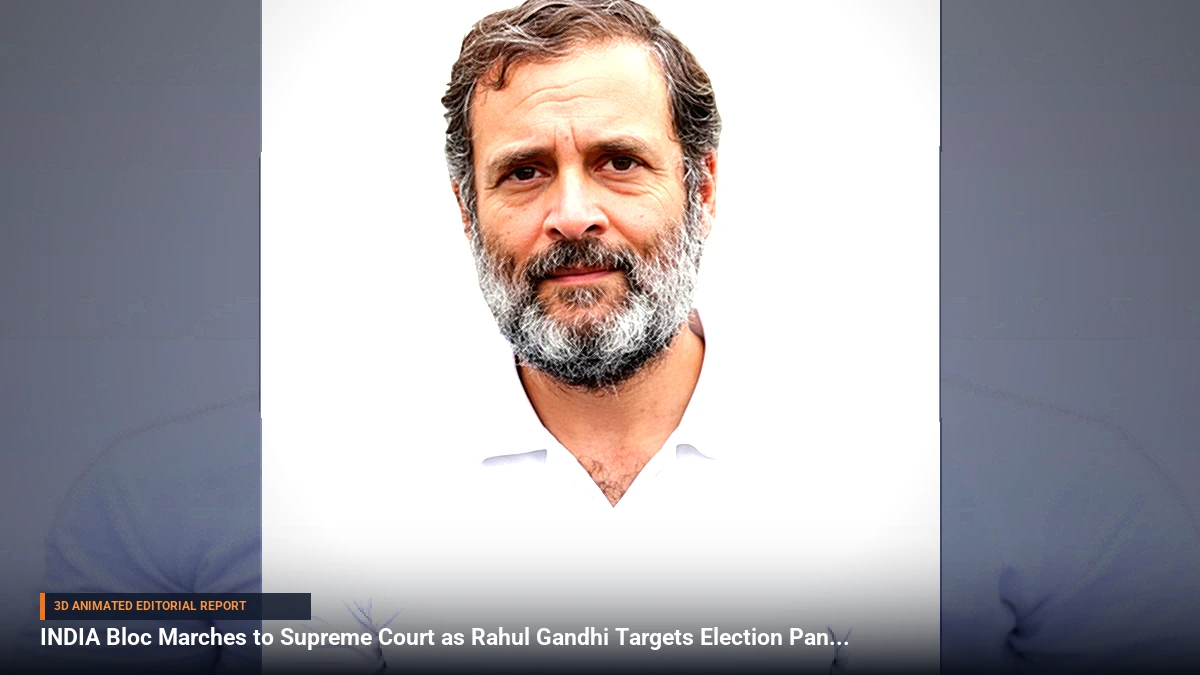
What Happened: The Core Developments
The political landscape in New Delhi intensified as opposition figures under the INDIA bloc banner organized a massive march culminating near the Supreme Court. Spearheaded by Leader of the Opposition Rahul Gandhi, the demonstration directly targeted the Election Commission of India, pressing demands centered around the resignation of Chief Election Commissioner Gyanesh Kumar and systemic reforms in the electoral panel's functioning.
The march drew substantial crowds, including prominent civil society members and students. Following the mobilization, Gandhi hosted a high tea for INDIA bloc leaders, emphasizing that unified political and grassroots resistance would persist as an ongoing nationwide movement rather than isolated events.
Background & Key Context
Tensions between the opposition and federal electoral authorities have escalated over concerns regarding electoral transparency, electronic voting machines (EVMs), and administrative oversight. The INDIA bloc has consistently accused the establishment of undermining independent constitutional bodies. Simultaneously, letters submitted by political leaders—including communications concerning Punjab and EVM integrity sent by Rahul Gandhi and John Brittas—faced procedural guidance from the Supreme Court registry, which advised converting informal letters into formal judicial applications.
Key Takeaways
- Supreme Court March: INDIA bloc leaders and supporters marched to the apex court to register deep dissatisfaction with the Election Commission.
- CEC Demand: Protesters and opposition leaders reiterated calls targeting Chief Election Commissioner Gyanesh Kumar.
- Unified Resistance: Rahul Gandhi announced that political and people's resistance will continue as a consolidated national campaign.
- Legal Procedural Shifts: The Supreme Court registry advised opposition figures to translate correspondence regarding EVMs and regional concerns into formal legal petitions.
- Symbolic Theater: The demonstration generated viral media moments involving superhero imagery, which quickly became a focal point of political crossfire.
Impact, Analysis & Global/National Reactions
The protest served as a powerful display of opposition solidarity, injecting fresh energy into the anti-establishment narrative. However, it also provided ample ammunition for the ruling Bharatiya Janata Party (BJP). During the march, a lighthearted moment occurred when Rahul Gandhi was seen assisting Congress Chief Mallikarjun Kharge with a Batman mask, a gesture prompted by youth participants.
The ruling party was swift to capitalize on the imagery. BJP representatives launched political counter-attacks, mocking the opposition's reliance on pop culture motifs, with sharp remarks stating that Delhi requires governance rather than cinematic superhero routines.
What's Next: Looking Ahead
As political battlelines harden, attention shifts to the judiciary. With the Supreme Court registry instructing leaders to formalize their letters into petitions, the confrontation is expected to transition from street protests to formal courtroom battles. The INDIA bloc has directed its MPs and key stakeholders to remain stationed in Delhi, signaling that both parliamentary pressure and public mobilization will remain elevated in the coming weeks.

Be the first to comment
Start a useful conversation around this story.