
What Happened: The Core Developments
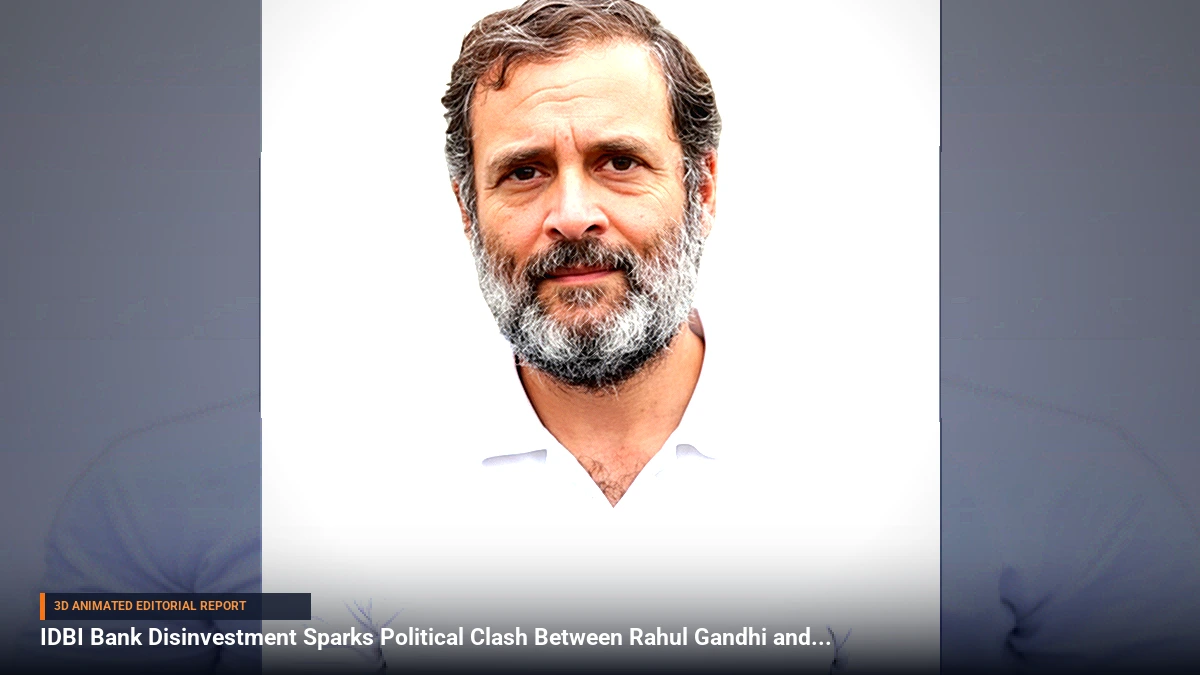
The proposed strategic disinvestment of IDBI Bank has ignited a fierce political confrontation in India. The focal point of the controversy centers on the central government's decision to offload its major equity stake in the financial institution to Canadian multinational conglomerate Fairfax.
Senior opposition figure and Member of Parliament Rahul Gandhi voiced strong opposition to the transaction, arguing that public sector banks are vital nation-building assets rather than commercial properties meant for private liquidation. Concurrently, Gandhi explicitly threw his weight behind the institution's workforce, stating, "I stand with employees."
The resistance is not confined to political corridors. The IDBI Bank employees' forum has formally come forward to challenge the majority stake transfer. Representing the collective workforce, the union has actively opposed the transaction and formally sought an exhaustive parliamentary review of the divestment proceedings.
Background & Key Context
IDBI Bank holds a unique position in India's banking architecture, having transitioned from a development finance institution into a commercial bank. Over the past decade, the institution underwent substantial structural realignments following periods of severe financial distress and non-performing asset (NPA) accumulations.
Disinvestment discussions involving IDBI Bank have been on the anvil for several years as part of the broader administrative agenda to streamline state-owned enterprises and reduce fiscal deficits through strategic asset sales. However, selling a controlling public sector bank stake to a foreign-backed private entity like Fairfax has consistently raised complex questions regarding economic nationalism, banking sector sovereignty, and the job security of thousands of public banking professionals.
Key Takeaways
- Major Disinvestment Move: The central government is moving forward with selling its stake in IDBI Bank to the Canadian firm Fairfax.
- Political Pushback: Opposition leader Rahul Gandhi has criticized the sale, asserting that public banks are essential tools for national development rather than disposable corporate assets.
- Employee Opposition: The IDBI Bank employees' forum has officially opposed the majority stake transition and demanded a comprehensive parliamentary review.
- Government Defense: Finance Minister Nirmala Sitharaman strongly defended the administration's policy, pointing out that the bank was inherited in severely distressed financial condition.
- Broader Implications: The controversy highlights ongoing national debates over the privatization of critical financial infrastructure and the balancing act between fiscal policy and labor protections.
Impact, Analysis & Global/National Reactions
The transaction has drawn sharp reactions across the Indian political and economic landscape, marking yet another major flashpoint between the ruling administration and the opposition.
Reacting swiftly to Rahul Gandhi's remarks, Finance Minister Nirmala Sitharaman hit back, asserting that the institution was handed over to the current government in a remarkably bad shape. The administration maintains that the restructuring and subsequent disinvestment are vital steps designed to infuse modern capital, enhance operational efficiencies, and secure the long-term viability of the bank after years of state-funded life support.
Conversely, labor representatives and political critics argue that privatizing major financial institutions compromises public-interest lending and weakens economic safety nets. Independent analysts note that the fierce pushback from bank unions adds regulatory and procedural hurdles that could potentially stretch the timeline of the transaction.
What's Next: Looking Ahead
As the political standoff intensifies, attention shifts to how the administration handles the formal demands for parliamentary scrutiny raised by employee unions. Stakeholders and market observers will closely monitor subsequent announcements regarding the precise valuation, transactional timelines, and regulatory clearances required to finalize the Fairfax acquisition. Whether political pressure and union resistance will alter the trajectory of the disinvestment remains a critical question for India's ongoing economic reform agenda.





Be the first to comment
Start a useful conversation around this story.