
What Happened: The Core Developments
The regional confrontation between Saudi Arabia and Yemen's Houthi movement has escalated significantly, characterized by a dual campaign of conventional aerial bombardments and psychological information warfare. Saudi defense systems successfully intercepted a barrage of incoming missiles and drones targeting vital urban and industrial centers, including the capital city of Riyadh and various locations across the kingdom's southern region.
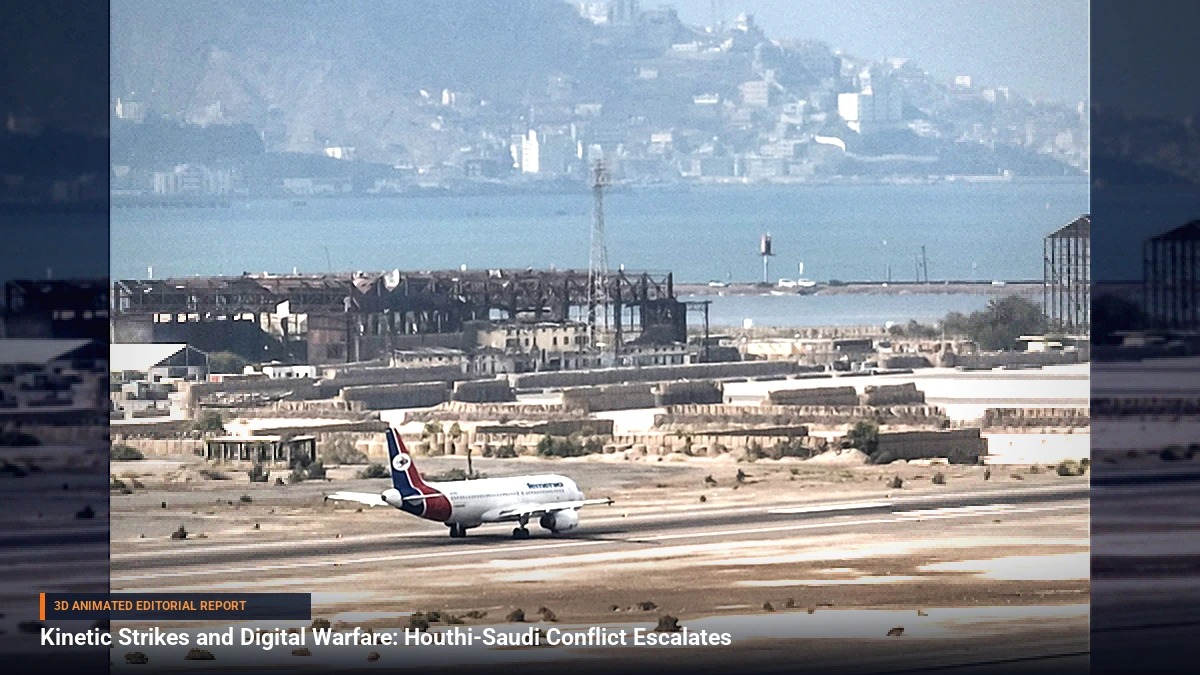
The conflict further intensified as Saudi authorities reported multiple missile interceptions over the revered holy cities of Mecca and Medina. This claim sparked immediate and sharp denials from the Houthi leadership, who publicly labeled the assertion a "huge lie" designed to rally regional sentiment against them. Concurrently, the Houthis expanded their operational theater within Yemen, carrying out direct strikes against strategic infrastructure in Aden, including the city's international airport and a critical local coastguard base.
Background & Key Context
This latest flare-up represents a dangerous intensification of a long-running conflict that has heavily impacted the Arabian Peninsula's stability. While traditional military engagements between the Saudi-led coalition and Houthi forces have fluctuated over the years, the current phase introduces a sophisticated hybrid warfare model.
Beyond the skies, the Houthi movement has adopted unconventional digital tactics, notably weaponizing newly released U.S. Department of Justice documents concerning Jeffrey Epstein. By integrating these sensitive foreign archival records into their domestic and international messaging streams, the group has sought to construct complex propaganda narratives aimed at undermining Saudi diplomatic standing and public perception.
Key Takeaways
- Multi-City Aerial Assault: Saudi Arabia intercepted drones and missiles targeting Riyadh, southern districts, and debris falling near Mecca and Medina.
- Fierce Disputed Claims: Saudi reports of attacks near Islam's holiest sites were vehemently denied by Houthi spokespersons as fabricated propaganda.
- Domestic Yemeni Fronts: The Houthis extended their kinetic campaign domestically, striking strategic assets in Aden such as the airport and coastguard facilities.
- Information Warfare Innovation: The conflict has expanded into the digital realm, with Houthi networks utilizing unrelated U.S. DOJ archival documents as messaging tools.
- Hybrid Strategy Execution: The escalation highlights how modern regional conflicts seamlessly blend physical missile fire with psychological information operations.
Impact, Analysis & Global/National Reactions
International analysts note that the integration of digital information operations with kinetic warfare marks a profound shift in how non-state actors project power. By leveraging Western legal and archival disclosures, the Houthi movement attempts to bypass traditional regional media filters to reach global audiences.
Defense strategists warn that the targeting of high-value infrastructure and the sensitive friction surrounding Mecca and Medina risk pulling regional diplomacy backward, threatening fragile peace initiatives. Civil defense authorities across Saudi Arabia have maintained high alert statuses, issuing warnings regarding potential dangers in major metropolitan and religious hubs.
What's Next: Looking Ahead
As kinetic engagements continue to test regional air defense networks, diplomatic channels face mounting pressure to de-escalate the military friction before it triggers broader retaliatory cycles. Observers will be closely monitoring both the security posture of Saudi coalition forces and the evolving digital narratives circulating across social and international media channels.





Be the first to comment
Start a useful conversation around this story.