

What Happened: The Core Developments
A massive wave of public demonstrations has taken hold across multiple European countries, including France, Italy, Spain, Portugal, and Albania. Frequently spearheaded by Generation Z activists and student groups, the protesters have taken to the streets to demand urgent solutions to deteriorating socioeconomic conditions.
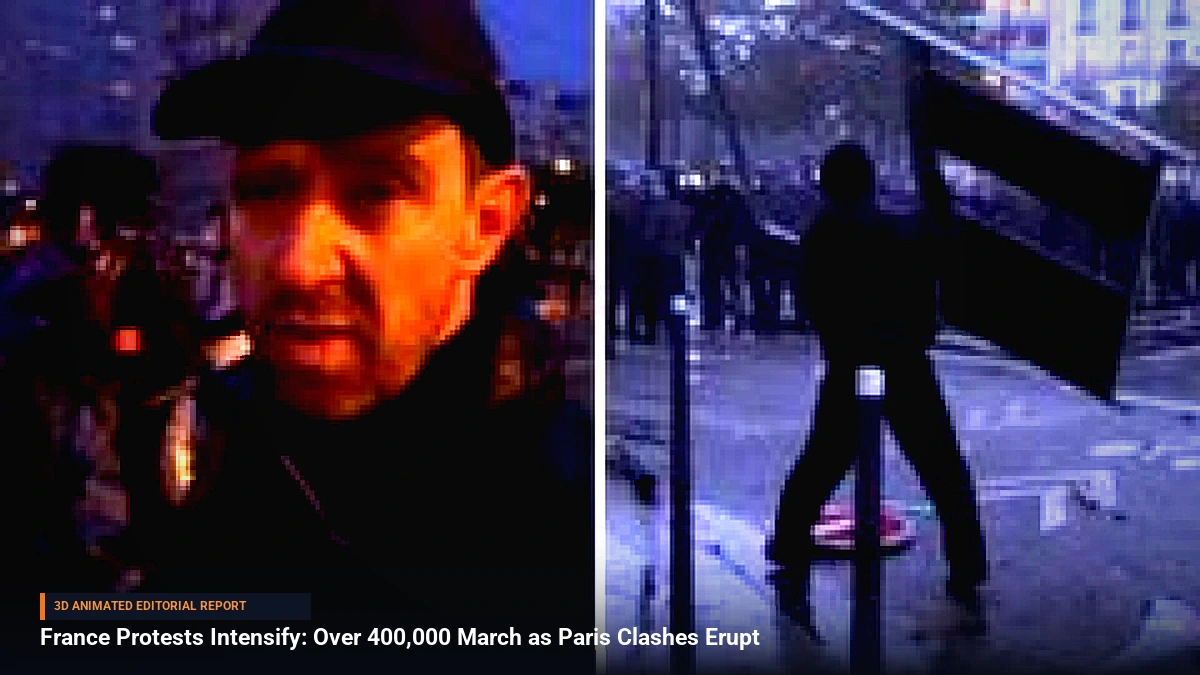
In France, the unrest prompted the government to mobilize a massive security apparatus, deploying 70,000 police officers nationwide. Despite the heavy security presence, demonstrations turned volatile in various sectors, resulting in 135 arrests in France alone. Simultaneously, Italian law enforcement conducted raids in cities like Milan, while public demonstrations unfolded concurrently in Spain and Albania.
Simultaneously, regional tensions flared outside of Europe. In Arunachal Pradesh, India, violent protests broke out over the controversial Siang dam project. The demonstrations saw widespread property damage, including an NHPC office set ablaze and the targeting of local leaders' homes, leaving dozens of security personnel and protesters injured.
Background & Key Context
While the simultaneous eruptions share a temporal footprint, observers emphasize that the root causes are deeply rooted in distinct local grievances. In Spain, surging housing costs have locked younger demographics out of stable living conditions. In Italy and France, public frustration centers around skyrocketing living costs and the degradation of public services. Meanwhile, protests in nations like Serbia and Albania have been galvanized by deep-seated anger over political corruption and institutional accountability—sparked in some cases by infrastructure disasters like deadly railway-station canopy collapses.
Political analysts note that the general public mood has undergone a structural shift. The prevailing societal sentiment has flipped from a belief that "this is broken, but things will get better" to a grim consensus that "this is broken and things will get worse." This loss of faith in traditional political machineries has created fertile ground for spontaneous, youth-led mass movements.
Key Takeaways
- Transnational Scale: Protests have simultaneously engulfed multiple European nations, including France, Italy, Spain, Portugal, and Albania.
- Gen Z Leadership: Younger generations are spearheading the demonstrations, expressing profound anxiety over their long-term economic prospects and social stability.
- Divergent Local Triggers: While grievances vary by country—housing in Spain, living costs in France and Italy, and corruption in the Balkans—they collectively reflect a broader erosion of trust.
- Heavy State Response: France deployed 70,000 officers and recorded 135 arrests, while Italian authorities executed targeted raids in Milan.
- Infrastructure Conflict in Asia: In Arunachal Pradesh, India, anti-dam sentiments boiled over into violent clashes, resulting in extensive property destruction and numerous injuries.
Impact, Analysis & Global/National Reactions
Commentators and political columnists suggest that these movements represent an undeniable crisis of political responsiveness. Rokhaya Diallo, writing on European social dynamics, noted that these uprisings target the very foundations of a decent life and an individual's ability to shape their future. Fellow commentator Alexander Hurst added that modern citizens feel an acute "loss of control" as political systems prove incapable of handling overlapping crises.
Furthermore, external figures have seized upon the European unrest to push partisan narratives. Former US President Donald Trump publicly claimed that France was "burning down" due to its immigration policies, asserting without evidence that the demonstrations were unrelated to educational or economic factors. Local authorities and independent fact-checkers have firmly pushed back against these assertions, pointing instead to systemic domestic grievances.
What's Next: Looking Ahead
As governments grapple with the dual pressures of maintaining public order and addressing legitimate civic complaints, the pressure on ruling administrations is mounting. Upcoming electoral cycles in Europe will likely feel the shockwaves of this youth-led discontent, forcing mainstream political parties to formulate credible responses to housing shortages, inflation, and institutional corruption. Meanwhile, infrastructural projects like the Siang dam in India face heightened scrutiny and localized resistance, signaling that authorities will need to navigate complex environmental and social opposition in future development planning.




Be the first to comment
Start a useful conversation around this story.