
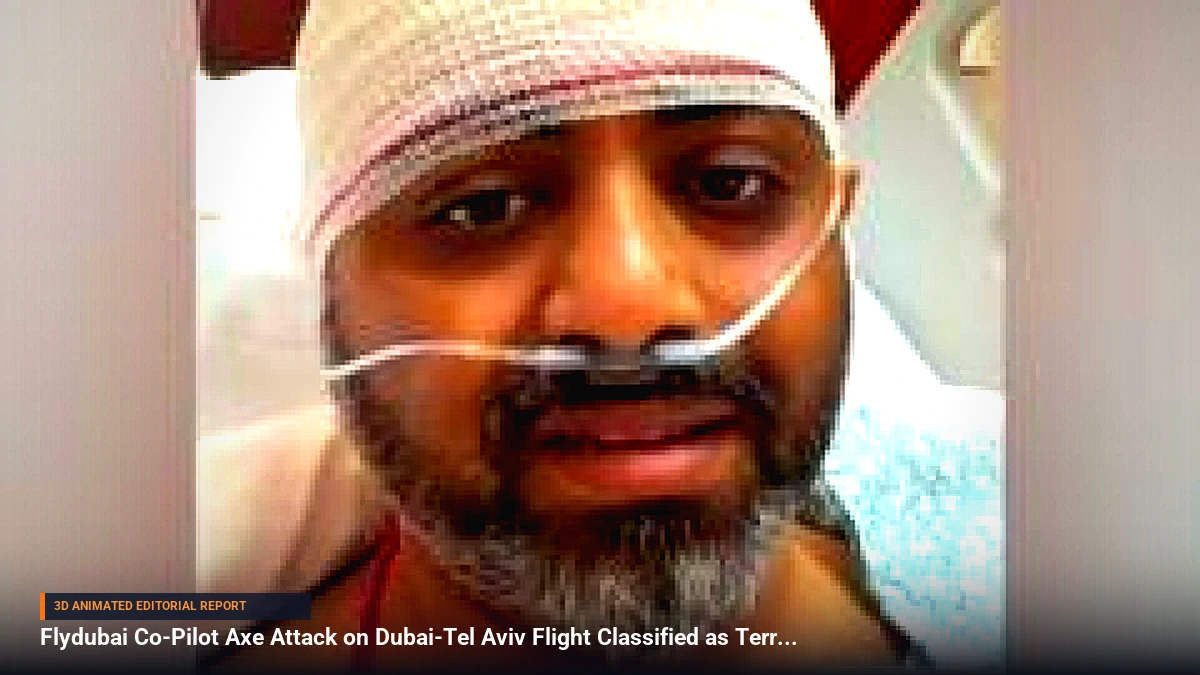
What Happened: The Core Developments
Commercial aviation security protocols faced an unprecedented test following a violent in-flight incident aboard a Flydubai flight operating between Dubai and Tel Aviv. According to verified reports from international officials, the co-pilot launched a sudden and brutal physical assault against the flight captain utilizing a standard-issue emergency crash axe located inside the cockpit.
Media outlets identified the accused co-pilot as Hamam al-Hammami. The sudden attack threatened the structural and operational integrity of the aircraft mid-flight, forcing crew members and alert passengers to intervene rapidly to subdue the assailant and prevent a catastrophic disaster. While specific details regarding the exact flight number and the precise medical condition of the injured captain remain closely guarded, aviation authorities confirmed that swift intervention by individuals on board thwarted what could have been a fatal downing of the jetliner.
Background & Key Context
Commercial airline cockpits are designed as highly secure, fortified sanctuaries intended to prevent unauthorized entry from the passenger cabin. However, insider threats—specifically involving rogue crew members who already possess security clearances and authorized access to flight deck controls—present a uniquely difficult challenge for global aviation security frameworks.
Preliminary investigations and regional reports have raised urgent questions regarding pilot vetting procedures, psychological evaluations, and intelligence-sharing between Middle Eastern civil aviation authorities. The route connecting Dubai and Tel Aviv carries profound geopolitical and commercial significance, heightening the sensitivity of any security breach occurring on this specific flight corridor.
Key Takeaways
- Terrorist Classification: UAE authorities officially classified the mid-air cockpit attack as a targeted act of terror.
- Assailant Identified: Media outlets and official briefings named the co-pilot involved in the assault as Hamam al-Hammami.
- Weapon Used: The co-pilot utilized an emergency crash axe, a standard safety tool required to be housed within commercial cockpits.
- Passenger and Crew Intervention: Quick action by off-duty personnel and passengers successfully stopped the suspect from seizing complete control of the aircraft.
- International Fallout: The incident has triggered immediate reviews of pilot recruitment, vetting standards, and cockpit access controls across regional carriers.
Impact, Analysis & Global/National Reactions
The classification of the incident as a terrorist act by United Arab Emirates officials marks a severe escalation in how aviation authorities view insider threats. Security analysts point out that while doors are heavily armored against external hijackers, systems designed to monitor internal psychological distress or radicalization among active flight crew remain dangerously opaque.
Aviation security experts have called for an immediate overhaul of international background check standards. Stakeholders across the Middle Eastern aviation market are under intense pressure to reassure global regulators and traveling publics that commercial flights remain secure against rogue operational personnel.
What's Next: Looking Ahead
As international aviation bodies, including the International Civil Aviation Organization (ICAO), review the incident, airlines are expected to implement tighter internal monitoring protocols. Investigators will likely focus on tracing al-Hammami's background, employment history, and any potential indicators that went unnoticed during his vetting process. Further regulatory updates regarding cockpit tool storage—specifically emergency crash axes—are anticipated in upcoming global safety summits.






Be the first to comment
Start a useful conversation around this story.