
What Happened: The Core Developments
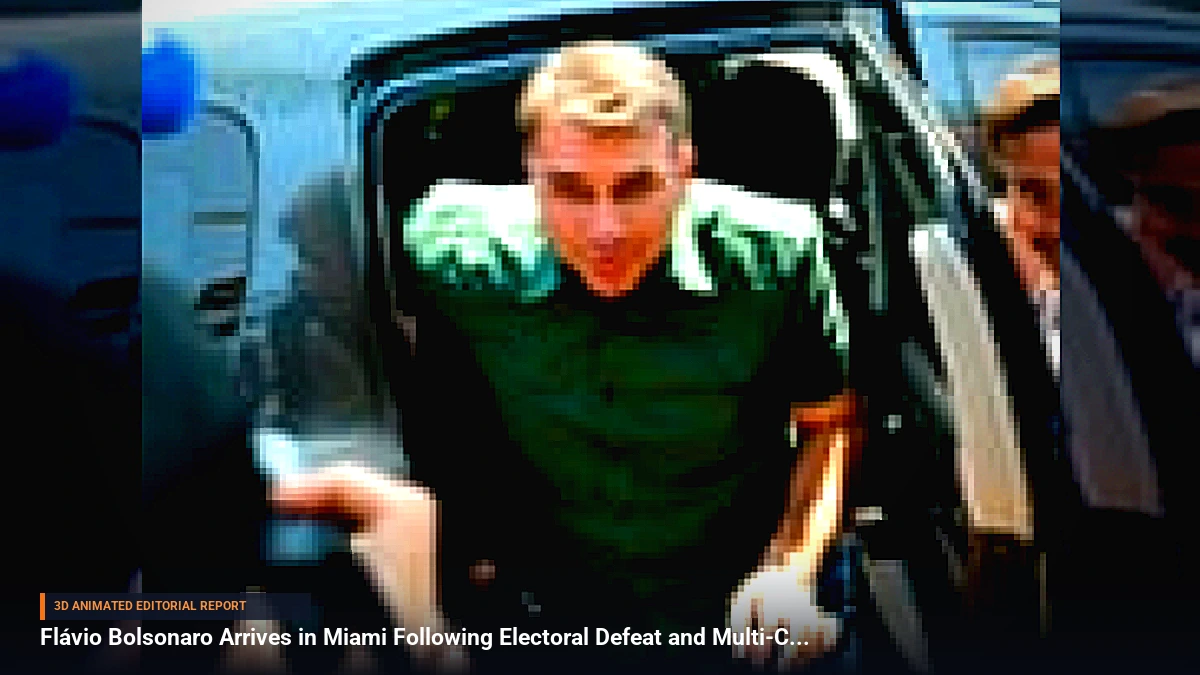
Following his defeat in the Brazilian presidential election runoff to incumbent Luiz Inácio Lula da Silva, far-right senator Flávio Bolsonaro made a swift and secretive exit from South America. After disappearing from public view for more than 24 hours following Sunday's election results, migration records confirmed he crossed the border into Argentina by land on Tuesday night.
From Argentina, Bolsonaro and his family traveled north, subsequently boarding a private jet out of Guayaquil, Ecuador, bound for the United States. The Gulfstream IV aircraft landed in Miami, Florida, where Bolsonaro and his family disembarked and departed the airport under a heavy police escort without addressing waiting journalists.
Background & Key Context
The dramatic exit occurs against a backdrop of escalating political and legal friction in Brazil. Prior to his departure, reports indicated that the Brazilian Supreme Court had initiated moves regarding passport surrenders amid ongoing scrutiny. Bolsonaro’s decision to bypass formal domestic channels and seek refuge abroad echoes the broader regional migration patterns of political figures facing shifting judicial landscapes.
Concurrently, diplomatic channels between Washington and regional actors played a pivotal role in the relocation. The US State Department confirmed that visas would be granted to Bolsonaro and his family, following a high-level administrative approval or offer involving Donald Trump, who publicly questioned the legitimacy of the Brazilian election.
Key Takeaways
- Electoral Defeat: Flávio Bolsonaro lost Sunday’s presidential runoff election to incumbent President Luiz Inácio Lula da Silva.
- Multi-Country Transit: Bolsonaro fled Brazil via an overland border crossing into Argentina, followed by a connecting flight out of Ecuador.
- Arrival in the US: A private jet carrying Bolsonaro and his family landed in Miami, Florida, where they left the airport under police escort.
- Domestic Backlash: Brazilian President Luiz Inácio Lula da Silva strongly denounced the departure, labeling it a "shameful" maneuver.
- US Visa Facilitation: The US State Department and Washington leadership facilitated entry by approving visas for Bolsonaro and his family.
Impact, Analysis & Global/National Reactions
The maneuver has triggered immediate political fallout across Latin America and the United States. Brazilian President Luiz Inácio Lula da Silva did not mince words, openly criticizing the departure as an evasion of democratic accountability and labeling the sudden exit as shameful.
Conversely, the decision by Washington to grant entry visas highlights ongoing geopolitical realignments. Political analysts note that the intervention—reportedly backed by Donald Trump, who characterized the Brazilian election as "very strange"—demonstrates how domestic political grievances in South America can quickly become entangled in broader US foreign policy and partisan rhetoric.
What's Next: Looking Ahead
As Flávio Bolsonaro settles in Florida, legal and political analysts are monitoring potential repercussions in Brasilia. Questions remain regarding whether Brazilian authorities will seek formal extradition or international cooperation requests, particularly concerning any active judicial restrictions or supreme court directives regarding travel and passport retention.
Domestically, President Lula's administration faces the task of consolidating governance and addressing the polarized political climate left in the wake of the hard-fought election cycle, while international observers watch closely to see how Washington's accommodation of the defeated candidate impacts diplomatic relations between the US and Brazil.



Be the first to comment
Start a useful conversation around this story.