
What Happened: The Core Developments
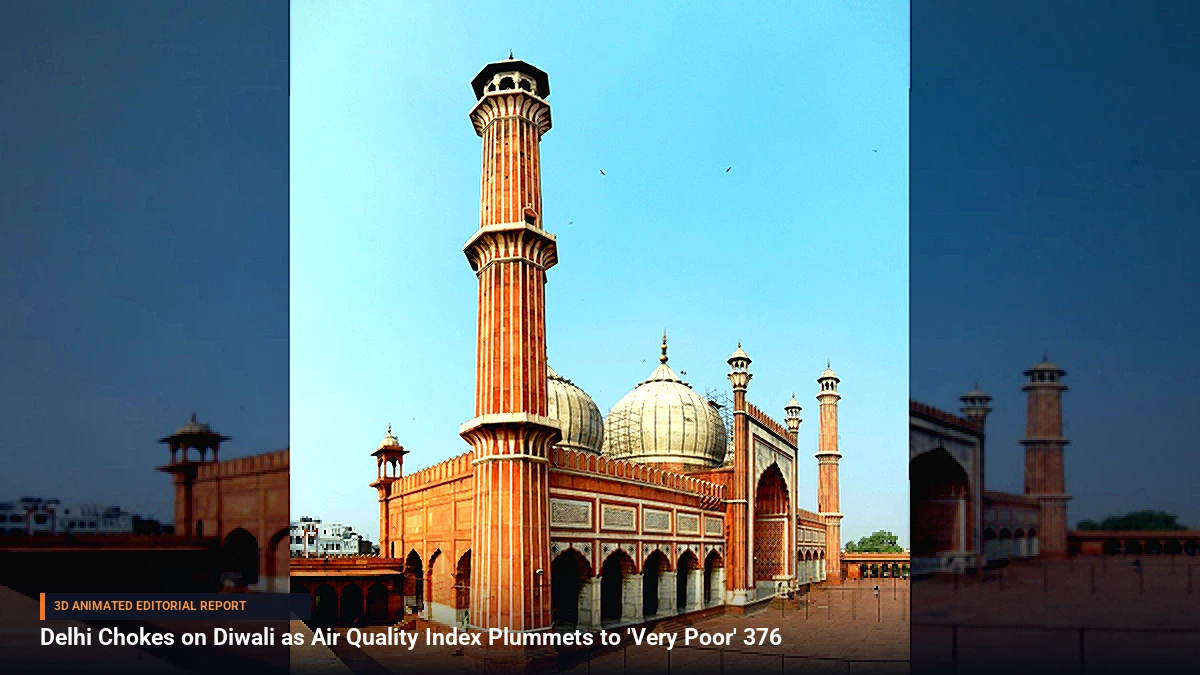
Delhi once again found itself engulfed in a thick, toxic blanket of smog as the Air Quality Index (AQI) touched an alarming 376, firmly cementing a 'very poor' rating across the capital on the day of Diwali. The situation deteriorated rapidly as night fell, with numerous local monitoring stations reporting readings crossing into the 'severe' bracket.
Ahead of and during the festivities, residents across the National Capital Region (NCR) woke up to severely compromised visibility and heavy particulate haze. Official updates from the Air Quality Early Warning System (EWS) confirmed that a large number of stations—spanning up to nearly twenty distinct monitoring zones—flashed hazardous red and maroon alerts, signaling severe health risks for millions of citizens.
In response to the plummeting air metrics, administrative bodies swiftly activated Stage-III anti-pollution measures under the Graded Response Action Plan (GRAP). These protocols bring a slew of emergency restrictions into play, compounding existing curbs with heightened enforcement targeting localized pollution sources, dust mitigation lapses, and unauthorized vehicular operations.
Background & Key Context
Seasonal spikes in air pollution have become an annual crisis for Delhi-NCR, typically triggered by an unfortunate convergence of meteorological shifts and anthropogenic activities. As winter establishes its grip over northern India, falling temperatures and stagnant surface winds create an inversion layer that traps airborne pollutants close to the ground.
Compounding this geographical vulnerability is the peak agricultural stubble-burning season in neighboring agrarian states, where millions of acres of crop residue are torched concurrently. When combined with dense urban traffic emissions, local construction dust, and celebratory bursting of firecrackers during festivals, the atmospheric capacity of the region reaches a saturation point, transforming the city into a literal gas chamber.
Over the past decade, successive governments, judicial bodies, and environmental panels have attempted to curb the crisis through a mix of firecracker bans, smog towers, and traffic rationing. However, enforcement gaps and persistent regional cross-border factors continue to render these measures insufficient during peak festival windows.
Key Takeaways
- Alarming AQI Readings: Delhi recorded an overall AQI of 376 on Diwali, categorizing the air as 'very poor' overall, with multiple pockets crossing into 'severe' levels.
- Widespread Impact: At least twenty dedicated monitoring stations reported severe localized pollution on Deepavali night, trapping residents in a dense layer of hazardous smog.
- Emergency Protocols Active: Stage-III anti-pollution measures under GRAP have been fully enforced, bringing strict additional curbs to mitigate worsening conditions.
- Compounding Factors: The crisis is driven by a dangerous mix of winter weather inversions, peak stubble burning, vehicular density, and festival emissions.
- Bleak Short-Term Forecast: Early warning forecasts indicate that air quality will likely fluctuate between 'severe' and 'very poor' categories over the coming days.
Impact, Analysis & Global/National Reactions
The recurring crisis has sparked intense debate among environmental scientists, public health advocates, and policymakers regarding the efficacy of reactive emergency measures versus long-term systemic reforms. Medical professionals have warned of surging emergency room visits for acute respiratory distress, chronic obstructive pulmonary disease (COPD), and cardiovascular complications, particularly among vulnerable demographics such as children and the elderly.
Environmental analysts note that while firecracker restrictions and localized curfews generate short-term visibility improvements, they fail to address the systemic interstate coordination required to manage crop residue burning effectively. Public frustration continues to mount as residents question whether annual emergency declarations are merely band-aids on a systemic environmental catastrophe.
What's Next: Looking Ahead
According to meteorological models and the EWS outlook, Delhi's air quality is anticipated to remain trapped in the 'severe' to 'very poor' range for at least the next several days.
Enforcement agencies have been directed to maintain strict vigil on industrial emissions, C&D (construction and demolition) waste sites, and diesel generator usage under the ongoing Stage-III guidelines. Unless unexpected meteorological phenomena—such as high-velocity winds or unseasonal rainfall—sweep through the region, the capital faces a grueling winter season dictated by continuous pollution battles and emergency health advisories.



Be the first to comment
Start a useful conversation around this story.