
What Happened: The Core Developments
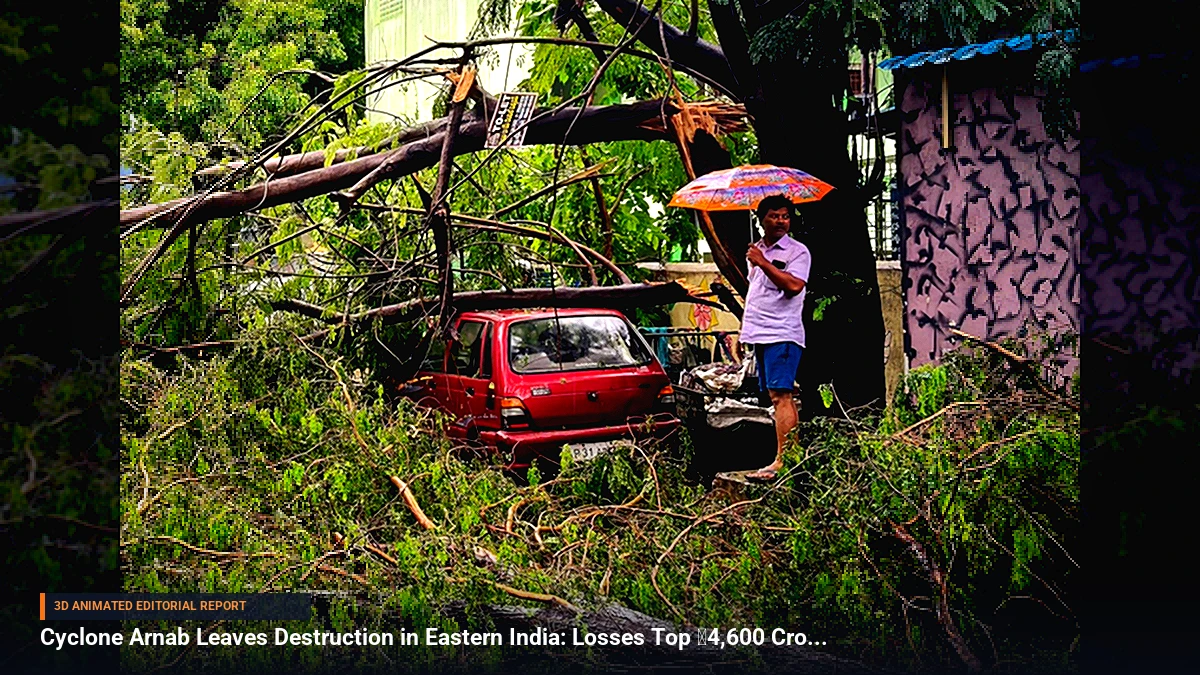
Cyclone Arnab has delivered a severe blow to eastern India, triggering emergency evacuations and leaving a profound trail of structural destruction along its coastal path. Official reports confirm at least three fatalities resulting directly from the severe weather system. Thousands of residents living in low-lying and vulnerable coastal zones were swiftly relocated to temporary shelters by disaster management authorities.
In the wake of the storm, preliminary financial assessments have begun to paint a stark picture of the disaster's scale. The state government of Andhra Pradesh has pegged its initial estimated losses at approximately ₹4,600 crore, reflecting heavy damage to public utilities, transport networks, and residential settlements.
Background & Key Context
Eastern India's coastal vulnerabilities to tropical weather systems are well-documented, but Cyclone Arnab's trajectory brought a novel dimension of risk. Recent years have seen heavy capital investments pouring into eastern states like Andhra Pradesh and neighboring regions to establish tech parks, manufacturing hubs, and crucial data center corridors.
As the storm churned through these developmental zones, analysts noted a direct intersection between the severe weather path and India's emerging digital infrastructure footprint. Furthermore, as relief and rescue operations unfolded, digital platforms faced an influx of misinformation. Fact-checking networks revealed that sensational visuals—including an archived video depicting an older tornado event in Odisha—were circulated widely online to misrepresent the ground realities of Cyclone Arnab.
Key Takeaways
- Human Toll and Displacement: Cyclone Arnab resulted in three confirmed deaths and forced the emergency evacuation of thousands of residents across eastern India.
- Massive Economic Damage: The government of Andhra Pradesh has officially estimated initial losses from the cyclone at roughly ₹4,600 crore.
- Agricultural Impact: Authorities in Jharkhand have initiated comprehensive damage assessments to evaluate agricultural and crop losses, promising direct compensation to affected farming communities.
- Digital Misinformation: Social media platforms saw widespread circulation of old, unrelated footage—specifically a past tornado video from Odisha—falsely labeled as Cyclone Arnab.
- Infrastructure Vulnerabilities: The storm's trajectory directly impacted regions slated for significant data center and tech corridor expansions, raising questions about long-term climate resilience.
Impact, Analysis & Global/National Reactions
Regional stakeholders are now grappling with the dual challenge of immediate humanitarian relief and long-term economic recovery. State administrations have mobilized emergency response teams to clear blocked roadways, restore disrupted power grids, and deliver essential supplies to displaced families.
Agricultural sectors in states like Jharkhand face severe setbacks, prompting local governments to pledge proactive relief measures. "We are mobilizing field teams to rapidly assess crop damage and ensure that every affected farmer receives due compensation," stated regional administrative representatives.
Beyond agrarian concerns, economic analysts have pointed out the broader implications for industrial planning. The intersection of Cyclone Arnab with planned technology and data center clusters highlights an urgent need for climate-proofing regional development plans. Building redundancy into digital networks and reinforcing physical facilities against severe weather events will be paramount as eastern India continues its economic ascent.
What's Next: Looking Ahead
In the coming weeks, attention will shift from immediate disaster response to systematic recovery and policy readjustment. Detailed fiscal packages are expected from state and central authorities to address the ₹4,600 crore deficit in Andhra Pradesh and support agricultural rehabilitation in Jharkhand.
Additionally, urban planners and tech corporations are expected to re-evaluate site selection criteria for future data centers and server farms in eastern coastal belts. Strengthening digital resilience standards will likely become a cornerstone of future regional infrastructure development to safeguard against increasingly unpredictable weather anomalies.






Be the first to comment
Start a useful conversation around this story.