
What Happened: The Core Developments
India's eastern coastline is currently facing an escalating climate emergency as Cyclone Arnab barrels toward the shores of Andhra Pradesh and Odisha. Packing maximum sustained winds of 115 to 125 kilometers per hour, with ferocious gusts reaching up to 140 kmph, the storm represents a severe threat to coastal and inland communities alike. Meteorological agencies project that the core of the system will cross the Andhra Pradesh and Yanam coasts—specifically targeting the corridor between Bapatla and Visakhapatnam—by the forenoon of October 28.
The immediate impact of the impending landfall has triggered sweeping disruptions across civic infrastructure. Transport networks have been severely bottlenecked, with numerous key rail services canceled, delayed, or heavily rerouted to keep passengers out of harm's way. Aviation hubs have also felt the squeeze: at least 21 commercial flights have been canceled across major regional airports in Vijayawada and Visakhapatnam. Educational institutions, government offices, and non-essential businesses throughout the high-risk districts have been ordered to shut down indefinitely as state machinery pivots entirely to disaster response and rescue mobilization.
Background & Key Context
The genesis of Cyclone Arnab must be viewed through the lens of shifting regional weather patterns and broader oceanic anomalies. The eastern coastline of India has historically borne the brunt of severe cyclonic activity during the post-monsoon transition months, fueled by warm sea-surface temperatures in the Bay of Bengal. However, meteorologists emphasize that atmospheric phenomena, including lingering regional influences from El Niño and complex Western Disturbances, have played a critical role in altering seasonal storm dynamics, resulting in tighter moisture concentration and intensified wind shear.
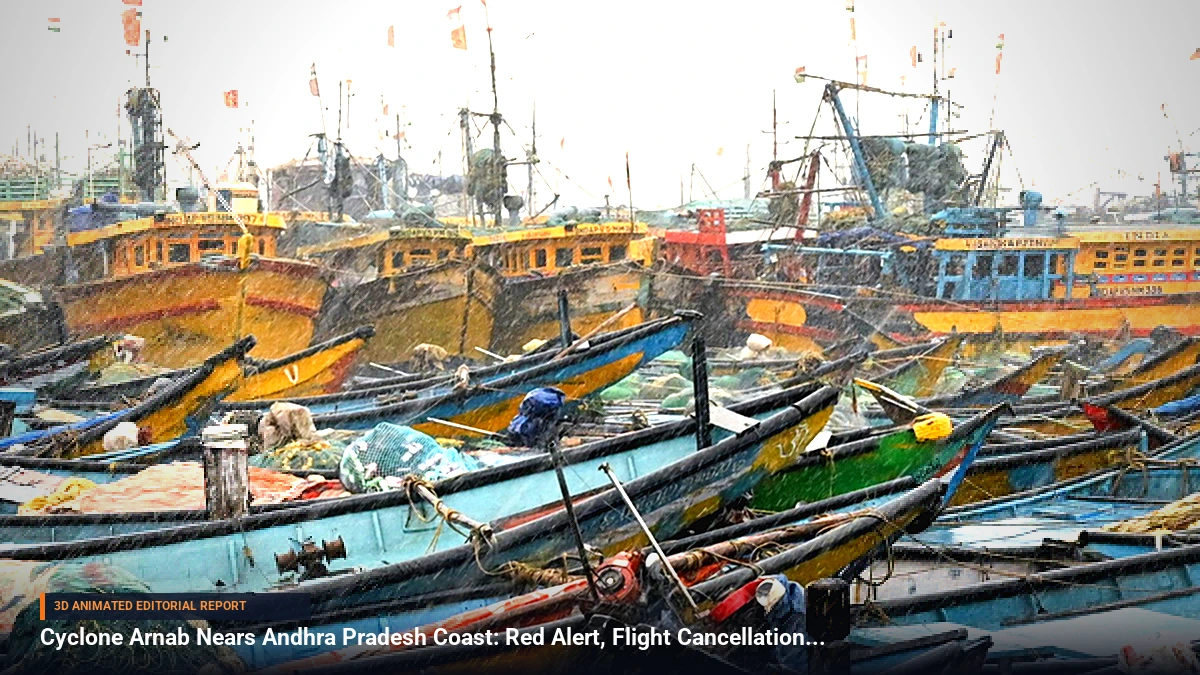
State governments in both Andhra Pradesh and Odisha have spent the past 48 hours reviewing standard operating procedures refined from previous storm events. Emergency response teams, including specialized units from the National Disaster Response Force (NDRF) and state disaster management bodies, have been pre-positioned in vulnerable low-lying districts. Coastal fishing communities have been placed under strict orders to remain ashore, and evacuation protocols for residents living within vulnerable mud-and-thatch dwellings have been accelerated.
Key Takeaways
- Landfall Window: Cyclone Arnab is expected to strike the coast between Bapatla and Visakhapatnam during the forenoon of October 28.
- Wind Intensity: The storm packs sustained winds of 115-125 kmph, with violent gusts touching 140 kmph.
- Official Alerts: The India Meteorological Department (IMD) has issued a top-tier red alert for Andhra Pradesh, keeping neighboring Odisha on high alert.
- Infrastructure Impact: Rail services are heavily disrupted, educational institutions are closed, and 21 flights have been canceled in Vijayawada and Visakhapatnam.
- Broader Climate Factors: Experts are closely analyzing how wider oceanic and atmospheric disruptions are influencing the intensity and erratic trajectory of post-monsoon cyclonic systems.
Impact, Analysis & Global/National Reactions
The economic and social ramifications of Cyclone Arnab extend far beyond immediate wind damage. Agricultural specialists note that unseasonal, torrential downpours threaten standing kharif crops ready for harvest across the coastal plains, potentially impacting regional food supply chains and farmer livelihoods. Logistical supply chains throughout the southeastern corridor have ground to a partial halt, affecting freight transport and port operations.
National authorities are maintaining round-the-clock coordination with district collectors. "Our primary focus is zero casualties, which requires stringent pre-landfall evacuations and uncompromising adherence to safety advisories," noted a senior disaster management official involved in the coordination effort. Transport operators and municipal bodies have urged citizens to refrain from non-essential travel as heavy rains and localized coastal flooding continue to batter the coastline.
What's Next: Looking Ahead
As Cyclone Arnab makes its final approach and subsequent landfall, attention will immediately shift from preparedness to rapid damage assessment, search-and-rescue operations, and infrastructure restoration. Power grids, telecommunication towers, and rural roads are expected to sustain the heaviest blow, requiring swift mobilization of state engineering teams once wind speeds subside.
Longer-term policy discussions will likely focus on reinforcing coastal resilience, upgrading early-warning telemetry, and adapting agricultural infrastructure to withstand increasingly erratic weather volatility driven by global climate shifts. Meteorological departments will continue issuing hourly tracking updates as the system moves inland and gradually loses momentum.





Be the first to comment
Start a useful conversation around this story.