
What Happened: The Core Developments
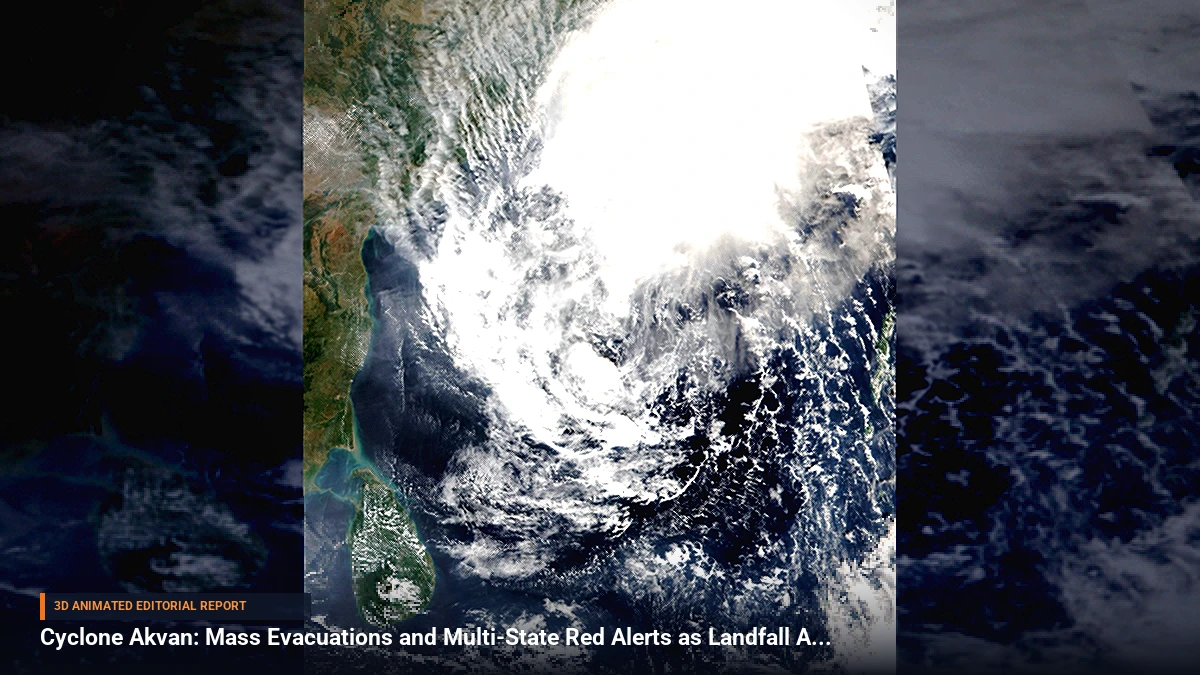
As Cyclone Akvan barrels towards the eastern coastline of India, disaster response agencies and local administrations have shifted into high gear. Over one lakh residents have been successfully evacuated from vulnerable low-lying areas in Odisha alone, reflecting the immense scale of the pre-emptive safety measures. Meteorological forecasts indicate that the severe cyclonic storm is projected to make landfall around November 20, targeting a coastal stretch near Gopalpur or between Machilipatnam and Puri along the Andhra-Odisha border.
The intensification of the storm has prompted the Andhra Pradesh State Disaster Management Authority (APSDMA) and Odisha's state administration to issue stringent red alerts across multiple districts. Heavy downpours, fierce squalls, and rough sea conditions have already begun lashing the eastern seaboard. Neighboring West Bengal is also feeling the outer bands of the weather system, with heavy rain alerts issued for several southern districts and overnight showers reported in Kolkata.
Background & Key Context
Tropical disturbances in the Bay of Bengal during the post-monsoon transition period frequently pose severe challenges to India's eastern seaboard. Cyclone Akvan developed rapidly over the warm waters of the central Bay, tracking northwestward before shifting trajectory slightly toward the Odisha-Andhra Pradesh coastline. Historical precedents, such as previous devastating cyclones in the region, have taught disaster management authorities valuable lessons in prioritizing zero-casualty evacuation protocols well ahead of impact.
In response to the escalating threat, Odisha declared immediate administrative shutdowns for educational institutions, ordering schools and colleges in six high-risk districts to remain closed through November 21. District collectors have been granted discretionary powers to extend these closures depending on localized post-landfall damage and weather assessments.
Key Takeaways
- Massive Evacuation Effort: More than one lakh individuals have been moved to safer storm shelters across high-risk zones in Odisha.
- Anticipated Landfall: The severe cyclonic storm is projected to cross the coast on November 20, near Gopalpur or between Machilipatnam and Puri.
- Multi-State Red Alerts: Multiple districts across Andhra Pradesh and Odisha are under high-severity red alerts, signaling potential disruptions to power, communication, and transport.
- Educational Closures: Schools and colleges in six Odisha districts are shut down until November 21, with extensions possible based on local weather conditions.
- Regional Spillover: West Bengal is bracing for heavy rainfall, with Kolkata experiencing overnight precipitation as the storm's outer perimeter expands northward.
Impact, Analysis & Global/National Reactions
Government agencies have mobilized National Disaster Response Force (NDRF) and State Disaster Response Force (SDRF) teams to pre-position themselves in the path of the storm. Transport networks, including rail and coastal shipping, face severe disruptions as authorities advise fishermen to stay completely away from deep-sea environments.
Disaster management experts emphasize that early warning systems and proactive mass evacuations have dramatically reduced mortality rates from tropical cyclones in recent decades. Institutional preparedness in Odisha and Andhra Pradesh continues to serve as a benchmark for disaster resilience in South Asia, mitigating potential catastrophes before the eye of the storm even reaches land.
What's Next: Looking Ahead
As Cyclone Akvan closes in on the coast, the immediate focus remains on securing human life and managing relief camps housing the displaced population. Post-landfall, attention will quickly pivot to damage assessments, clearing blocked roadways, restoring disrupted power grids, and preventing waterborne diseases in waterlogged zones. District administrations will continue monitoring real-time meteorological updates to determine when it is safe to rescind red alerts and resume normal economic and educational activities.




Be the first to comment
Start a useful conversation around this story.