
What Happened: The Core Developments
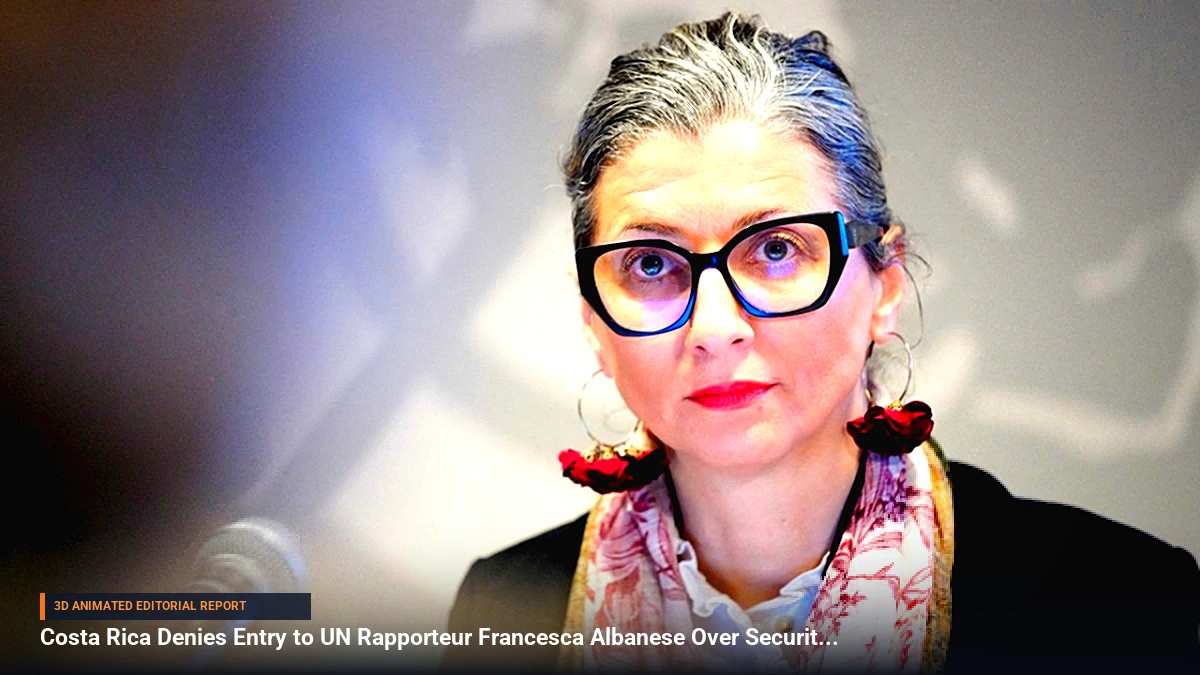
In a highly unusual diplomatic standoff, Costa Rican authorities formally denied entry to the United Nations Special Rapporteur on the occupied Palestinian territories, Francesca Albanese. Government officials justified the border restriction by pointing to perceived national security risks and unverified allegations linking the high-ranking human rights investigator to terrorist acts. The refusal immediately sparked intense international scrutiny, putting a spotlight on the friction between national sovereignty and the diplomatic privileges granted to UN mandate holders.
The restriction did not go unanswered. The United Nations voiced immediate and profound institutional backlash against San José, characterizing the move as an obstruction of official human rights reporting. In response to the accusations leveled by Costa Rican immigration and security officials, Francesca Albanese strongly rejected the claims, accusing the government of defamation. She has publicly demanded a formal apology from Costa Rican authorities to repair the diplomatic damage caused by the public exclusion.
Background & Key Context
United Nations Special Rapporteurs are independent experts appointed by the UN Human Rights Council to examine and report on specific country situations or thematic human rights issues worldwide. While these individuals do not speak directly for the UN as an administrative body, they operate under official mandates intended to provide objective oversight and investigative reporting on critical global matters.
Historically, sovereign states retain the fundamental right to regulate their borders and deny entry to foreign nationals under broad national security exemptions. However, invoking these powers against a sitting United Nations investigator is an extreme diplomatic measure. It exposes deep fractures in how individual governments cooperate with international human rights mechanisms, particularly regarding sensitive geopolitical flashpoints such as the Israeli-Palestinian conflict.
Key Takeaways
- Sovereign Border Action: Costa Rica barred UN Special Rapporteur Francesca Albanese from entering the country, citing national security and alleged links to terrorism.
- Immediate UN Backlash: The decision drew swift and vocal condemnation from the United Nations and international human rights advocates.
- Defamation Allegations: Francesca Albanese vehemently denied the accusations and demanded an official apology from Costa Rican authorities.
- Diplomatic Precedent: The incident highlights a rare and aggressive clash between a sovereign nation's border enforcement powers and UN investigative mandates.
Impact, Analysis & Global/National Reactions
The decision by San José to bar a senior UN human rights official marks a notable hardening of administrative postures toward international monitors. Analysts note that while nations frequently exercise discretion over who crosses their borders, utilizing terrorism-related justifications against an active UN mandate holder sets a provocative precedent. It tests the boundaries of international diplomatic immunities and threatens to strain relations between small democratic states and multilateral human rights bodies.
International legal observers have pointed out that accusing a UN investigator of terror links without transparent, publicly verifiable evidence risks undermining both the credibility of national security protocols and the safety of human rights defenders operating globally. Conversely, defenders of the Costa Rican government's stance emphasize that state sovereignty and domestic security remain paramount, arguing that international status does not automatically grant unconditional entry rights.
What's Next: Looking Ahead
As the diplomatic fallout continues to unfold, attention will turn to how the United Nations Human Rights Council and senior UN leadership choose to address the precedent set by Costa Rica. Observers will be watching for any formal diplomatic resolutions, potential discussions within UN committees regarding the safety and freedom of movement for rapporteurs, and whether Costa Rican officials will provide further clarification or evidence supporting their security claims. Meanwhile, Albanese's demand for an apology remains unanswered, leaving bilateral tensions high.



Be the first to comment
Start a useful conversation around this story.