
What Happened: The Core Developments
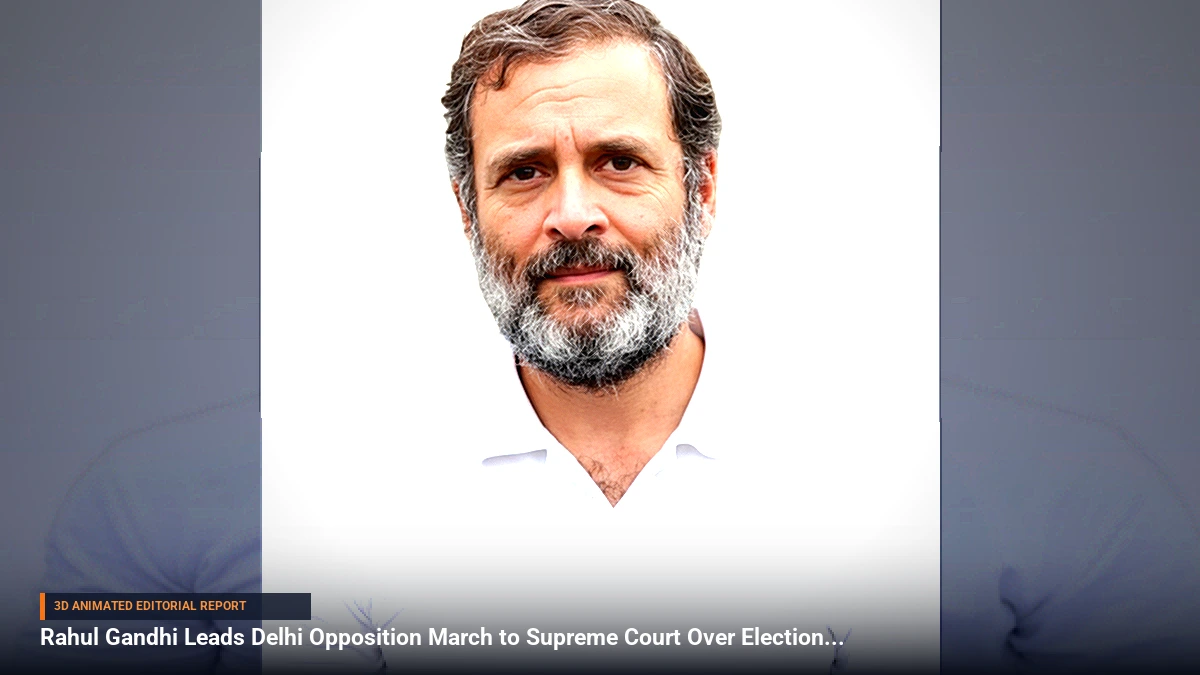
In a decisive stance safeguarding institutional boundaries, Chief Justice Surya Kant has turned down a formal request from opposition leaders attempting to discuss contentious allegations surrounding vote theft and disputes involving the election commission. The apex court leadership made it unequivocally clear that while democratic avenues for dissent must remain open, the judiciary cannot and will not be dragged into partisan political disputes or street-level agitations.
Addressing the broader context of ongoing demonstrations targeting the poll body, the Chief Justice stressed that maintaining public order is fundamentally distinct from the responsibilities shouldered by the head of the judiciary. He remarked that law and order management is not the domain of the Chief Justice, drawing a sharp demarcation between constitutional adjudication and executive governance.
Background & Key Context
The friction between political bodies and electoral oversight mechanisms has intensified significantly, culminating in high-profile street protests and demonstrations against the Chief Election Commissioner (CEC). Opposition parties have repeatedly sought judicial intervention or backing to amplify their grievances regarding electoral integrity and transparency.
Historically, while the Supreme Court serves as the ultimate guardian of fundamental rights and constitutional integrity, Indian jurisprudence has consistently wrestled with the extent to which the judiciary should intervene in active political disputes. By declining the meeting, CJI Surya Kant reinforces the traditional doctrine of separation of powers, signaling that political grievances must be addressed through legislative forums, electoral reforms, or public debate rather than judicial arbitration.
Key Takeaways
- Direct Refusal: CJI Surya Kant explicitly declined to meet opposition delegations wishing to present grievances regarding alleged vote theft.
- Separation of Powers: The Chief Justice firmly asserted that the Supreme Court must not be dragged into political agitations and electoral protests.
- Jurisdictional Limits: The bench underscored that public law and order enforcement remains completely outside the domain of the judicial office.
- Right to Protest: Acknowledging democratic freedoms, the CJI noted that every citizen—including legal practitioners—retains the fundamental right to participate in peaceful protests.
Impact, Analysis & Global/National Reactions
The CJI's refusal has sparked widespread national debate, drawing varied responses from legal experts, politicians, and civil society actors. Proponents of judicial restraint praise the decision as a vital defense against the politicization of the bench, arguing that courts risk losing their perceived neutrality if they step into the arena of electoral politics. Conversely, some political critics argue that dismissing dialogue channels prematurely risks alienating segments of the electorate that feel aggrieved by administrative or electoral processes.
Legal scholars have pointed out that balancing democratic expression with judicial independence is a delicate task. By defending the right of individuals—including lawyers—to engage in peaceful assembly, the judiciary has maintained its protection of civil liberties while simultaneously shutting the door on backchannel political lobbying.
What's Next: Looking Ahead
As political formations continue to mount pressure regarding electoral transparency, attention now shifts back to parliamentary avenues and public forums where these disputes are constitutionally mandated to be fought. Observers will closely monitor whether opposition groups alter their strategy following the judicial rebuff, and how the election commission responds to ongoing public scrutiny regarding its administrative procedures.


Be the first to comment
Start a useful conversation around this story.