
What Happened: The Core Developments
Brazil is holding its fiercely contested presidential election runoff on Sunday, October 25, 2026, culminating weeks of intense political friction. Nearly 159 million people are eligible to cast their ballots in a deeply polarized electoral landscape. The runoff features a high-stakes duel between veteran leftist incumbent Luiz Inácio Lula da Silva and far-right challenger Flávio Bolsonaro, a serving senator and the son of imprisoned former president Jair Bolsonaro.
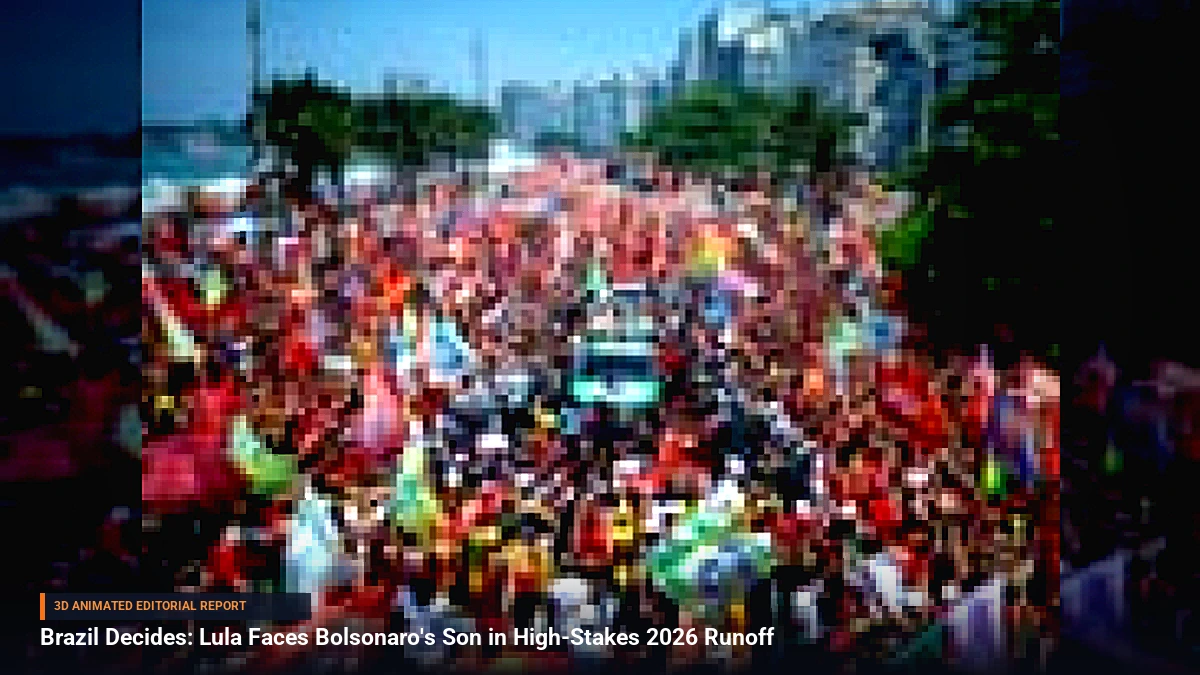
The final stretch of the campaign saw monumental rallies across the country. Tens of thousands of passionate supporters of President Lula converged on iconic locations like Rio’s famous beaches to propel the incumbent toward a historic political comeback. Meanwhile, the challenger's camp has maintained strong momentum following a surprising first-round victory on October 4, where Flávio Bolsonaro captured 47% of the vote compared to Lula’s 45%.
Background & Key Context
The road to this pivotal runoff has defied traditional political forecasting. When the first round concluded on October 4, 2026, Flávio Bolsonaro emerged as the frontrunner, outperforming most pre-election opinion polls and positioning himself as the favorite heading into the final three weeks. His unexpected surge energized the far-right coalition, effectively framing the race as a referendum on the current administration's economic and social trajectories.
For Lula da Silva, seeking another historic term in office, the primary objective has been consolidating the center-left and progressive vote while bridging divisions. The presence of Flávio Bolsonaro as the standard-bearer for the right is particularly symbolic, given that his father, former president Jair Bolsonaro, is currently imprisoned. This dynastic element has added intense emotional and ideological weight to an already fractured national discourse.
Key Takeaways
- Massive Electorate: Approximately 159 million Brazilians are eligible to vote in the high-stakes Sunday runoff.
- First-Round Surprise: Challenger Flávio Bolsonaro led the initial October 4 round with 47% of the vote against Lula's 45%.
- Neck-and-Neck Polls: Following intensive campaign rallies, the two candidates entered election day in a virtual dead heat.
- Dynastic Challenge: Flávio Bolsonaro represents the far-right movement of his imprisoned father, Jair Bolsonaro.
- Incumbent Comeback Attempt: President Lula is fighting to secure an unprecedented political recovery after trailing in the first round.
Impact, Analysis & Global/National Reactions
The outcome of this election carries massive implications not only for Latin America's largest economy but for global geopolitics, environmental policy, and democratic norms across the region. International observers have closely monitored the mobilization on both sides, noting that the tight margin highlights a nation split evenly down ideological lines. Political analysts emphasize that the campaign has transcended traditional party politics, turning into a profound test of resilience for Brazil's democratic institutions.
Markets have reacted nervously to the polling volatility, pricing in potential shifts in fiscal policy, trade posture, and environmental governance depending on the victor. As crowds filled public spaces from Copacabana to Brasília in the final hours before the vote, civic leaders and international bodies called for calm and respect for the electoral process.
What's Next: Looking Ahead
As polling stations close across the nation's multiple time zones, all eyes turn to the Superior Electoral Court (TSE) for the official, verified vote tallies. The certified results will dictate the immediate political direction of the country, setting the stage for either a consolidation of Lula's leftist agenda or a dramatic rightward shift under the banner of the Bolsonaro family.



Be the first to comment
Start a useful conversation around this story.