
What Happened: The Core Developments
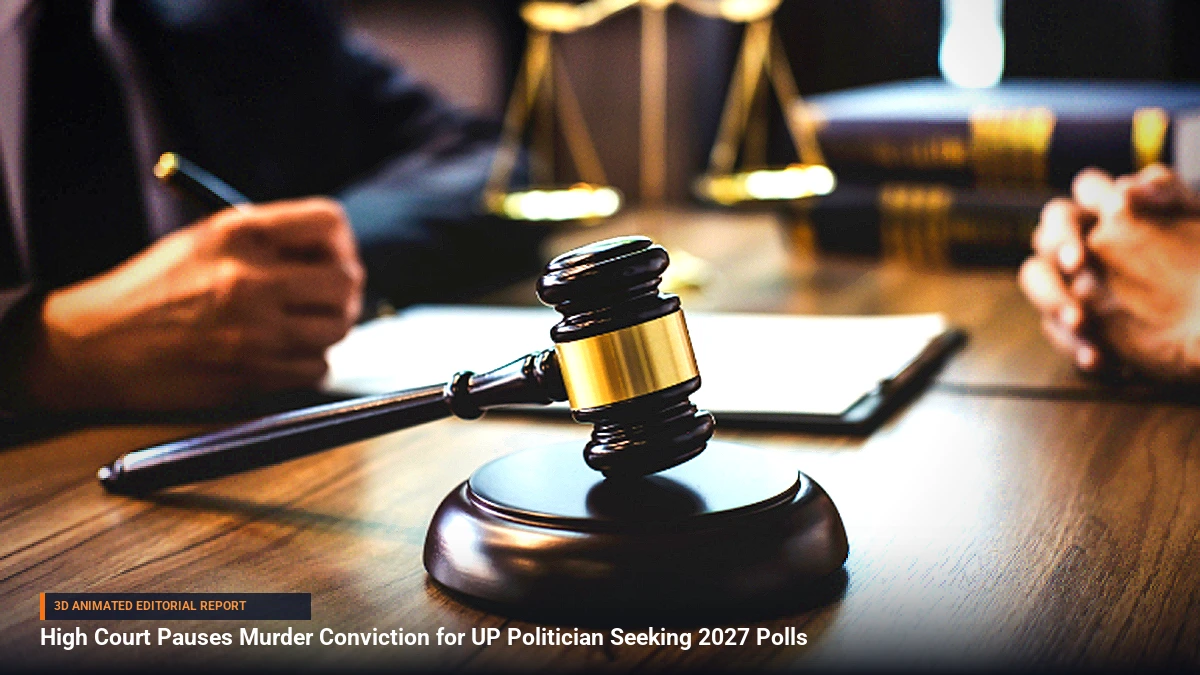
In a notable legal development that has sparked intense public debate, the Allahabad High Court has temporarily suspended the conviction of Nandlal Rai, widely known as Babloo Rai. Rai had previously been handed a severe sentence by a Varanasi sessions court in 2025 in connection with a high-profile 2017 murder case.
A two-judge bench comprising Justice Siddharth and Justice Vinai Kumar Dwivedi presided over the criminal appeal filed by the convict. The legal maneuver was initiated primarily because Rai expressed a clear desire to participate in the democratic process by contesting the upcoming Uttar Pradesh assembly elections, reportedly aiming for a ticket from the Bharatiya Janata Party (BJP). By pausing the conviction, the High Court effectively removes a major statutory hurdle that would have otherwise barred him from running for public office under electoral laws governing convicted criminals.
Background & Key Context
The case dates back to a violent incident in 2017 that eventually culminated in a murder trial in Varanasi. For years, the legal proceedings wound their way through the trial court system, concluding with a conviction in 2025 that threatened to permanently derail Rai's political ambitions. Under the Representation of the People Act, individuals convicted of serious crimes and sentenced to imprisonment for two years or more are generally disqualified from contesting elections unless their conviction is stayed by a higher court.
In India, the practice of seeking a stay on conviction—distinct from a stay on the sentence itself—has become a crucial legal pathway for politicians facing criminal baggage. While a suspended sentence keeps a person out of prison during an appeal, only a suspended conviction prevents the legal disqualification from holding public office. This recent ruling by the Allahabad High Court adds another chapter to the ongoing discourse regarding how courts evaluate the electoral rights of individuals with serious criminal records.
Key Takeaways
- Judicial Relief: The Allahabad High Court paused the conviction of Nandlal Rai alias Babloo Rai, who was convicted of murder by a Varanasi sessions court in 2025.
- Bench Composition: The order was delivered by a two-judge bench comprising Justice Siddharth and Justice Vinai Kumar Dwivedi.
- Electoral Ambitions: The primary grounds for seeking the stay centered on Rai's stated intention to contest the 2027 Uttar Pradesh assembly elections on a BJP ticket.
- Legal Distinction: The ruling highlights the critical legal difference between staying a prison sentence and staying a conviction, the latter being necessary to clear an individual for electoral participation.
- Public and Political Scrutiny: The decision has drawn sharp reactions from civil society watchdogs and legal experts, contrasting the relief granted to local political aspirants with the prolonged custody faced by other political figures.
Impact, Analysis & Global/National Reactions
The court's decision has triggered a wave of reactions across the political and legal spectrum. Civil rights organizations, including groups like Citizens for Justice and Peace (CJP), have openly questioned the systemic disparities in the Indian criminal justice framework. Critics have pointed out the stark contrast between granting swift relief to local political figures seeking electoral clearance and the prolonged incarceration or delayed bail hearings experienced by other political detainees and activists facing trial under stringent laws.
Legal analysts note that while higher courts possess the discretionary power to stay convictions in exceptional circumstances to prevent irreversible prejudice to an individual's career, the threshold for such relief is historically high. The invocation of future electoral participation as a key argument introduces complex questions about whether political aspirations should weigh heavily in judicial evaluations of serious criminal offenses.
What's Next: Looking Ahead
As Uttar Pradesh edges closer to the 2027 assembly elections, the political landscape is expected to grow increasingly volatile. For Nandlal Rai, the immediate legal hurdle of electoral disqualification has been lifted, paving the way for potential negotiations regarding party candidacy. However, the underlying criminal appeal against his 2017 murder conviction remains active before the Allahabad High Court, meaning that the ultimate resolution of his legal guilt or innocence is still far from settled.
Legal experts anticipate that opposing parties and petitioners may closely monitor the proceedings, and further legal challenges or appeals regarding the stay of conviction cannot be ruled out. The case will likely serve as a significant precedent—or a point of intense contention—in discussions surrounding criminalization in Indian politics and the scope of judicial relief in electoral seasons.



Be the first to comment
Start a useful conversation around this story.