
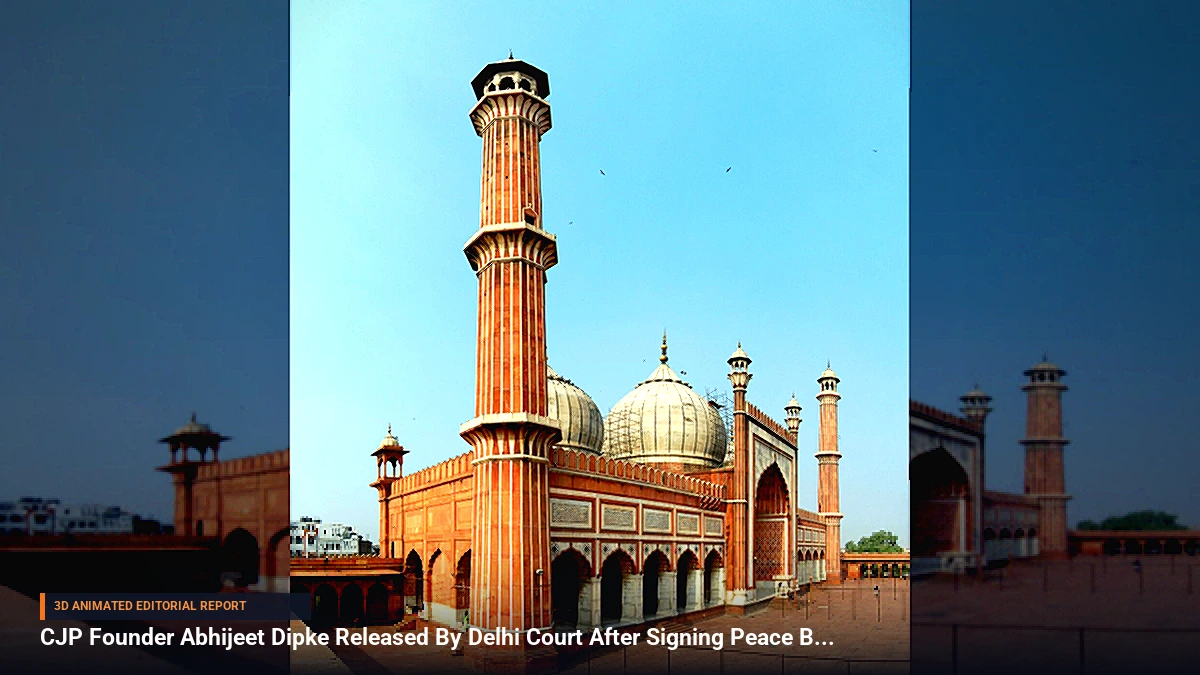
What Happened: The Core Developments
Abhijeet Dipke, the founder of CJP, walked out of custody following an order issued by a Delhi Executive Magistrate (SEM) court. His release was contingent upon the formal signing of a peace bond, bringing a temporary close to a detention episode that had drawn considerable public attention. Dipke had been initially detained by law enforcement authorities and subsequently placed under formal arrest as part of preventative measures deployed across the national capital.
The police action occurred as Dipke and his supporters were preparing to mobilize for a high-visibility 'Tiranga March' directed toward Connaught Place. The intended demonstration aimed to gather citizens to wave the national flag in protest against what organizers termed alleged electoral fraud. Law enforcement agencies intervened prior to the commencement of the march, utilizing administrative detention powers to preempt potential public order complications.
Background & Key Context
The utilization of Special Executive Magistrates and preventive detention mechanisms is rooted in statutory provisions designed to maintain public tranquility during periods of heightened political tension. In recent weeks, the capital has witnessed various demonstrations and civic movements challenging electoral bodies and processes. These gatherings have frequently brought civil society organizations, activists, and law enforcement into a delicate operational balance regarding public assembly rights.
Preventive custody and the execution of security bonds under procedural law are frequently invoked when authorities anticipate actions that could breach public peace. While these measures are legally codified, they often spark intense debates surrounding civil liberties, the right to peaceful assembly, and the proportionality of state interventions during political dissent.
Key Takeaways
- Court-Ordered Release: Abhijeet Dipke was released by a Delhi SEM court after executing a standard peace bond.
- Initial Detention: Law enforcement detained and formally arrested Dipke ahead of a scheduled public demonstration.
- The Planned Protest: The intervention targeted a proposed 'Tiranga March' to Connaught Place meant to feature national flag-waving.
- Core Grievances: The broader protests center around public dissatisfaction and allegations regarding electoral fraud.
- Legal Mechanism: The case highlights the active role of executive magistrates in managing public order through preventive legal instruments.
Impact, Analysis & Global/National Reactions
The swift legal proceedings and subsequent release have brought renewed focus to the protocols governing public protests in urban centers. Civil rights advocates closely monitor how administrative detentions are applied, particularly when demonstrations involve prominent digital creators or organization founders. Legal analysts note that while the executive magistrate's court acted promptly to secure his release via a bond, the underlying tensions regarding electoral transparency remain a pressing discourse.
Reactions from supporters emphasized the peaceful nature of the intended 'Tiranga March', framing the flag-waving demonstration as an expression of patriotic dissent. Conversely, administrative authorities defended the precautionary detentions as a necessary step to manage urban mobility and prevent potential disruptions to public infrastructure.
What's Next: Looking Ahead
As Dipke returns to public life following his conditional release, organizers of the ongoing movement are assessing their next steps regarding planned demonstrations. Stakeholders across the political and civic spectrum will be watching closely to see whether future protests encounter similar administrative hurdles or if dialogue between civic groups and local authorities can establish clearer frameworks for safe public assembly.





Be the first to comment
Start a useful conversation around this story.