
What Happened: The Core Developments
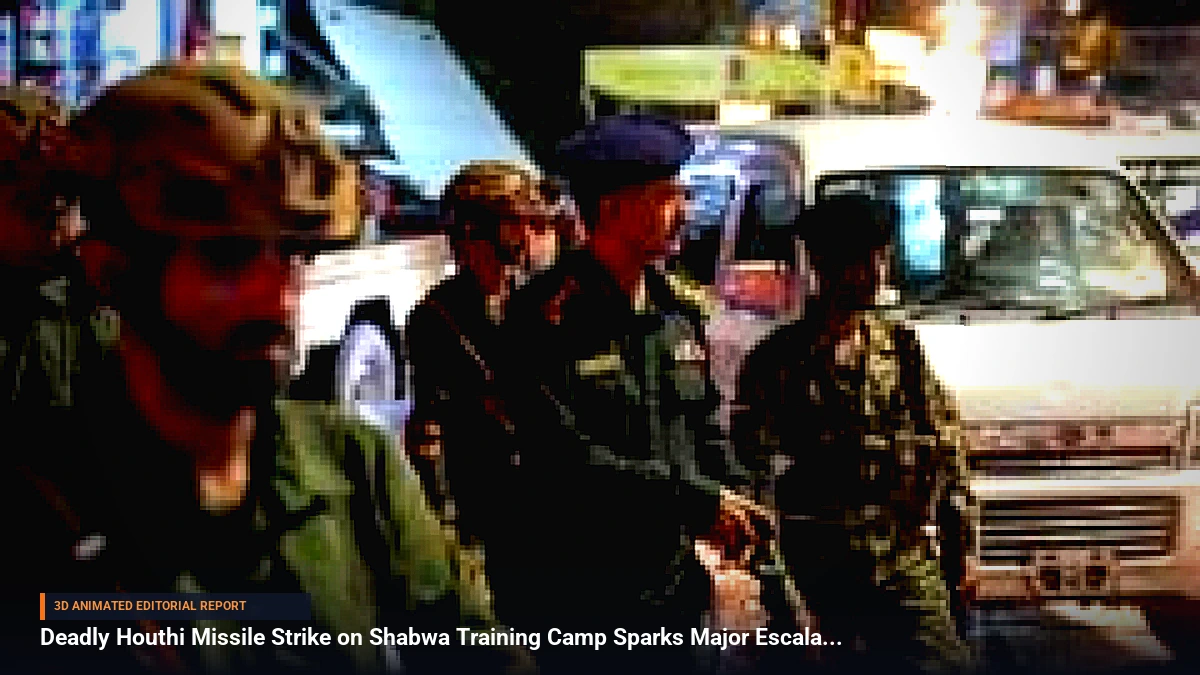
A high-impact missile strike has shattered a period of relative tactical restraint in Yemen, after Houthi forces launched a coordinated ballistic assault on a military training facility situated in the government-controlled Shabwa province. Local security officials confirmed that multiple missiles struck the camp precisely as new security recruits were assembled for daily training sessions.
While initial chaos at the site made immediate casualty accounting difficult, verified reports from regional medical facilities and local authorities place the death toll between 50 and 60 individuals, with dozens more sustaining severe injuries. Emergency responders rushed to the scene to transport the wounded to nearby hospitals, where medical staff have issued urgent appeals for blood donations to cope with the surge of critical trauma patients.
Background & Key Context
The devastating strike in Shabwa highlights the persistent fragility of the Yemeni landscape, where localized outbreaks of violence routinely threaten fragile ceasefires. Shabwa province, rich in energy resources and strategically vital, has frequently been a flashpoint between the internationally recognized government forces and the Houthi movement.
Over the past several years, various regional and international mediation efforts have attempted to forge a lasting political settlement to end the protracted civil war. However, sporadic aerial engagements, drone incursions, and missile attacks continue to disrupt stabilization initiatives, leaving civilian populations and military recruits vulnerable to sudden military escalations.
Key Takeaways
- High Casualties: Reported fatalities range from 50 to 60 people, making this one of the single deadliest security incidents in months.
- Targeted Facility: The strike directly impacted a government-controlled military training camp in the strategic Shabwa province.
- Ballistic Deployment: Local authorities confirmed the attack involved multiple incoming ballistic missiles rather than standard artillery or small-scale drone strikes.
- Regional Strain: The attack compounds existing regional tensions, occurring alongside concurrent security crises across the broader Middle East and East Africa.
- Humanitarian Toll: Local medical infrastructure is operating under severe strain, with hospitals issuing urgent pleas for blood and medical supplies.
Impact, Analysis & Global/National Reactions
Defense analysts and regional experts view the Shabwa missile strike as a dangerous escalation that could unravel ongoing back-channel diplomatic efforts. By targeting a training facility housing newly inducted security personnel, the Houthi movement has signaled its continued capability and willingness to project military power deep into contested government territory.
Institutional stakeholders and international observers have expressed deep concern over the mounting civilian and military casualties. Condemnations from allied regional governments emphasize that such attacks undermine confidence-building measures and exacerbate an already catastrophic humanitarian crisis. Humanitarian organizations operating in Yemen warn that any sustained return to open military hostilities will reverse fragile distribution pathways and further imperil displaced populations.
What's Next: Looking Ahead
As emergency rescue operations conclude, international mediators face mounting pressure to prevent retaliatory escalations from government-aligned forces. Analysts will be closely monitoring military posture across frontlines in Shabwa, Marib, and surrounding provinces to determine whether this strike triggers a broader resumption of conventional warfare.
Furthermore, diplomatic channels are expected to push for renewed oversight to secure accountability and re-engage opposing factions in dialogue, though prospects for immediate de-escalation remain dim in the wake of such high-casualty violence.



Be the first to comment
Start a useful conversation around this story.