
What Happened: The Core Developments
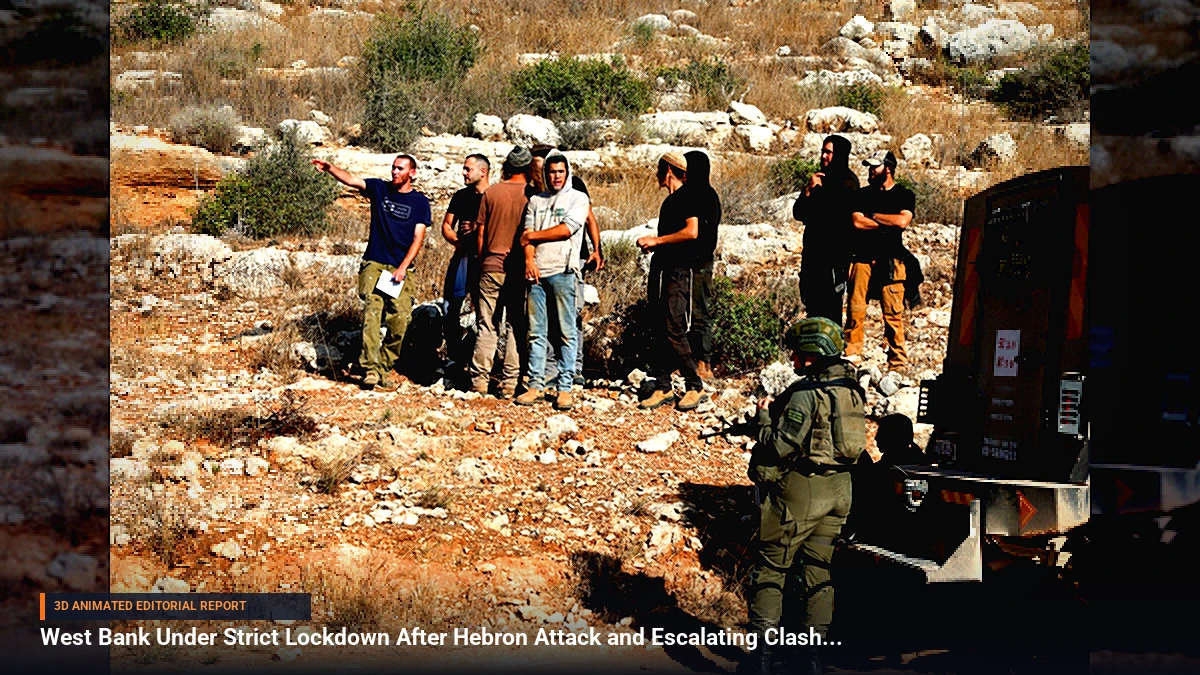
Tensions in the occupied West Bank have reached a critical threshold following a high-profile shooting attack near a military checkpoint close to Hebron. The incident resulted in five Israelis sustaining wounds, prompting a swift and lethal response from Israeli security forces who killed two suspected Palestinian attackers at the scene.
In the immediate aftermath, Israeli Prime Minister Benjamin Netanyahu ordered a comprehensive closure and lockdown of the occupied West Bank. Security officials have further intensified containment measures, sealing off neighborhoods linked to the suspected gunmen and signaling aggressive military countermeasures. Parallel to these operations, Israeli security forces carried out sweeping raids, arresting 36 Palestinians across various West Bank towns amid escalating friction surrounding the seasonal olive harvest.
Background & Key Context
The latest outbreak of violence occurs against the backdrop of an already volatile security landscape in the occupied West Bank. The annual olive harvest, a vital economic and cultural pillar for Palestinian communities, has increasingly become a flashpoint for friction. Reports indicate mounting assaults on local farmers and agricultural lands, compounding daily hardships under military occupation.
Compounding these grievances are growing domestic and international concerns over legal parity and law enforcement in the region. Recent judicial proceedings saw an Israeli court release nine settler suspects who had been detained in connection with separate West Bank attacks. Human rights monitors and local critics have sharply contrasted this judicial leniency with the mass arrests targeting Palestinians, highlighting systemic discrepancies in how violence and security infractions are prosecuted.
Key Takeaways
- Hebron Checkpoint Shooting: Five Israelis were wounded in a targeted armed assault near Hebron, leading to the death of two suspected Palestinian gunmen by security forces.
- Widespread Lockdowns: Prime Minister Benjamin Netanyahu mandated a strict closure of the occupied West Bank alongside punitive neighborhood containment measures.
- Agricultural Disruptions: The critical olive harvest season has been severely disrupted by escalating attacks on Palestinian farmers and their properties.
- Asymmetrical Arrests: Israeli forces arrested 36 Palestinians in recent sweep operations across the territory.
- Judicial Controversy: The release of nine settler suspects by an Israeli court has drawn intense scrutiny regarding disparate legal standards.
Impact, Analysis & Global/National Reactions
The convergence of checkpoint violence, sweeping military closures, and unchecked settler aggression has created a multifaceted humanitarian and security crisis. Analysts note that collective punitive measures, such as total territorial lockdowns and neighborhood destructions, risk deepening collective grievances while failing to provide long-term security.
Human rights organizations have voiced profound alarm over the intensification of what critics describe as settler violence targeting rural Palestinian livelihoods. The juxtaposition of swift, mass detentions of Palestinians against the judicial release of detained settler suspects underscores deep-seated institutional inequalities that continue to fuel cycles of unrest and distrust.
What's Next: Looking Ahead
As the Israeli military maintains its heightened state of alert and tightens movement restrictions across the West Bank, stakeholders are closely monitoring the economic and humanitarian fallout on local populations. The ongoing disruption of the olive harvest threatens to inflict lasting financial damage on vulnerable rural communities.
Diplomatic channels face mounting pressure to intervene as international observers call for restraint and accountability from all sides. Meanwhile, legal battles over the treatment of detained suspects and the enforcement of equal justice under the law are expected to remain central to domestic and international debates regarding the trajectory of the conflict.




Be the first to comment
Start a useful conversation around this story.