
What Happened: The Core Developments
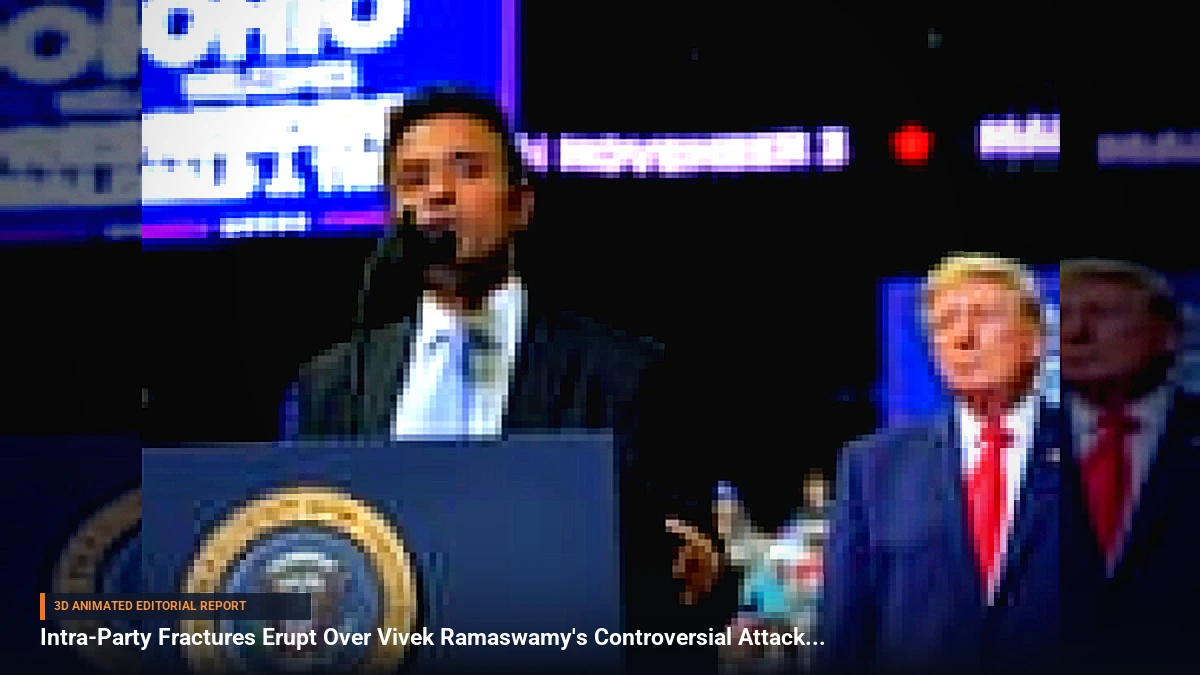
A recent campaign advertisement launched by Vivek Ramaswamy targeting his Democratic opponent, Amy Acton, has ignited a fierce national and state-level debate. The controversial spot prominently features Acton's estranged mother, a creative choice that immediately drew sharp condemnation from political opponents and mainstream commentators alike. Amy Acton strongly condemned the broadcast, labeling the attack as "despicable" and crossing standard ethical lines by dragging family estrangement into the electoral arena.
The fallout quickly transcended standard partisan crossfire, driving a distinct wedge deep inside the Republican party. Ohio Governor Mike DeWine publicly denounced the advertisement, calling it "deeply troubling" and "wrong," while directly demanding that Ramaswamy pull the spot immediately. Other high-ranking Ohio Republicans, including Jon Husted and Frank LaRose, distanced themselves from the campaign strategy, explicitly noting that they would not have chosen to run such an ad.
Background & Key Context
Modern American political campaigns have long pushed boundaries, but utilizing personal, estranged family relationships represents a particularly aggressive escalation in campaign tactics. The dispute highlights the ongoing evolution of aggressive media strategies favored by populist factions within the conservative movement, contrasted sharply with traditional institutional norms upheld by long-standing state officials. As midterm election stakes climb, candidates are increasingly looking for high-impact ways to secure voter attention, sometimes at the expense of established unwritten rules regarding personal boundaries.
Key Takeaways
- The Controversial Spot: Vivek Ramaswamy released an attack ad featuring the estranged mother of Democratic opponent Amy Acton.
- Severe Local Backlash: Ohio Governor Mike DeWine denounced the ad as "deeply troubling" and called for its removal.
- Target Response: Amy Acton fiercely condemned the strategy, calling it "despicable."
- National Republican Split: Donald Trump endorsed the tactic with a "Keep It Up" message, while JD Vance remarked that "politics is tough business."
- Intra-Party Criticism: Other prominent Republicans, including Ohio officials Jon Husted and Frank LaRose alongside U.S. Representative Nancy Mace, criticized the ad as uniquely shameful and offensive.
Impact, Analysis & Global/National Reactions
The ad has exposed a profound ideological and tactical divide within the Republican establishment. On one side, populist heavyweights have doubled down on aggressive confrontations. Donald Trump threw his weight behind Ramaswamy with a public message urging him to "Keep It Up." Meanwhile, Vice President-elect or senior surrogate figures like JD Vance minimized the uproar, remarking succinctly that "politics is tough business."
Conversely, traditional and moderate factions within the GOP expressed deep dismay. Republican Representative Nancy Mace did not mince words, labeling the production as the most shameful, disgusting, and offensive campaign ad of the entire election season. Analysts note that this friction underscores a persistent identity crisis within the party, as candidates weigh the short-term shock value of aggressive personal attacks against the long-term risk of alienating moderate and suburban voters.
What's Next: Looking Ahead
As the midterm election cycle presses forward, the controversy surrounding Ramaswamy's campaign strategy will likely serve as a key case study in modern political communication. Observers will be closely watching whether the backlash impacts voter turnout in Ohio or forces a shift in advertising strategies among other contested campaigns nationwide. The episode also raises ongoing questions about accountability, media standards, and how political parties will police ethical boundaries in an increasingly polarized digital era.




Be the first to comment
Start a useful conversation around this story.