
What Happened: The Core Developments
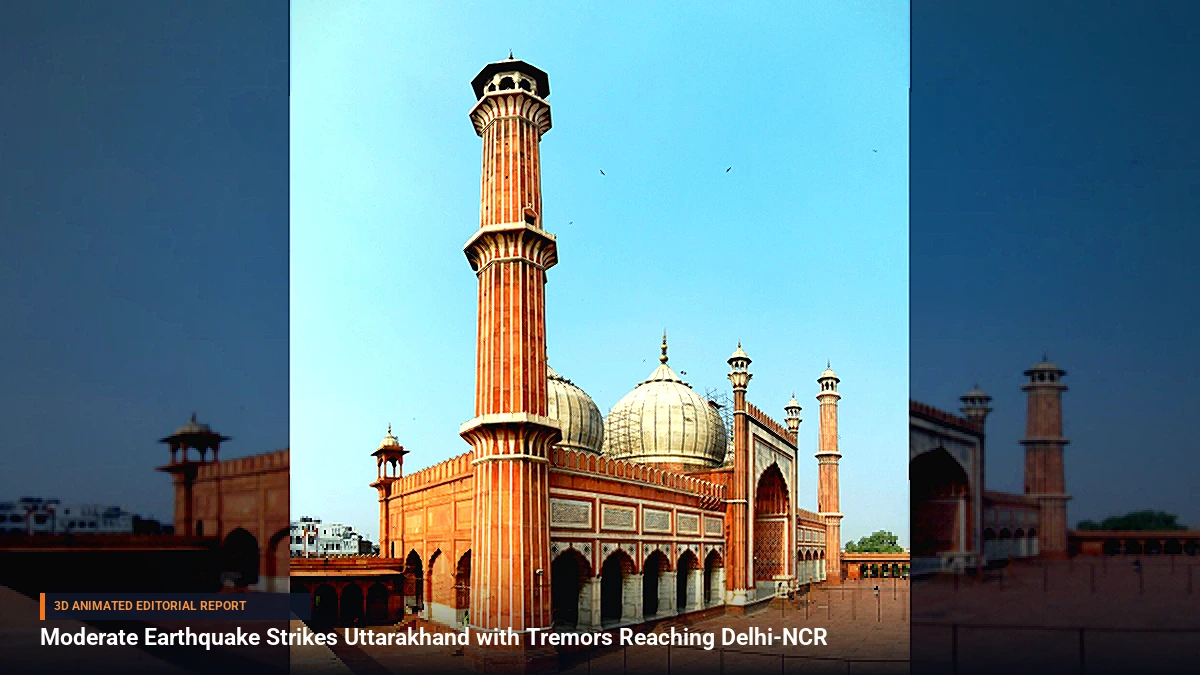
A moderate earthquake struck the northern Indian state of Uttarakhand, triggering noticeable tremors that rattled high-rises and residential neighborhoods across Delhi and the broader National Capital Region (NCR). The seismic event, which occurred late in the evening, originated from an epicentre located in the mountainous Chamoli district of Uttarakhand.
Residents across Noida, Gurgaon, Ghaziabad, and various parts of the national capital reported sudden shaking, prompting many to evacuate buildings and gather in open streets as precautionary measures. Social media platforms quickly flooded with user accounts describing swaying ceiling fans, rattling windows, and sudden jolts. While local authorities confirmed an initial magnitude reading of 4.9, international seismological networks, including the Euro-Mediterranean Seismological Centre (EMSC), registered the tremor at a slightly higher magnitude of 5.1.
Background & Key Context
The Himalayan belt is one of the most seismically active regions in the world, frequently experiencing moderate to severe earthquakes due to the ongoing tectonic collision between the Indian Plate and the Eurasian Plate. Chamoli and surrounding districts in Uttarakhand fall within high-risk seismic zones, making them prone to frequent geological adjustments.
In recent years, urban centers like Delhi—situated hundreds of kilometers away from the primary fault lines—have consistently felt the ripple effects of earthquakes originating in the Himalayan foothills. The deep alluvial soil profile of the Indo-Gangetic plain often amplifies these distant seismic waves, causing noticeable ground motion in urban areas even when the source is relatively far away.
Key Takeaways
- Epicentre Location: The earthquake's epicenter was officially traced to the Chamoli district in the rugged terrain of Uttarakhand.
- Magnitude Discrepancy: Domestic monitoring agencies recorded the tremor at a magnitude of 4.9, whereas international networks like the EMSC measured it at 5.1.
- Geographic Reach: Tremors were felt extensively across Delhi, Noida, Gurgaon, and neighboring areas of Uttar Pradesh.
- Public Reaction: The sudden shaking sent residents scrambling into open spaces, though initial reports confirmed no immediate widespread damage or structural collapses.
- Seismic Vulnerability: The event highlights the continued susceptibility of northern India's densely populated urban centers to distant Himalayan seismic activities.
Impact, Analysis & Global/National Reactions
Seismologists and disaster management experts have long emphasized the unique challenges posed by the region's geological framework. The minor discrepancy between local and international magnitude calculations—ranging between 4.9 and 5.1—stems from differences in sensor distribution, algorithmic processing, and attenuation models used by various institutions.
Disaster response teams and local authorities in Uttarakhand and Delhi initiated rapid assessments following the tremors. Emergency helplines were activated, though preliminary field reports indicated that the depth and moderate scale of the earthquake likely prevented major structural failures. Experts continue to stress the critical need for strict adherence to earthquake-resistant building codes, particularly given the rapid vertical expansion of cities across the NCR.
What's Next: Looking Ahead
Authorities are maintaining a close watch for potential aftershocks, which are common following tectonic shifts of this magnitude in the Himalayan region. Geological survey teams are continuing to analyze data from regional stations to determine the precise focal depth and fault rupture characteristics of the Chamoli event. Public awareness campaigns regarding earthquake safety protocols remain a key priority for civic bodies across northern India as the region navigates its high seismic risk profile.





Be the first to comment
Start a useful conversation around this story.