
What Happened: The Core Developments
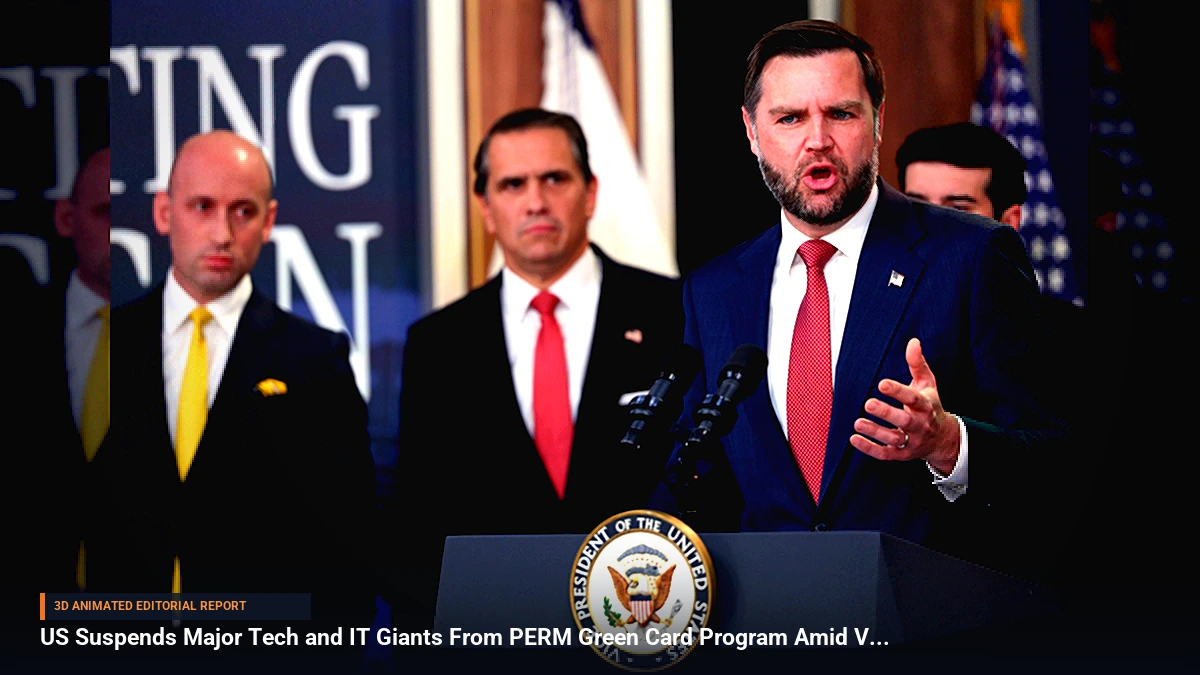
In a dramatic escalation of federal oversight regarding corporate immigration, the United States has temporarily suspended multiple major technology firms and multinational IT consulting giants from utilizing the PERM (Program Electronic Review Management) green card sponsorship system. The targeted corporations encompass industry heavyweights such as Microsoft and Adobe, alongside prominent global technology service providers including Infosys, Tata Consultancy Services (TCS), Wipro, and Cognizant.
The regulatory freeze is directly tied to ongoing federal inquiries examining suspected abuses within the H-1B visa framework and associated employment-based immigration pathways. Authorities are reviewing whether these organizations systematically exploited international worker programs, manipulating recruitment channels and sponsorship mechanics in ways that allegedly undermine domestic wage structures and circumvent fair hiring practices.
Background & Key Context
The PERM certification process serves as the foundational first step for most foreign nationals seeking an employment-based permanent residency visa, commonly known as a green card, in the United States. Before a company can sponsor an employee, it must legally test the domestic labor market to demonstrate that there are no able, willing, qualified, and available U.S. workers for the position, and that employing foreign nationals will not adversely affect local wages.
Over the past several years, political and labor scrutiny has intensified surrounding the reliance of major outsourcing firms and software companies on non-immigrant work visas. Critics have long argued that certain provisions within temporary and permanent residency pipelines allow employers to suppress domestic wage growth and bypass qualified American applicants. This latest administrative crackdown signals a aggressive shift toward enforcing strict program integrity and penalizing perceived systemic non-compliance.
Key Takeaways
- Targeted Companies: The suspension impacts industry giants ranging from software leaders like Microsoft and Adobe to top-tier IT services firms such as Infosys, TCS, Wipro, and Cognizant.
- Core Allegations: The regulatory penalty stems from alleged H-1B visa abuse, fraudulent practices, and the intentional circumvention of U.S. labor market testing.
- Program Impact: The PERM freeze halts these companies' ability to sponsor foreign employees for permanent residency, casting uncertainty over thousands of current visa holders.
- Broader Scope: Investigations also extend into academic institutions suspected of facilitating pathways that depress domestic wage standards using international student pipelines.
- Enforcement Shift: The action highlights an aggressive federal stance under current administrative oversight targeting corporate immigration compliance.
Impact, Analysis & Global/National Reactions
Industry analysts note that suspending PERM sponsorship privileges for foundational players in the technology and outsourcing sectors represents an unprecedented regulatory roadblock. For major consulting firms that rely heavily on deploying global talent to service Fortune 500 clients in the United States, workforce mobility and retention strategies face immediate disruption.
"Employment-based visa pathways are designed to supplement, not supplant, the domestic labor force," noted a labor market compliance strategist following the announcement. "When federal authorities uncover patterns suggesting systemic circumvention of wage protections, the institutional response is swift and disruptive to business models dependent on cross-border talent pipelines."
Employee advocacy groups have cautiously welcomed the move, asserting that strict enforcement is necessary to protect domestic wage growth and ensure fair competition. Conversely, business coalitions warn that sudden administrative suspensions without formalized transitional guidance could exacerbate skilled labor shortages in critical tech domains.
What's Next: Looking Ahead
As the affected corporations navigate the fallout of the PERM suspension, legal experts anticipate a wave of formal challenges, administrative appeals, and requests for clarification from the Department of Labor and immigration authorities. Companies will be forced to conduct internal compliance audits to address federal fraud claims and demonstrate adherence to labor certification rules.
Stakeholders across the technology sector will closely monitor forthcoming federal guidelines to determine the exact duration of the suspensions, potential financial penalties, and the pathway required for reinstated compliance. Meanwhile, the broader implications for international workers currently residing in the United States under temporary visas remain a primary source of anxiety and legal uncertainty.






Be the first to comment
Start a useful conversation around this story.