
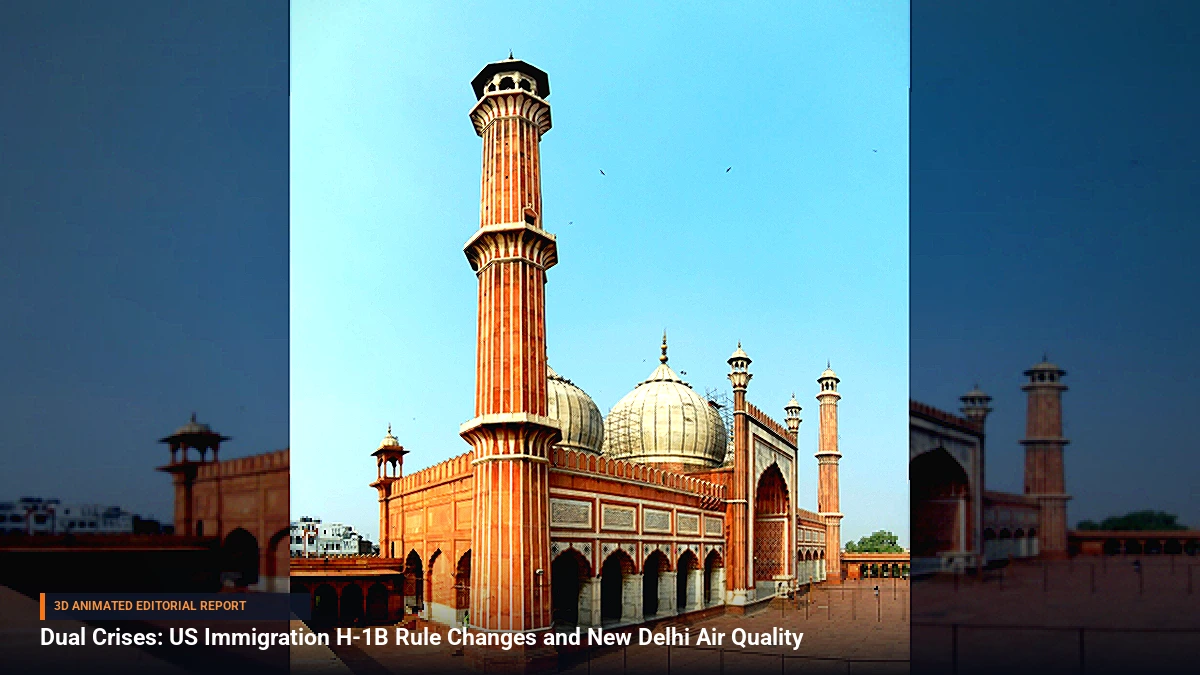
What Happened: The Core Developments
Across distinct geographic regions, global stakeholders are navigating significant disruptions. In the United States, proposed regulatory adjustments by U.S. Citizenship and Immigration Services (USCIS) have ignited intense public debate regarding the future of the H-1B non-immigrant visa program. Specifically, discussions surrounding potential alterations to post-employment grace periods have placed thousands of foreign technology workers and skilled professionals on high alert.
Simultaneously, environmental monitors in South Asia have sounded alarms over deteriorating urban conditions. Recent scientific studies indicate that New Delhi's early winter air pollution has surged to its highest levels in three years. Environmental analysts point out that methodological gaps in data collection—such as the historical exclusion of peak-hour particulate measurements—may have previously masked the true severity of urban smog.
Background & Key Context
The H-1B visa category has long served as the primary pipeline for foreign technical talent entering the United States, heavily utilized by the technology and engineering sectors. Historically, laid-off workers were afforded a structured grace period to secure alternative employment, depart the country, or adjust their status. Potential rollbacks or curtailments of these provisions introduce profound vulnerabilities, forcing professionals to reconsider long-term career planning in North America.
In tandem, India's capital region continues its annual struggle with toxic winter air quality. Meteorological conditions, agricultural stubble burning, and vehicular emissions combine to create hazardous atmospheric conditions. Recent findings suggest that integrating complete, uninterrupted datasets into Air Quality Index (AQI) calculations could dramatically elevate official pollution averages, highlighting a systemic need for more transparent environmental reporting.
Key Takeaways
- USCIS Policy Shifts: Proposed regulatory changes to H-1B terms and grace periods have drawn tens of thousands of public comments, reflecting widespread anxiety among immigrant professionals.
- Workforce Vulnerability: Skilled workers facing sudden job market shifts now encounter tighter operational timelines to maintain legal status in the United States.
- Record Pollution Levels: New Delhi recorded its highest early winter air pollution levels in three years, signaling persistent structural challenges in urban environmental management.
- Data Integration Impact: Comprehensive studies reveal that accounting for peak pollution windows could increase baseline pollution metrics significantly, demanding stricter regulatory oversight.
- Interconnected Pressures: Both crises underscore the complex socioeconomic and environmental hurdles faced by global citizens navigating shifting institutional frameworks.
Impact, Analysis & Global/National Reactions
The convergence of these challenges highlights the precarious nature of modern professional and urban mobility. For the international workforce in the United States, institutional shifts threaten to disrupt stability for families and employers alike. Legal experts and advocacy groups have actively engaged with the rule-making process, submitting extensive commentary to push back against measures perceived as overly restrictive.
On the environmental front, public health advocates continue to criticize regulatory bodies for inconsistent monitoring practices. Experts argue that transparent reporting is essential for public health protection, noting that understated pollution metrics undermine urgent mitigation efforts.
What's Next: Looking Ahead
Stakeholders across both arenas await definitive administrative decisions. For H-1B holders and employers, the finalization of USCIS guidelines will dictate workforce retention strategies and mobility planning in the coming months. Meanwhile, municipal authorities in New Delhi face mounting pressure to refine their air quality monitoring models and implement rigorous, year-round mitigation frameworks to safeguard public health.
Be the first to comment
Start a useful conversation around this story.