
What Happened: The Core Developments
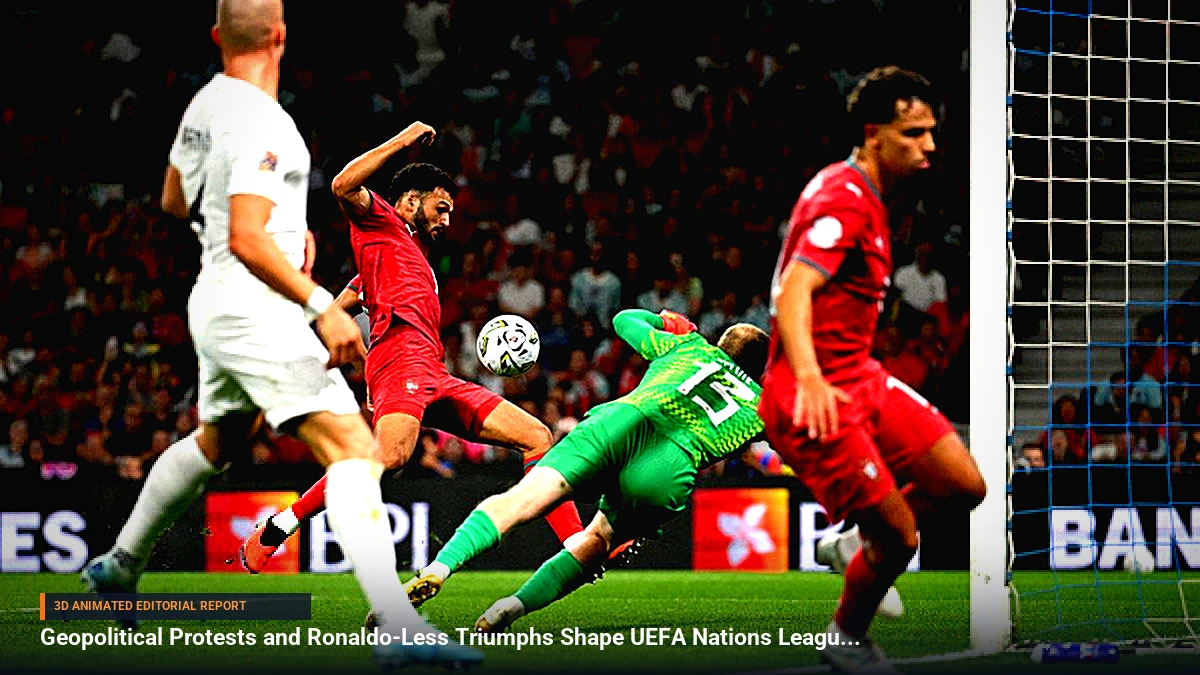
The most recent slate of UEFA Nations League matches offered a potent mix of athletic achievement and intense geopolitical friction. On October 4, 2026, Portugal demonstrated exceptional squad depth by securing a hard-fought 2-1 victory over Norway. This crucial win officially punched Portugal's ticket to the 2026-27 UEFA Nations League quarterfinals, making them the very first team to advance in the tournament. Notably, this milestone was achieved entirely without their talismanic captain, Cristiano Ronaldo, forcing tactical adjustments and shifting leadership focus onto players like Bruno Fernandes.
Meanwhile, off-the-pitch events captured global headlines during the fixture between the Republic of Ireland and Israel. Irish players made a profound statement by wearing black armbands and visibly refusing traditional pre-match handshakes with their Israeli opponents, bringing wider geopolitical tensions directly onto the European football stage.
Background & Key Context
The UEFA Nations League continues to evolve as a high-stakes competitive arena that frequently intersects with international diplomacy. Portugal's early qualification underscores the nation's robust talent pipeline and tactical adaptability, proving that the squad can perform at the highest levels during transitional phases away from its historic veterans.
Conversely, the Republic of Ireland's actions against Israel reflect a growing trend of athletes using high-profile sporting platforms to voice political stances, solidarity, or protest. Such demonstrations test international football governing bodies, such as UEFA, as they navigate the delicate balance between maintaining political neutrality in sports and accommodating freedom of expression for athletes.
Key Takeaways
- Historic Qualification: Portugal became the first team to secure a spot in the 2026-27 UEFA Nations League quarterfinals following a 2-1 win over Norway.
- Overcoming Absence: The victory was accomplished without Cristiano Ronaldo, signaling a successful tactical transition for the squad.
- Symbolic Protest: Republic of Ireland players wore black armbands and abstained from standard pre-match handshakes during their match against Israel.
- Geopolitical Intersection: The Ireland-Israel fixture highlighted how international conflicts continue to manifest within major European sports tournaments.
- Regulatory Scrutiny: These demonstrations place added pressure on UEFA officials to address the blending of political expression and competitive international play.
Impact, Analysis & Global/National Reactions
Sports analysts have praised Portugal's tactical maturity under pressure, noting that successfully navigating high-stakes tournament fixtures without a global superstar like Ronaldo is a vital milestone for the national team's long-term sustainability. The shift in reliance toward midfielders like Bruno Fernandes has revitalized the team's creative engine.
On the other hand, reactions to the Republic of Ireland's protests have sparked intense global debate. Supporters view the black armbands and handshake refusals as a courageous exercise of moral conscience in the face of ongoing humanitarian crises. Critics and opposing stakeholders, however, debate the appropriateness of political demonstrations in sports, raising questions about sporting integrity and the enforcement of governing body regulations.
What's Next: Looking Ahead
As the UEFA Nations League group stages progress toward their climactic phases, all eyes will be on how governing bodies respond to the growing wave of player-led protests. Disciplinary panels and executive committees may face mounting pressure to clarify guidelines regarding political expressions on the pitch.
For Portugal, the immediate future involves preparing for the quarterfinal stages, where the team can test its depth further and potentially welcome back seasoned veterans as the competition intensifies. Other national teams will closely watch these developments as the road to the tournament finals continues to unfold.
Be the first to comment
Start a useful conversation around this story.