
What Happened: The Core Developments
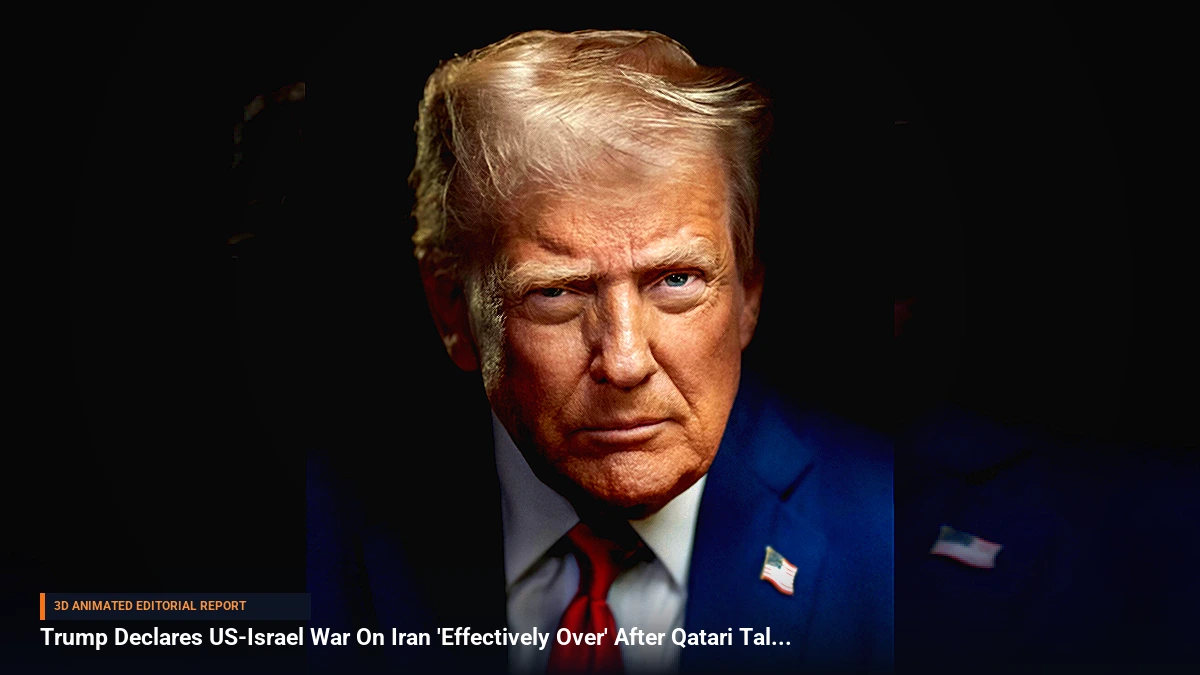
President Donald Trump announced during a White House briefing that the military campaign waged by the United States and Israel against Iran is "effectively over." Speaking to reporters following high-level diplomatic talks in Washington, DC, with the Prime Minister of Qatar, Trump signaled that further military escalation is unnecessary at this juncture.
The diplomatic breakthrough, facilitated by Qatari mediation, sparked immediate reactions across global financial and geopolitical landscapes. Oil futures slid sharply following reports that additional airstrikes or major kinetic engagements against Iran are currently off the table. Despite the optimism expressed by Washington and its Gulf allies, the political reality on the ground remains deeply fractured, marked by sharp rhetorical discord between Western leaders and Iranian state authorities.
Background & Key Context
The announcement comes against the backdrop of sustained regional tensions and active military exchanges involving the US, Israel, and Iran. Qatar has played a pivotal role behind the scenes, acting as a crucial intermediary to relay proposals and build a framework for a potential diplomatic off-ramp. Previous weeks had seen heightened concerns regarding a widening regional conflict, particularly as domestic political milestones approached in the United States. Trump’s latest assertions indicate a strategic pivot toward de-escalation, suggesting that regional defense networks have successfully insulated Israel and Gulf partners from retaliatory threats.
Key Takeaways
- Unilateral Assessment: President Trump stated that the military campaign is effectively finished and that further offensive operations are unwarranted.
- Diplomatic Catalyst: The announcement directly followed a critical meeting in Washington with the Prime Minister of Qatar regarding a ceasefire proposal.
- Tehran's Rejection: Iranian officials swiftly dismissed the American leader's remarks, categorizing them as "fake news" amid conflicting demands.
- Market Reaction: Global oil futures experienced an immediate downward slide as traders priced in a lowered probability of imminent new strikes.
- Regional Shielding: Trump emphasized that Israel and Gulf allies remain well-protected, mitigating the need for ongoing active warfare.
Impact, Analysis & Global/National Reactions
The divergence between Washington's narrative of de-escalation and Tehran's hostile posture highlights the delicate nature of current Middle Eastern diplomacy. While the White House frames the situation as a transition toward regional stabilization driven by positive momentum, Iranian leadership has pushed back aggressively, demanding terms and rejecting the notion of an unconditioned cessation.
Market analysts noted that the swift drop in oil prices underscores how sensitive global energy markets are to US-Iran rhetoric. Meanwhile, international observers are closely monitoring how regional actors, particularly the Israeli government, will align their operational posture with Washington's newly stated preference for restraint.
What's Next: Looking Ahead
As the dust settles on Washington's latest diplomatic overtures, all eyes turn to the specifics of the Qatari-backed proposals and whether backchannel communications can bridge the wide gap between the warring parties. Analysts will be watching for any official clarification from Tehran or adjustments in military readiness across the region to determine if Trump's declaration translates into a sustainable cessation of hostilities.


Be the first to comment
Start a useful conversation around this story.