
What Happened: The Core Developments
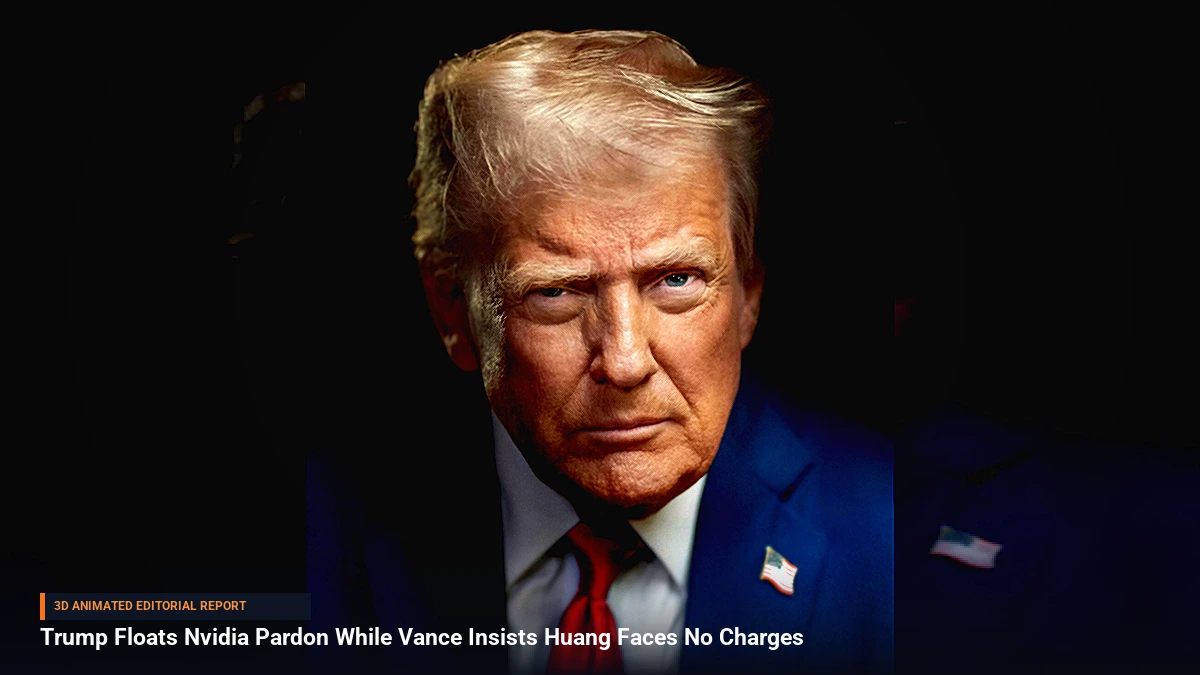
Recent statements from the highest levels of the United States government have illuminated a complex and high-stakes intersection between national security, federal export laws, and the artificial intelligence semiconductor sector. Donald Trump publicly stated that granting a pardon to Nvidia Chief Executive Officer Jensen Huang was "always an option" following scrutiny and accusations relating to international export regulations.
However, this stance was immediately contextualized and partially dialed back by Vice President JD Vance. Speaking to reporters, Vance asserted that the tech executive did not require any executive clemency because Huang was not facing an active criminal investigation by the Department of Justice (DOJ). Vance noted that he received direct assurances from the attorney general and other top-tier federal officials confirming the absence of any formal DOJ probe.
Meanwhile, corporate developments have moved rapidly alongside political maneuvers. Jensen Huang has officially been reinstated as President, Chief Executive Officer, and Board Director of Nvidia, solidifying his return to the helm of the world's most critical AI chip designer amidst a turbulent regulatory climate.
Background & Key Context
The developments follow intense policy friction surrounding semiconductor trade, particularly concerning advanced chips bound for international markets like China. As the geopolitical significance of artificial intelligence hardware has skyrocketed, regulatory compliance has turned into a tightrope walk for Silicon Valley giants. Nvidia's central role in powering global AI infrastructure has placed it under an unprecedented microscope, merging corporate governance with geopolitical strategy.
Simultaneously, internal corporate shifts at Nvidia—including discussions around succession planning and executive leadership stability—have drawn global attention. The swift orchestration of Huang's return highlights how deeply intertwined the fortunes of leading technology firms have become with federal oversight and executive branch priorities.
Key Takeaways
- Executive Mixed Signals: President Trump claimed a pardon for Jensen Huang was "always an option," while Vice President Vance insisted a pardon is completely unnecessary.
- DOJ Status Clarification: Vice President Vance stated that he received direct assurances from top federal officials that Huang is not under criminal investigation by the DOJ.
- Leadership Reinstatement: Jensen Huang has officially returned to his positions as President, CEO, and Board Director of Nvidia.
- Export Law Scrutiny: The ongoing tensions highlight intense federal interest and stricter enforcement regarding semiconductor export regulations.
- Global Market Reactions: International stakeholders, particularly in tech hubs like Israel, have closely monitored Huang's reinstatement given Nvidia's heavy regional investments.
Impact, Analysis & Global/National Reactions
The divergent public comments from Trump and Vance underscore the delicate balancing act within the administration regarding the enforcement of tech regulations versus the preservation of American industrial dominance in artificial intelligence. While some administration figures have signaled a willingness to use executive authority aggressively to protect or guide critical economic leaders, others have sought to reassure markets that standard legal boundaries are being respected without preemptive interventions.
Legal analysts and market watchers have noted the ambiguity surrounding the exact nature of the export law accusations. While top administration officials like Todd Blanche have navigated inquiries by declining to publicly confirm specific investigative details, the public back-and-forth has inadvertently spotlighted the immense pressure facing regulatory and law enforcement bodies as they weigh national security against commercial innovation.
What's Next: Looking Ahead
As Jensen Huang settles back into his leadership role at Nvidia, attention will inevitably shift toward upcoming congressional hearings and legislative oversight committees. Observers expect further scrutiny regarding how federal agencies monitor advanced technology transfers and enforce export restrictions.
Investors and market participants will be watching closely for any formal guidance or clarification from the Department of Justice or the Department of Commerce, which could finally clear the air regarding compliance expectations for the semiconductor industry and definitively resolve any questions concerning executive exposure.






Be the first to comment
Start a useful conversation around this story.