
What Happened: The Core Developments
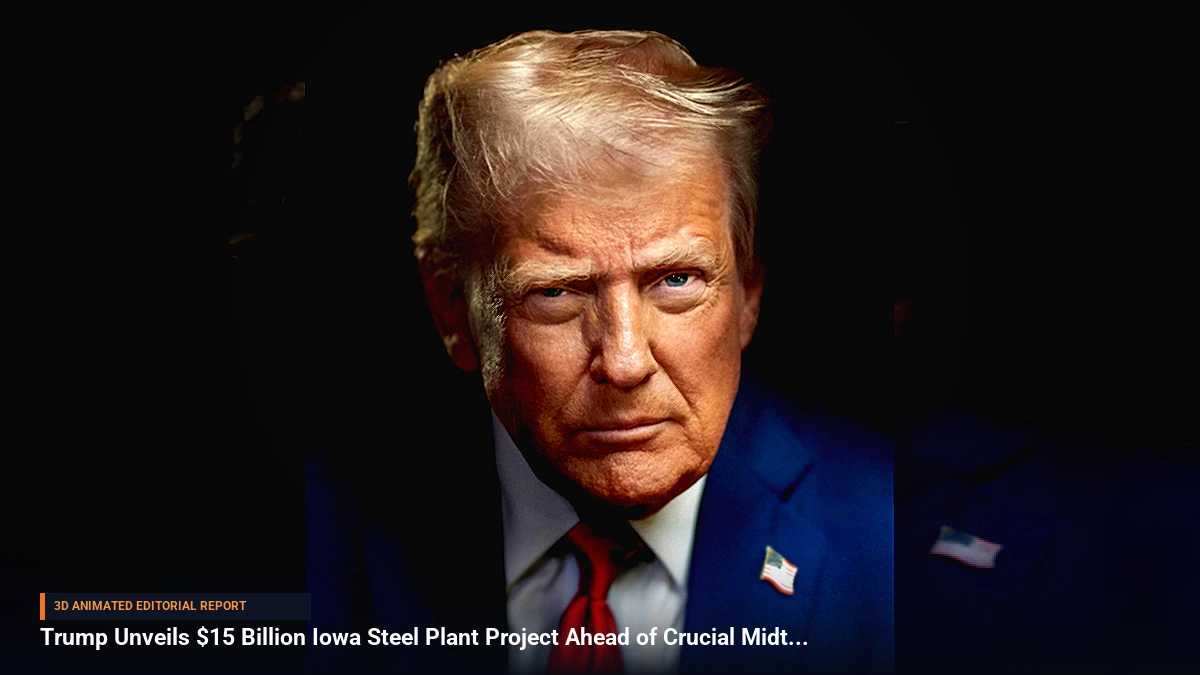
President Donald Trump officially announced a sweeping $15 billion infrastructure initiative aimed at constructing a massive steel manufacturing facility in the state of Iowa. Billed by the administration as the largest steel plant project in American history, the announcement was made from the Oval Office with several of Iowa’s top Republican figures in attendance.
According to federal officials and administration briefings, the monumental facility will be built and operated by an Indian-owned enterprise utilizing advanced, cutting-edge steelmaking technologies. While specific site boundaries within the state and local workforce estimates are yet to be fully finalized, the timeline indicates that formal construction operations are scheduled to break ground in 2030.
Background & Key Context
The timing of the announcement has drawn intense scrutiny from political analysts and economists alike, arriving just weeks ahead of high-stakes United States midterm elections. Iowa remains a critical battleground state, particularly given its potential influence over the delicate balance of power in the United States Senate.
Industrial policy and manufacturing revitalization have long been central pillars of Trump’s economic platform. By spotlighting a massive foreign-backed domestic investment, the administration seeks to reinforce its narrative surrounding American industrial competitiveness, supply chain security, and the revival of traditional heavy manufacturing sectors in the American Heartland.
Key Takeaways
- Massive Financial Commitment: The $15 billion steel plant represents one of the largest single industrial manufacturing investments in modern U.S. history.
- Strategic Timeline: Heavy construction on the sprawling facility is officially scheduled to commence in the year 2030.
- International Partnership: The project is spearheaded by an Indian-owned corporation, reflecting cross-border economic collaboration in heavy industry.
- Political Timing: The high-profile unveiling in Washington is widely viewed as a strategic economic boost for Republican candidates facing competitive midterm races in Iowa.
- Advanced Technology: The administration emphasizes that the plant will incorporate modern, advanced steelmaking processes designed to produce high-grade and cost-competitive output.
Impact, Analysis & Global/National Reactions
Reactions to the announcement have divided political and economic circles. Supporters and regional stakeholders have championed the project as a monumental win for Iowa’s long-term economic outlook, pointing to the secondary benefits for local infrastructure, logistics, and allied supply chains.
"Using advanced steelmaking technology, the plant will produce some of the highest quality, most affordable steel anywhere in the world," President Trump stated during the Oval Office unveiling.
Conversely, critics and political opponents have questioned the long-term timeline, noting that physical construction is still years away. Economists are also evaluating how shifting global trade dynamics, environmental regulations, and international corporate partnerships will shape the complex engineering and financing required over the next several years.
What's Next: Looking Ahead
As the immediate political dust settles from the midterm campaign season, attention will shift toward the regulatory and logistical hurdles facing the Iowa steel plant. Stakeholders will be closely monitoring preliminary land acquisition, environmental review processes, and the definitive partnership agreements between state authorities and the corporate developer.
With construction not set to begin until 2030, the coming years will serve as a critical proving ground for whether this ambitious multi-billion-dollar vision can transition successfully from an Oval Office announcement into a fully operational industrial powerhouse.




Be the first to comment
Start a useful conversation around this story.