
What Happened: The Core Developments
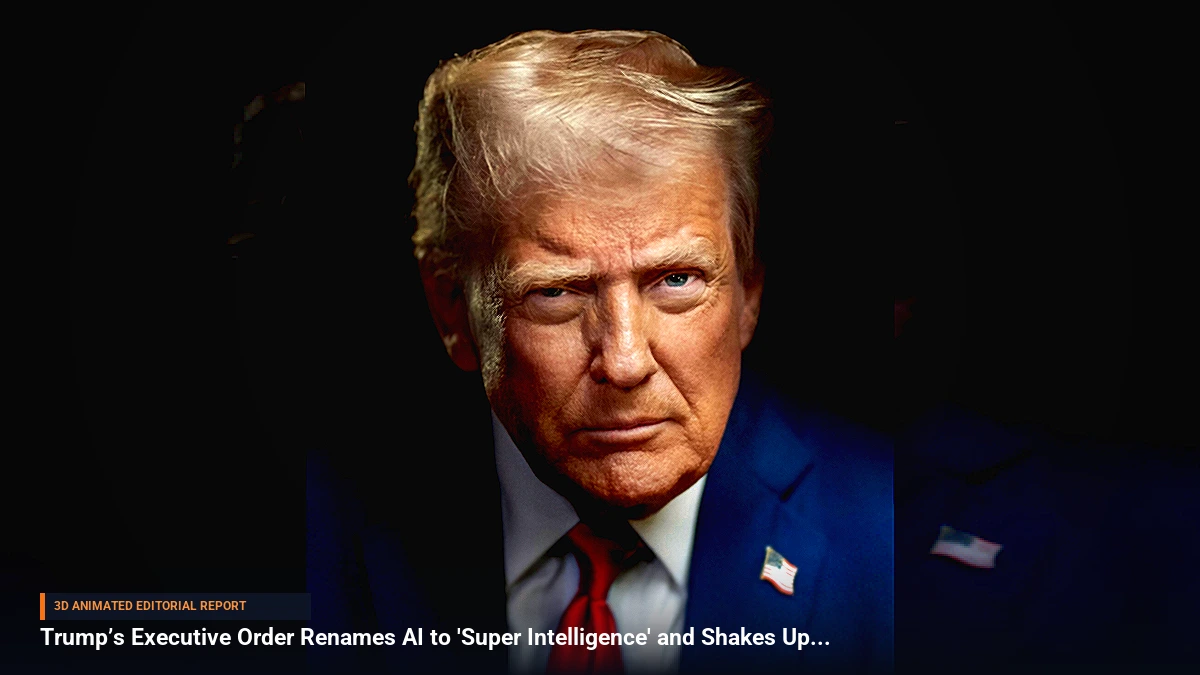
The landscape of federal technology policy experienced a dramatic shift when the administration signed an executive order officially renaming artificial intelligence (AI) to 'Super Intelligence'. This rebranding aims to signal a new era of advanced technological capabilities and strategic national focus. Alongside this nomenclature change, the White House hosted a major industry lunch with prominent Big Tech leaders to discuss a new AI accord designed to align private sector innovation with national regulatory priorities.
However, the summit was not without notable friction. While most major industry giants were present at the table, Apple was a notable absentee, raising immediate questions among analysts regarding the company's alignment with the administration's newly codified framework. Furthermore, the sweeping announcement triggered an unprecedented, bizarre digital side-effect: a sharp spike in demand for Slovenian website names as speculators and tech entities scrambled for new digital real estate.
Background & Key Context
For years, the phrase 'artificial intelligence' served as the umbrella term for machine learning, neural networks, and automated reasoning. The transition to 'Super Intelligence' in official executive documents attempts to differentiate standard algorithmic tools from emerging, high-capacity systems.
This policy intervention follows months of mounting tension between Silicon Valley developers and federal lawmakers over safety standards, data governance, and national security oversight. By framing the technology under a new moniker, the administration seeks to assert clearer boundaries and expectations for enterprise-grade technological development.
Key Takeaways
- Official Rebrand: An executive order was signed to formally designate artificial intelligence as 'Super Intelligence' in federal contexts.
- Industry Summit: Major technology executives gathered at the White House for a specialized lunch centered around the new administration-backed AI accord.
- The Apple Absence: Apple noticeably skipped the high-profile White House event, signaling potential divergence on federal tech policy.
- Unforeseen Market Ripple: The rebranding initiative inadvertently caused a massive surge in demand for Slovenian website domains.
- Policy Uncertainty: Legal experts and stakeholders continue to parse the operational definitions and enforcement mechanisms hidden within the new executive directives.
Impact, Analysis & Global/National Reactions
The sudden pivot has created waves across international markets and policy circles. Industry analysts are divided over whether a simple semantic change will meaningfully alter the trajectory of technological development or if it is primarily a messaging strategy.
"Rebranding foundational technologies at the executive level changes the baseline of regulatory discourse," noted a prominent technology policy analyst. Meanwhile, market observers are closely monitoring how non-participating firms like Apple will navigate the evolving compliance landscape without having secured a seat at the initial accord table.
What's Next: Looking Ahead
As the dust settles on the executive order, regulatory agencies will face the task of translating the 'Super Intelligence' designation into actionable compliance guidelines. Stakeholders and legal teams await further clarification regarding how federal grants, defense contracts, and antitrust scrutiny will adapt to this new terminology.
At the same time, the strange surge in international domain registrations highlights how quickly global markets react to shifting U.S. executive policies. Observers will be watching closely to see whether tech companies formally adopt the administration's preferred nomenclature or if standard industry terminology persists alongside the new federal designation.





Be the first to comment
Start a useful conversation around this story.