
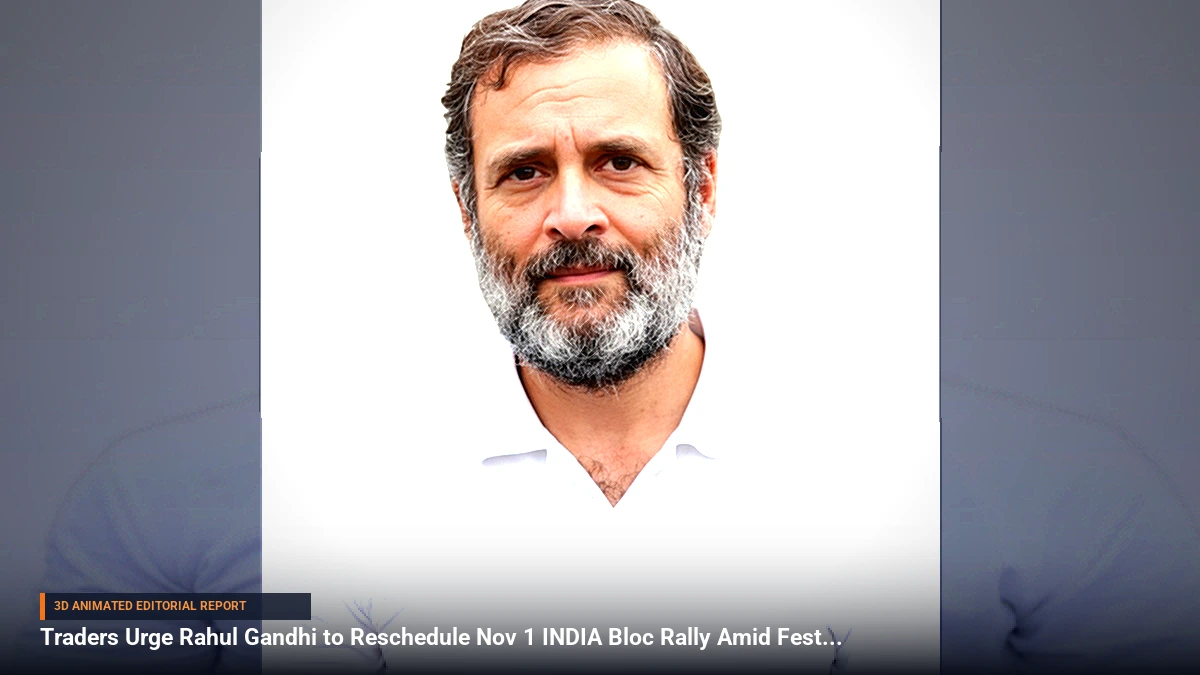
What Happened: The Core Developments
Tensions have escalated around the upcoming opposition mobilization scheduled for November 1, as local traders formally urged Congress leader Rahul Gandhi to defer the massive political rally. Business associations pointed out that staging a high-profile demonstration during the peak festive shopping window would cause severe logistical disruptions, crippling local commerce when merchants rely heavily on steady consumer footfall.
Despite the economic concerns raised by the mercantile community, the INDIA opposition bloc is moving forward aggressively with its plans. Senior Congress leader K.C. Venugopal announced that the alliance intends to stage a unique 'public impeachment proceeding' targeting Chief Election Commissioner (CEC) Gyanesh Kumar. Organizers have stepped up mobilization efforts, setting ambitious turnout goals as they push for the removal of the top election official.
Background & Key Context
The friction highlights a classic dilemma in urban political mobilization: the clash between democratic protest and local economic imperatives. Major political rallies in capital hubs frequently necessitate heavy security cordons, road closures, and public transport diversions. For small and medium-sized merchants, November represents a crucial financial period due to ongoing festival preparations.
Concurrently, the Congress-led opposition has ratcheted up its confrontation with constitutional bodies, framing the upcoming demonstration as a definitive show of strength against the Election Commission. While internal party estimates for the rally vary widely—ranging from targeted footfall figures of 50,000 to ambitious projections of up to 10 lakh attendees—the core demand remains centered on the ouster of CEC Gyanesh Kumar.
Key Takeaways
- Commercial Pushback: Local merchants have formally appealed to Rahul Gandhi to reschedule the November 1 rally to protect vital festive season sales.
- Opposition Strategy: The INDIA bloc is framing the gathering around a contentious 'public impeachment proceeding' targeting CEC Gyanesh Kumar.
- Mass Mobilization: Congress organizers are pushing for substantial crowd participation, though logistical estimates vary significantly across party projections.
- Political Fallout: The ruling Bharatiya Janata Party (BJP) has heavily criticized both the timing and the underlying rationale of the opposition's campaign.
Impact, Analysis & Global/National Reactions
The unfolding standoff has drawn sharp rebukes from the ruling Bharatiya Janata Party (BJP), which slammed the Congress party for prioritizing disruptive political theatrics over the economic well-being of local traders and everyday citizens. Political analysts note that while the opposition is keen to maintain momentum through high-visibility street politics, alienating the business community during a sensitive economic window could carry long-term reputational costs.
Institutional stakeholders and security agencies face the immediate challenge of managing large crowds while balancing the commercial rights of merchants during a high-stakes retail period. The planned 'public impeachment proceeding' also marks an escalation in the rhetoric directed against independent constitutional authorities.
What's Next: Looking Ahead
As November 1 approaches, all eyes will be on whether Congress leadership adjusts its schedule in response to the business community's appeals. Authorities will also finalize security protocols and venue permissions, while opposition leaders continue their grassroots outreach to secure maximum attendance for what they hope will be a defining moment in their ongoing confrontation with the Election Commission.
Be the first to comment
Start a useful conversation around this story.