
What Happened: The Core Developments
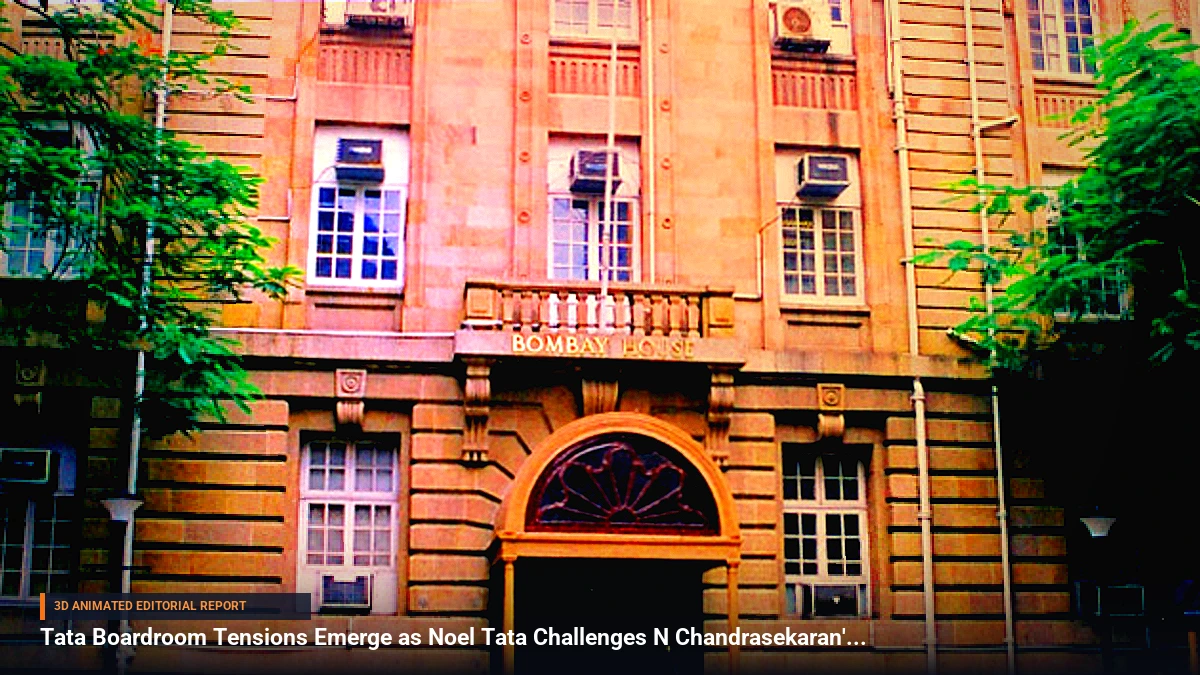
The board of Tata Sons has officially approved the re-appointment of N Chandrasekaran as the chairman of the Tata Group for another five-year term. The decision secures continuity at the helm of India's largest conglomerate amidst a complex macroeconomic and regulatory landscape. However, the boardroom deliberations were not entirely unanimous. Reports indicate that Noel Tata, chairman of Tata Trusts—which holds a commanding equity stake in the holding company—voted against or expressed strong opposition to Chandrasekaran's extended tenure, exposing underlying governance tensions between the philanthropic trusts and the commercial leadership.
Simultaneously, the conglomerate faces mounting pressure from financial regulators. The Reserve Bank of India (RBI) has filed a caveat following its rejection of Tata Sons' bid to evade mandatory public listing requirements. As a designated 'upper-layer' non-banking financial company (NBFC), Tata Sons is legally bound by central bank guidelines to list its shares on public exchanges, a regulatory collision course that threatens to alter the private, tightly-held structure of the historic enterprise.
Background & Key Context
For decades, Tata Sons has operated primarily as the core investment holding company for the sprawling Tata empire, insulated from the direct public market scrutiny faced by operating units like Tata Consultancy Services, Tata Motors, and Tata Steel. The introduction of the RBI’s scale-based regulations for NBFCs classified upper-layer institutions under strict transparency and listing mandates, giving these entities a strict timeline to comply.
Tata Sons previously explored avenues to restructure its balance sheet or surrender specific licenses to bypass the mandatory public offering requirement. The RBI's decisive rejection of these maneuvers, capped by the filing of a legal caveat to preempt any surprise litigation, signals a hardline stance by Indian regulators against exemptions for systemically important shadow lenders.
Key Takeaways
- Leadership Continuity: N Chandrasekaran has been granted a fresh five-year mandate to steer the Tata Group forward.
- Trust-Board Friction: Noel Tata and representatives of Tata Trusts reportedly opposed the extension, highlighting governance fissures.
- Regulatory Standoff: The RBI rejected Tata Sons' petition to dodge mandatory public listing requirements.
- Legal Precaution: The central bank has filed a caveat to safeguard against abrupt legal challenges from the conglomerate.
- Upper-Layer NBFC Status: Tata Sons' classification as an upper-layer NBFC remains the core statutory driver behind the forced public float.
Impact, Analysis & Global/National Reactions
The intersection of succession stability and regulatory enforcement has drawn intense scrutiny from market analysts, institutional investors, and corporate governance watchdogs. While Chandrasekaran’s reappointment reassures markets regarding strategic continuity—particularly in high-stakes sectors like semiconductors, electric vehicles, and aviation—the friction with Tata Trusts introduces an element of unpredictability.
Market experts note that a potential public listing could unlock substantial value and grant Tata Sons unprecedented flexibility to raise both debt and equity capital. Conversely, legacy stakeholders and leadership at the Trusts have traditionally favored privacy and insulation from public market volatility to preserve the group's long-term, nation-building ethos. Institutional advisory firms have pointed out that balancing regulatory compliance with the preservation of core values will remain the ultimate test for the group's executive tier.
What's Next: Looking Ahead
All eyes are now turned toward the legal and corporate maneuvers that will follow the RBI's caveat and the board's decision. Tata Sons' leadership must navigate the strict compliance deadlines set by the central bank, which could force a landmark initial public offering (IPO) over the upcoming quarters. Stakeholders will closely monitor subsequent board meetings of Tata Trusts and Tata Sons to gauge whether internal dissent will affect operational execution or prompt further structural reforms within India's preeminent business house.



Be the first to comment
Start a useful conversation around this story.