
What Happened: The Core Developments
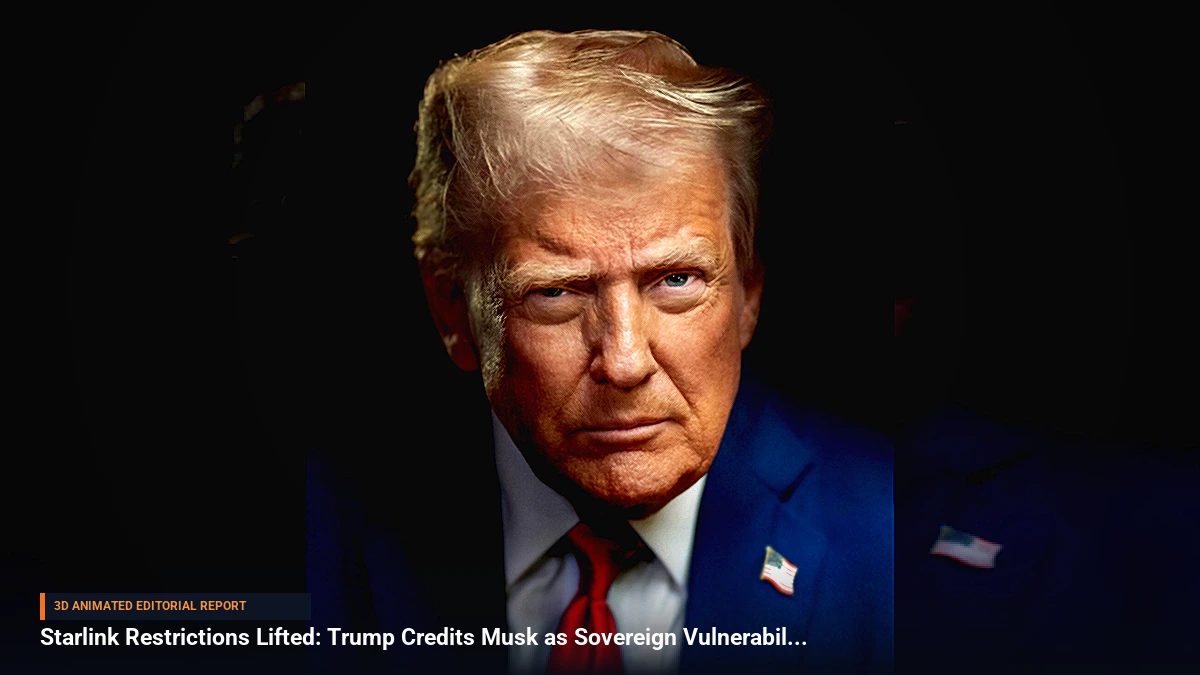
Recent statements from high-ranking political figures have thrust the operational status of SpaceX’s Starlink network in Ukraine back into the global spotlight. Donald Trump stated publicly that Elon Musk restored full access and lifted previous restrictions that had throttled the Starlink and Starshield capabilities critical to Ukraine’s defense operations.
According to reports and official admissions, the adjustments to internet and communications bandwidth had previously resulted in severe disruptions for Ukrainian military forces, including operational challenges for frontline drones. While Trump confirmed that access is now fully operational again—famously remarking that Musk "put it back"—he declined to detail the behind-the-scenes negotiations or the exact mechanics that led to the policy reversal. Meanwhile, U.S. Secretary of State Marco Rubio explicitly clarified that decisions governing Ukraine's access to Starlink remain entirely within the purview of Elon Musk and SpaceX, stating that the White House bears no responsibility for past speed limits or connectivity restrictions.
Background & Key Context
Since the outbreak of the full-scale conflict with Russia, Ukraine’s military apparatus has depended heavily on Starlink terminals for real-time battlefield communications, artillery coordination, and drone piloting. As conventional infrastructure crumbled under relentless bombardment, SpaceX’s low-earth-orbit satellite constellation emerged as the absolute backbone of Ukrainian resilience.
However, this heavy reliance has repeatedly stirred intense debate over the risks of privatized warfare and corporate diplomacy. Elon Musk has previously denied intentionally restricting access to compromise Ukrainian operations, maintaining that the platform was designed strictly for civilian and humanitarian use. Despite these denials, intermittent operational friction, throttling, and concerns over escalation have continually highlighted the precarious nature of depending on a single private commercial entity for sovereign national defense.
Key Takeaways
- Corporate Gatekeeping: The incident underscores how private billionaires can unilaterally influence the outcome of geopolitical conflicts through commercial technology assets.
- Operational Reversal: Donald Trump confirmed that Elon Musk restored unrestricted Starlink and Starshield access to Ukraine following a reported intervention.
- White House Stance: U.S. Secretary of State Marco Rubio distanced the administration from the connectivity curbs, asserting that Starlink management decisions rest solely with Musk.
- Battlefield Vulnerability: Prior restrictions on bandwidth and network speeds directly impacted front-line capabilities, affecting Ukrainian drone operations and strategic strikes.
- Global Alarm: International stakeholders, particularly in Europe, are accelerating efforts to develop sovereign satellite alternatives to reduce vulnerability to American corporate policies.
Impact, Analysis & Global/National Reactions
The episode has intensified anxieties among international defense analysts regarding the privatization of critical military infrastructure. Security experts argue that allowing a private corporation to act as a bottleneck for active war zones creates an unprecedented systemic risk.
Governments worldwide—particularly across Europe—are viewing the Starlink dilemma as a major wake-up call. Policymakers are aggressively re-evaluating domestic space programs and pushing for independent, state-controlled satellite networks to ensure that sovereign security operations can never again be bottlenecked by corporate policy shifts or individual executive discretion. While U.S. leadership maintains an arms-length approach, emphasizing the private nature of SpaceX, the implications resonate far beyond Washington and Kyiv.
What's Next: Looking Ahead
As the dust settles on the latest reconfiguration of Ukraine's communication network, attention turns to the long-term sustainability of military tech partnerships. Observers will be closely monitoring whether SpaceX formalizes a more predictable operational framework with allied governments or if defense departments will fast-track alternative procurement strategies.
Furthermore, European defense councils are expected to fast-track funding for competing sovereign constellations in upcoming legislative sessions. The overarching question remains whether modern warfare will permanently integrate commercial tech monopolies into its command structure, or if nations will successfully decouple military operations from private enterprise control.






Be the first to comment
Start a useful conversation around this story.