
What Happened: The Core Developments
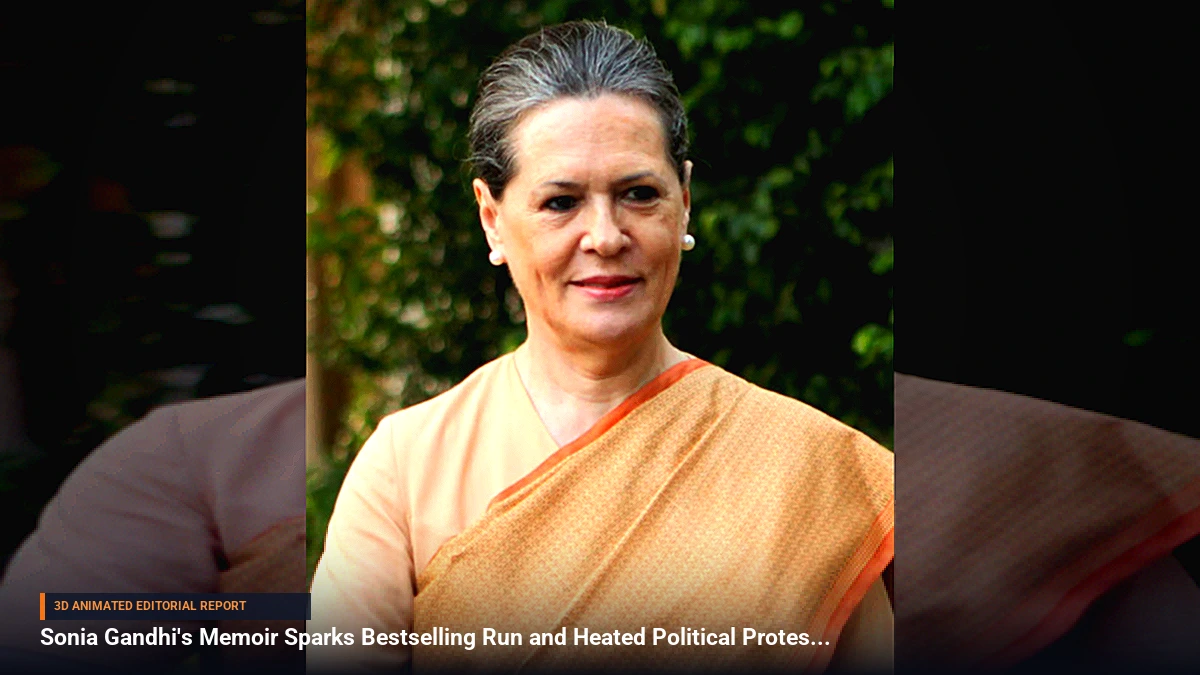
The autobiography recently authored and published by senior Indian political figure Sonia Gandhi has quickly captured national attention, registering robust early sales across bookstores nationwide. While the book has been widely received by supporters as a candid reflection on personal history, love, loss, and decades of high-stakes political maneuvering, it has simultaneously triggered intense controversy.
Opposition voices and critics have targeted specific historical claims made within the pages, most notably regarding the tragic events of the 1984 anti-Sikh riots. The friction surrounding these passages culminated in public demonstrations, where families of the victims of the 1984 riots took to the streets to protest the memoir's narrative, going as far as burning copies of the book in public displays of outrage.
Background & Key Context
Sonia Gandhi's entry into publishing marks a major milestone in contemporary Indian political history, offering her personal perspective on a life inextricably tied to the Indian National Congress and the Nehru-Gandhi dynasty. For decades, her private thoughts and internal viewpoints on monumental national events remained largely shielded from public view.
The memoir touches upon sensitive historical milestones, including the tumultuous political climate of the 1980s. However, sections detailing the 1984 anti-Sikh riots have faced immediate pushback from historians, political rivals, and affected families who argue that the book's framing glosses over institutional delays and missteps during the crisis, keeping decades-old wounds raw.
Key Takeaways
- Commercial Success: Bookstores across India report exceptionally strong early sales and high public curiosity surrounding the memoir.
- Fierce Family Defense: Senior Congress leaders and family members, including Rahul Gandhi and Priyanka Gandhi, have forcefully defended the publication.
- Political Backlash: The ruling Bharatiya Janata Party (BJP) and rival factions have heavily criticized the book's narrative framing.
- Victim Protests: Families affected by the 1984 anti-Sikh riots staged demonstrations and burned copies of the book in protest of its historical accounts.
- Historical Debates: The publication has reignited national discourse regarding accountability, historical accuracy, and political memory in India.
Impact, Analysis & Global/National Reactions
The release has deepened ideological fault lines in Indian politics. Defending her mother against political attacks, Priyanka Gandhi asserted that Sonia Gandhi possesses every right to tell her own story and documented history from her perspective, while accusing opponents of long-standing dishonesty regarding the family.
Meanwhile, Rahul Gandhi took a more provocative stance regarding the backlash from political adversaries. He remarked that criticisms from opposing party supporters ("bhakts") only serve to generate publicity and ultimately boost commercial interest and sales for the book.
Conversely, civil society groups and associations representing the victims of the 1984 riots view the memoir's portrayal of the violence as an attempt to rewrite history. Analysts note that while the book succeeds commercially, it functions as a lightning rod, underscoring how deeply historical trauma continues to influence modern political discourse.
What's Next: Looking Ahead
As the memoir settles into the public consciousness, it is expected to remain a focal point of literary and political debates. Reviewers and political analysts will likely parse its chapters for further historical insights, while political parties will continue leveraging its contents in ongoing ideological battles leading up to upcoming electoral cycles. Publishers anticipate sustained high demand, cementing the book's status as one of the most polarizing and widely discussed political releases in recent years.


Be the first to comment
Start a useful conversation around this story.