
What Happened: The Core Developments
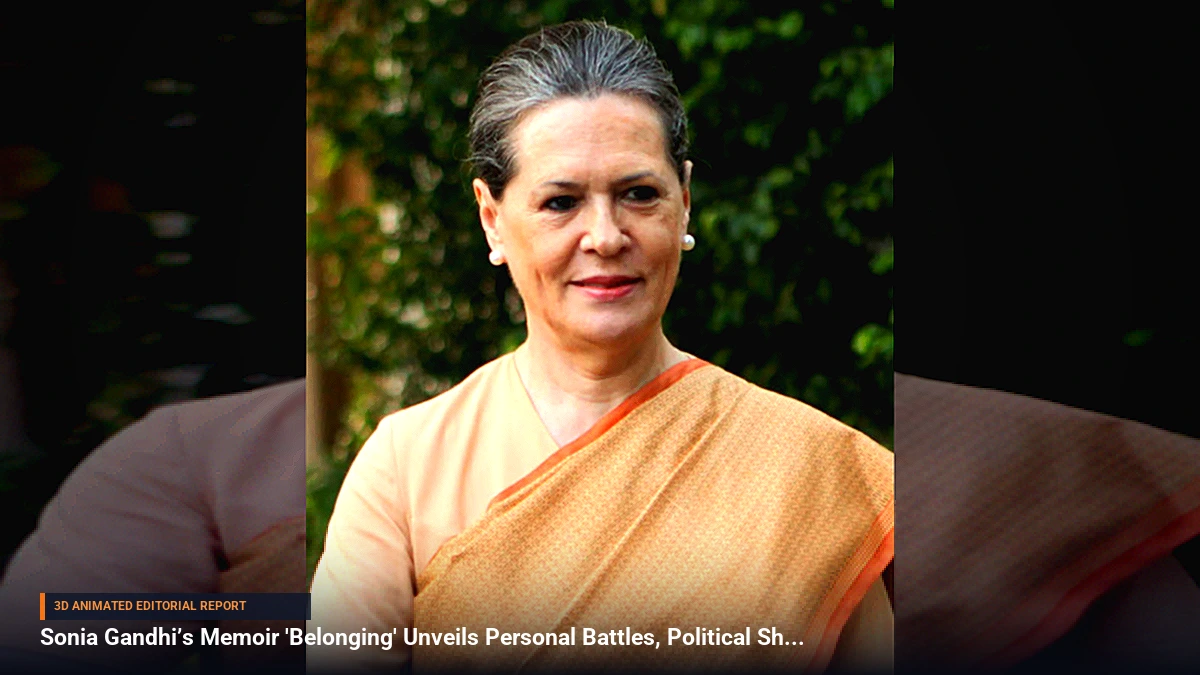
Former Indian National Congress president Sonia Gandhi has released her long-awaited memoir, 'Belonging: A Journey of Love', offering an unprecedented window into her private life and decades at the epicenter of Indian politics. The book touches upon pivotal milestones, ranging from her personal grief following the assassinations of Indira and Rajiv Gandhi to strategic coalition-building during the height of UPA governance.
Among the most striking revelations in the text are Gandhi's open discussions about her private life, including her battles with cancer. For the first time, she formally confirmed her health struggles, recalling how she was advised in 2010 to undergo an urgent operation for suspected breast cancer, a moment that sent her mind racing toward a terrifying outcome.
The memoir also details the high-wire act of coalition politics. Gandhi recounted having her "heart in my mouth" while making a critical 2003 alliance phone call to Dravida Munnetra Kazhagam (DMK) chief M. Karunanidhi, a step that helped realign national opposition forces.
Background & Key Context
For decades, Sonia Gandhi has remained one of the most enigmatic figures in contemporary Indian history. Thrust into the political spotlight after the 1991 assassination of her husband, former Prime Minister Rajiv Gandhi, she navigated initial hesitation, immense public grief, and intense scrutiny regarding her foreign origins to lead the Congress party through multiple electoral cycles.
'Belonging' captures these historical tensions, detailing her internal resistance to entering public life and her fears for her children, Rahul and Priyanka. Yet, the memoir also steps into controversial historical territory, offering her perspective on key governance transitions, alliance-building strategies, and internal party dynamics.
Key Takeaways
- Candid Health Confessions: Sonia Gandhi details her battle with cancer, specifically recalling the harrowing 2010 diagnosis and treatment phase during UPA 2.0.
- High-Level Political Friction: The book reveals that former President Pranab Mukherjee once hinted at a desire to become Prime Minister, a disclosure that reportedly shocked Gandhi.
- Strategic Alliance Building: She shares behind-the-scenes accounts of stitching together complex coalitions, including her tense 2003 outreach to DMK chief M. Karunanidhi.
- Everyday Human Touches: Providing a lighter, domestic angle, Gandhi notes that simple dal chawal remains a daily dietary staple that represents the true taste of home.
- Intense Political Fallout: The publication has triggered immediate pushback from rival parties, including the BJP and family members of deceased leaders mentioned in the book.
Impact, Analysis & Global/National Reactions
The release of Belonging has sent immediate shockwaves through India’s political landscape, drawing sharp criticisms and defensive reactions from various quarters.
The ruling Bharatiya Janata Party (BJP) quickly seized upon sections of the book, accusing Gandhi of attempting to whitewash the Congress party's historical record regarding the 1984 anti-Sikh massacre. Congress loyalists and defenders have countered these accusations, urging critics to read the entire volume rather than register knee-jerk protests.
Meanwhile, revelations concerning former President Pranab Mukherjee drew swift pushback and defense from Mukherjee's own daughter, who publicly questioned why aspirations for the highest office should be viewed with shock, asking if it was a "crime to be ambitious."
What's Next: Looking Ahead
As Belonging circulates globally and dominates domestic news cycles, its long-term political fallout remains to be seen. Literary critics and political analysts will undoubtedly parse its chapters for further insights into opposition strategy, internal Congress dynamics, and historical revisions.
With political temperatures already rising around regional and national electoral cycles, the memoir ensures that the legacy, trials, and strategic decisions of the Gandhi family will remain central to India's public discourse.





Be the first to comment
Start a useful conversation around this story.