
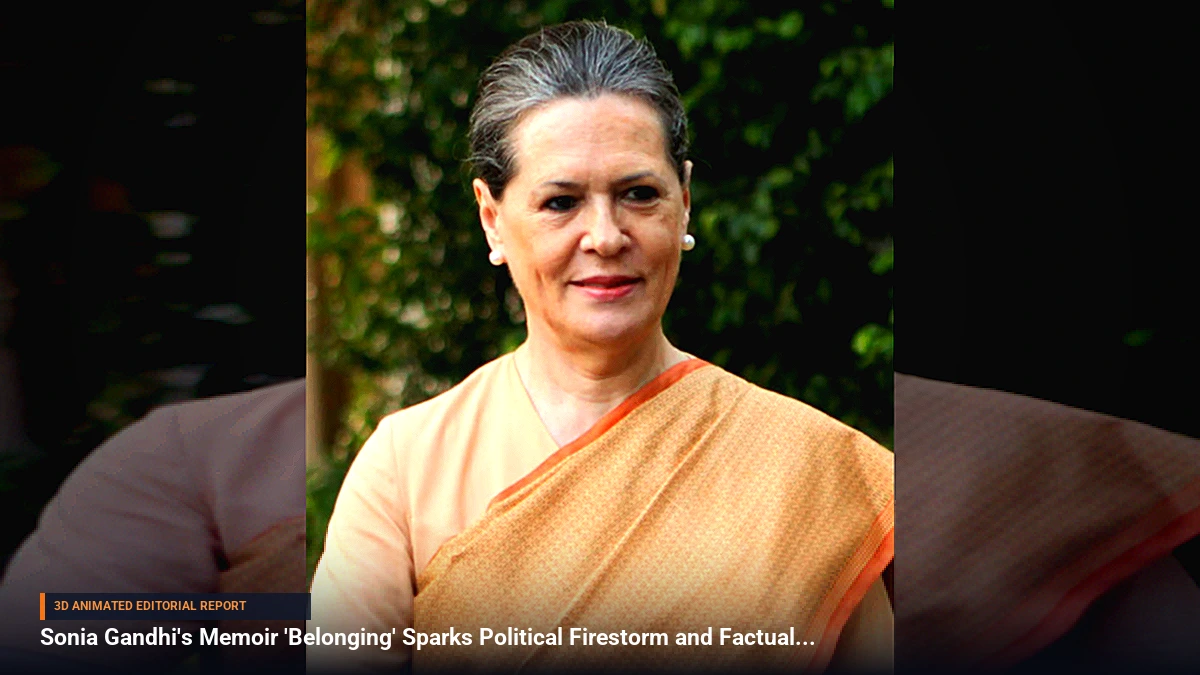
What Happened: The Core Developments
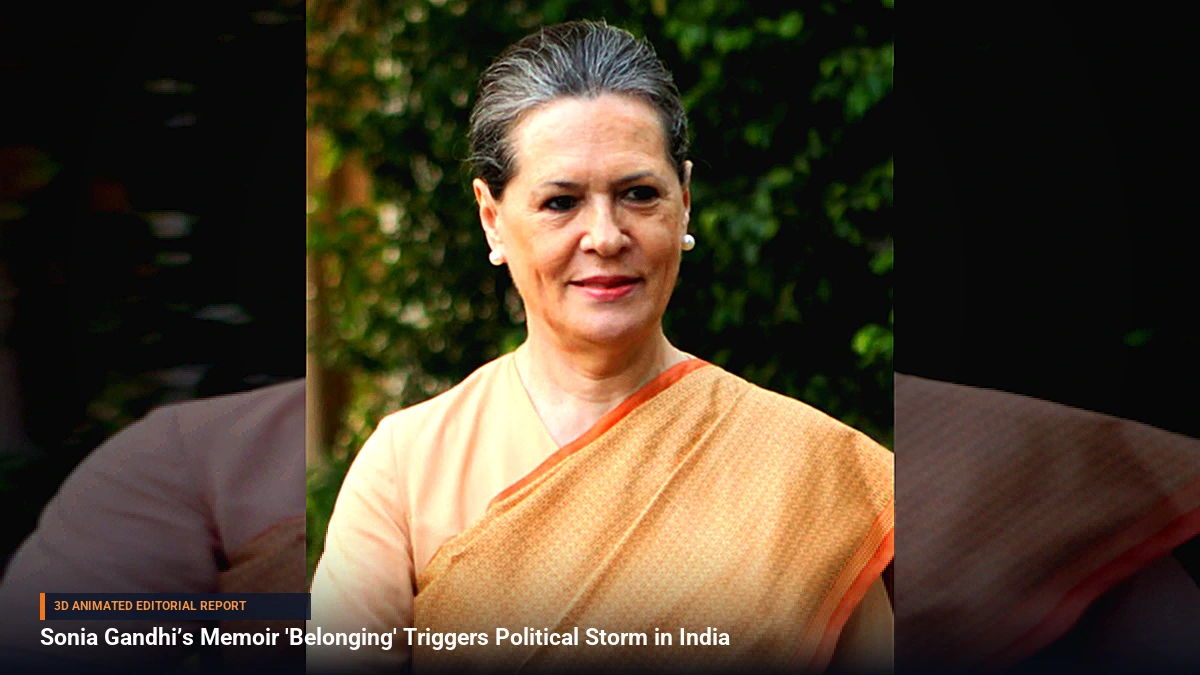
The release of former Congress president Sonia Gandhi’s memoir, 'Belonging: A Journey of Love', has triggered a multifaceted debate across India's political landscape. Tracing her remarkable personal and political transformation from a young Italian woman marrying Rajiv Gandhi to becoming one of the nation's most influential political figures, the book has quickly become a focal point of public discussion.
However, the launch has not been without controversy. Shortly after publication, critics and researchers pointed out several factual errors and chronological inaccuracies within the text. Noted discrepancies include misstated historical milestones, such as the founding year of the Rashtriya Swayamsevak Sangh (RSS) and details surrounding the death of a close political aide.
Simultaneously, the memoir has drawn severe pushback from the ruling Bharatiya Janata Party (BJP). Party leaders have aggressively targeted the book's contents, alleging that the narrative attempts to provide a clean chit to the Gandhi family regarding the tragic events of the 1984 anti-Sikh massacre.
Background & Key Context
Sonia Gandhi's literary venture invites readers into deeply sensitive chapters of modern Indian political history. The memoir reflects extensively on the harrowing days following Operation Blue Star in June 1984—the military action ordered to flush militants out of the Golden Temple in Amritsar.
In the book, Gandhi provides a rare glimpse into Indira Gandhi's state of mind during that critical summer, recounting how the late Prime Minister was acutely aware of the mortal dangers she faced, even advising young Rahul Gandhi to "be brave" as the family braced for the inevitable consequences of state decisions.
For decades, the legacy of the Nehru-Gandhi family has been closely intertwined with the triumphs and traumas of the Indian National Congress. Publishing a memoir of this magnitude inevitably opens historical wounds, transforming personal reflections into contested political battlegrounds.
Key Takeaways
- Memoir Title: Published under the title 'Belonging: A Journey of Love', the book tracks Sonia Gandhi's personal evolution within the heart of Indian politics.
- Factual Inaccuracies: Reviewers and critics have flagged multiple historical errors within the text, including mistakes regarding the RSS founding year and close aide timelines.
- BJP Allegations: The ruling party has accused the memoir of attempting to whitewash the Gandhi family's role and accountability in the 1984 anti-Sikh riots.
- Operation Blue Star Insights: The text details Indira Gandhi's psychological state and security preparations in the aftermath of the June 1984 military operation.
- Congress Counter-Defense: Congress supporters and defenders have urged critics to read the book objectively rather than resorting to partisan outrage.
Impact, Analysis & Global/National Reactions
The release of 'Belonging' has exposed deep ideological fractures. The BJP has framed the book as a calculated public relations exercise designed to rewrite history. Prominent BJP spokespersons argue that the narrative glosses over critical governance failures and the systemic violence witnessed during the 1984 riots.
Conversely, the Congress party has forcefully defended the publication, dismissing the political attacks as desperate attempts to undermine Sonia Gandhi's personal narrative. Senior leaders and commentators have urged critics to engage with the text textually rather than politically, emphasizing that memoirs inherently capture subjective human experiences alongside historical records.
Analysts note that while memoirs by political heavyweights always carry dual purposes—personal catharsis and political legacy-building—the presence of basic factual errors risks diluting the book's credibility as a definitive historical document.
What's Next: Looking Ahead
As the political dust settles, the debate over 'Belonging' is expected to fuel ongoing literary and historical discussions across media platforms. Historians and political scientists will likely continue dissecting the book's claims against archival records. Meanwhile, publishers and researchers will monitor whether subsequent editions will issue corrections for the flagged chronological and factual inaccuracies, ensuring the memoir stands up to rigorous historical standards.


Be the first to comment
Start a useful conversation around this story.